From Lab to Clinic: IMU-Based Gait Analysis for Ankle Fracture Recovery and Biomarker Discovery in Orthopedic Research
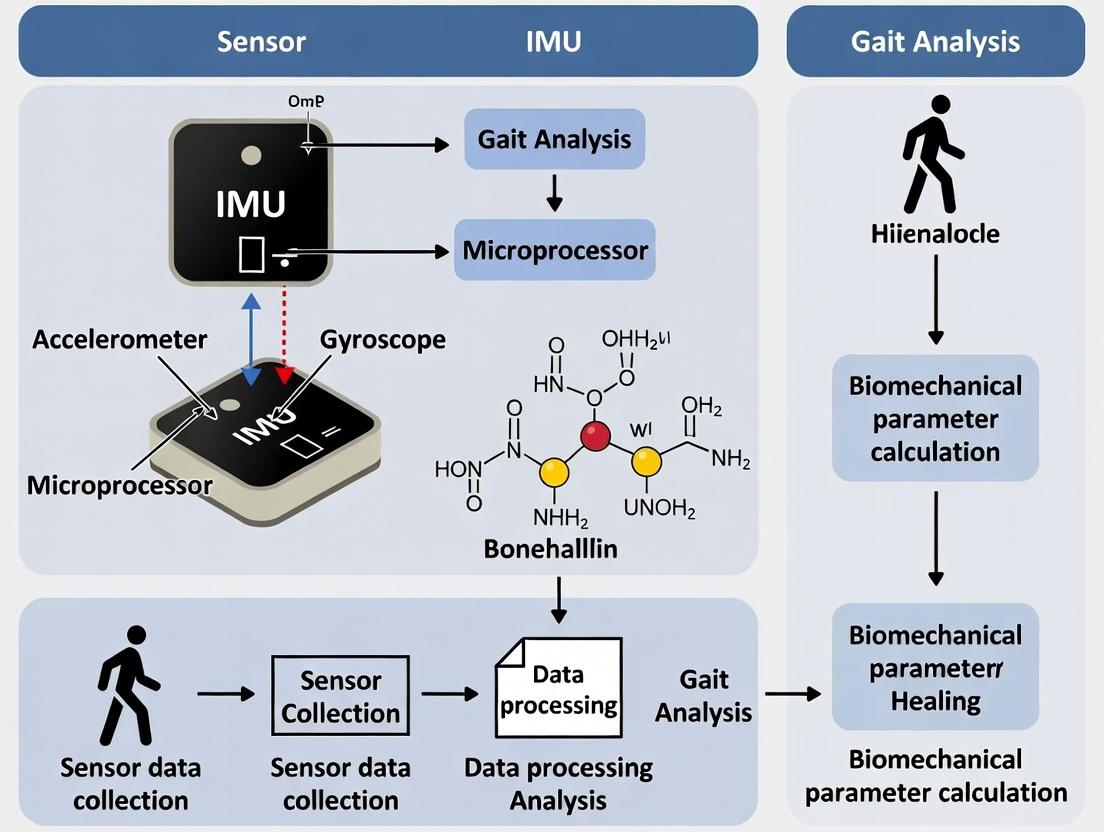
This article provides a comprehensive resource for biomedical researchers and professionals on inertial measurement unit (IMU)-based gait analysis for ankle fracture assessment.
From Lab to Clinic: IMU-Based Gait Analysis for Ankle Fracture Recovery and Biomarker Discovery in Orthopedic Research
Abstract
This article provides a comprehensive resource for biomedical researchers and professionals on inertial measurement unit (IMU)-based gait analysis for ankle fracture assessment. We explore the biomechanical rationale for using gait as a functional outcome, detail the technical methodology from sensor placement to data processing, and address common challenges in study design and signal analysis. By comparing IMU systems with gold-standard laboratory motion capture and highlighting validation studies, we demonstrate how precise gait quantification can serve as a digital biomarker for recovery, accelerate rehabilitation research, and inform the development of novel therapeutics and medical devices.
Understanding Gait Biomechanics: Why Ankle Fractures Demand Quantitative Functional Analysis
Application Notes
Ankle fractures disrupt the intricate biomechanical function of the ankle joint, leading to significant alterations in the gait cycle. These alterations persist beyond clinical healing and are critical targets for rehabilitation and therapeutic intervention. For researchers, quantitative gait analysis, particularly using Inertial Measurement Units (IMUs), provides a high-resolution tool to decode these changes within the context of longitudinal studies and clinical trials.
Key Biomechanical Alterations Post-Fracture: Gait deficits typically present as a reduction in walking speed, cadence, and stride length, alongside asymmetries in temporal and spatial parameters. The most profound impact is often observed in the affected limb's stance phase, with reduced loading and a shortened single-limb support period. Kinematic analysis reveals restricted sagittal plane motion (dorsiflexion/plantarflexion), which patients compensate for via increased hip flexion or knee flexion on the unaffected side. Such compensatory mechanisms increase energy cost and may lead to secondary musculoskeletal issues.
IMUs as a Translational Research Tool: IMU sensor arrays (typically on feet, shanks, and thighs) allow for laboratory-grade gait analysis in free-living environments. This ecologically valid data is crucial for assessing real-world functional recovery and the efficacy of pharmacologic or rehabilitative interventions in clinical trials. Parameters like ankle range of motion symmetry, heel-strike velocity, and medio-lateral stability serve as sensitive biomarkers for recovery.
Implications for Drug Development: In trials for bone healing accelerators, analgesics, or anabolic agents, objective gait metrics derived from IMUs can serve as primary or secondary efficacy endpoints. They provide continuous, objective data that is more sensitive than patient-reported outcomes or static radiographic healing.
Quantitative Gait Parameter Changes Post-Ankle Fracture: Table 1: Typical Gait Parameter Deviations in Early Recovery (6-12 weeks post-fracture) vs. Healthy Controls
| Gait Parameter | Healthy Control Mean (SD) | Ankle Fracture Cohort Mean (SD) | % Change vs. Control | Primary Sensor |
|---|---|---|---|---|
| Walking Speed (m/s) | 1.35 (0.12) | 0.85 (0.22) | -37% | Positional (GPS/Fusion) |
| Cadence (steps/min) | 112 (8) | 98 (14) | -12.5% | Gyroscope |
| Affected Limb Stride Length (m) | 1.44 (0.10) | 1.05 (0.25) | -27% | Accelerometer |
| Step Time Symmetry (Ratio) | 1.02 (0.03) | 1.18 (0.12) | +15.7% | Gyroscope |
| Ankle Sagittal ROM (°) | 28.5 (4.5) | 18.2 (7.8) | -36% | IMU (Shank/Foot) |
| Double Support Time (% Gait Cycle) | 22 (3) | 35 (8) | +59% | Gyroscope/Accel. |
Table 2: IMU-Derived Biomarkers for Clinical Trial Endpoints
| Biomarker Category | Specific Metric | Relevance to Ankle Fracture Recovery | Measurement Protocol |
|---|---|---|---|
| Temporal Symmetry | Step Time Ratio, Stance Time Ratio | Quantifies inter-limb loading asymmetry. | Section 2.1 |
| Kinematic Function | Peak Plantarflexion Angle, Dorsiflexion Swing ROM | Direct measure of ankle joint functional restoration. | Section 2.2 |
| Dynamic Stability | Root Mean Square of Lateral Acceleration (Shank) | Indicates balance confidence and risk of re-injury. | Section 2.3 |
| Impact Loading | Heel-Strike Peak Acceleration (Vert.) | Reflects pain and willingness to load the limb. | Section 2.4 |
| Movement Quality | Harmonic Ratio (Trunk Accelerometry) | Global measure of gait smoothness and stability. | Section 2.5 |
Experimental Protocols
Protocol 2.1: Data Collection for Temporal-Spatial Gait Parameters
Objective: To capture step time, stride length, and stance phase duration in a free-walking environment. Materials: Two IMU sensors (recommended sampling rate ≥100Hz), secure straps, data logger/Bluetooth transmitter, calibrated walkway (optional for validation). Procedure:
- Mount IMUs securely on the dorsum of each foot (or posterior heel counter of shoes) and on the mid-shank of each leg.
- Perform a 30-second static calibration period with participant standing still.
- Instruct participant to walk at a self-selected pace along a 20-meter straight corridor for 6 continuous passes.
- Initiate data recording before the first step and stop after the final step. Analysis:
- Event Detection: Use a shank gyroscope peak detection algorithm to identify initial contact (IC) and toe-off (TO).
- Step Time: Time between consecutive ICs of opposite feet.
- Stance Time: Time from IC to TO on the same foot.
- Stride Length: Estimate via double integration of foot acceleration during swing phase or using a biomechanical model fusing accelerometer and gyroscope data.
Protocol 2.2: Assessment of Ankle Sagittal Plane Range of Motion
Objective: To quantify active dorsiflexion and plantarflexion during the gait cycle. Materials: Two IMUs (≥100Hz), rigid sensor-to-segment attachment. Procedure:
- Attach one IMU on the lateral aspect of the shank (aligned with the fibula) and another on the lateral aspect of the hindfoot (calcaneus). Ensure axes are aligned.
- Perform a functional calibration: record 5 seconds of seated knee flexion/extension (to define shank longitudinal axis) and 5 ankle circumductions in a seated position.
- Execute the walking trial as in Protocol 2.1. Analysis:
- Calculate the relative orientation (quaternion or Euler angle) of the foot IMU relative to the shank IMU using sensor fusion algorithms (e.g., Madgwick, Kalman filter).
- Extract the sagittal plane angle (plantarflexion/dorsiflexion).
- Identify key events: peak dorsiflexion in stance, peak plantarflexion at toe-off, and peak dorsiflexion in swing.
Protocol 2.3: Evaluation of Medio-Lateral Stability
Objective: To measure lateral acceleration of the shank as a proxy for balance control. Materials: One IMU per shank. Procedure:
- Mount IMUs on the anterior tibia, midway between knee and ankle.
- Have the participant walk a 10-meter path, performing a 180-degree turn at each end, for 2 minutes. Analysis:
- Isolate the medio-lateral (ML) acceleration signal from the shank IMU.
- For each straight-line walking stride (excluding turns), calculate the Root Mean Square (RMS) of the ML acceleration.
- Higher RMS values indicate greater lateral motion and reduced stability.
Protocol 2.4: Heel-Strike Impact Transient Measurement
Objective: To quantify the magnitude of the vertical impact force at heel strike. Materials: IMU on the distal tibia or heel. Procedure:
- Securely attach an IMU to the skin over the distal tibia, approximately 5cm proximal to the medial malleolus.
- Collect data during steady-state walking (as per 2.1). Analysis:
- Band-pass filter the vertical accelerometer signal (10-50 Hz) to isolate the impact transient.
- For each gait cycle, identify the peak positive acceleration in the first 30% of the stance phase.
- Normalize peaks to gravitational acceleration (g).
Visualizations
Gait Alteration Pathway
IMU Gait Analysis Workflow
The Scientist's Toolkit: Research Reagent Solutions
Table 3: Essential Materials for IMU-Based Gait Analysis in Ankle Fracture Research
| Item / Reagent Solution | Function / Purpose | Specification Notes |
|---|---|---|
| 9-Axis IMU Sensors | Captures tri-axial acceleration, angular velocity, and magnetic field data for kinematic calculation. | Select models with ≥100Hz sampling, low noise, and onboard processing capabilities (e.g., BMI160, ICM-20948). Bluetooth LE for free ambulation. |
| Biocompatible Adhesive Sensor Patches | Secures IMUs to skin, minimizing motion artifact—critical for accurate segment orientation. | Hydrogel or hypoallergenic adhesive interfaces. Ensure compatibility with long-duration wear (≥1 hour). |
| Sensor-to-Segment Calibration Kit | Enables anatomical alignment of IMU data with body segments (shank, foot). | Includes jigs for neutral posture or protocol manuals for functional movement calibration (e.g., seated ankle circumduction). |
| Gait Event Detection Algorithm Software | Automatically identifies initial contact (heel-strike) and toe-off events from IMU signals. | Open-source (e.g., MATLAB-based algorithms using gyroscope peaks) or commercial SDKs. Validation against force plates is essential. |
| Sensor Fusion & Biomechanical Model Library | Converts raw IMU data into clinically meaningful joint angles (e.g., ankle dorsiflexion). | Utilizes quaternion or Kalman filters. Models range from simple inverse kinematics to full musculoskeletal simulations (OpenSim integration). |
| Validated Gait Parameter Database (Healthy & Pathological) | Serves as a reference for comparing patient data and defining recovery benchmarks. | Should contain age, sex, and BMI-matched normative values for temporal-spatial and kinematic parameters. |
Radiographic union remains the historical gold standard for assessing recovery from ankle fractures. However, a significant proportion of patients who achieve radiographic healing report persistent pain, functional limitation, and altered gait, negatively impacting quality of life. This discrepancy underscores the need for objective, functional biomarkers of recovery. Inertial Measurement Unit (IMU)-based gait analysis offers a high-resolution, quantitative, and ecologically valid method to define functional recovery, positioning gait as a critical digital biomarker in orthopedic trauma and rehabilitation research.
Table 1: Key IMU-Derived Spatiotemporal Gait Parameters and Their Clinical Significance in Ankle Fracture Studies
| Gait Parameter | Definition | Typical Impairment Post-Fracture | Reported % Deficit vs. Contralateral Limb (Acute Phase) | Significance |
|---|---|---|---|---|
| Walking Speed | Distance covered per unit time (m/s). | Markedly reduced. | 25-40% reduction | Global indicator of functional limitation; correlates with patient-reported outcomes. |
| Step Length | Distance from heel strike of one foot to heel strike of the opposite foot (m). | Asymmetry increased. | 10-15% asymmetry | Reflects impaired propulsion and weight-bearing confidence on affected limb. |
| Stance Time | Duration of foot contact with the ground during a gait cycle (s). | Increased on affected side. | 15-20% increase | Indicates pain, instability, or weakness leading to prolonged weight acceptance. |
| Swing Time | Duration the foot is off the ground during a gait cycle (s). | Decreased on affected side. | 8-12% decrease | Suggests reduced limb advancement due to pain or dorsiflexion limitation. |
| Stride Time Variability | Step-to-step fluctuation in stride time (Coefficient of Variation, %). | Significantly increased. | 50-100% increase | Marker of dynamic instability and impaired gait control; slow to normalize. |
| Ankle Sagittal ROM | Peak dorsiflexion/plantarflexion during gait (deg). | Reduced dorsiflexion. | 30-50% reduction | Direct measure of functional ankle stiffness and joint mobility under load. |
Table 2: Comparison of Gait Analysis Modalities for Clinical Research
| Modality | Spatial Resolution | Ecological Validity | Cost & Complexity | Key Advantage for Biomarker Development |
|---|---|---|---|---|
| Laboratory 3D Motion Capture | Very High (sub-mm) | Low (constrained lab) | Very High | Gold standard for kinematic detail; validation tool for IMUs. |
| Wearable IMU Sensors | High (deg, cm/s) | High (real-world) | Low-Moderate | Enables continuous, longitudinal monitoring in free-living environments. |
| Instrumented Walkways | High (temporal) | Moderate (clinic) | Moderate | Excellent for basic spatiotemporal parameters; limited kinematic data. |
| Smartphone/Consumer Wearables | Low-Moderate | Very High | Very Low | Scalable for large cohort studies; data quality and specificity can be lower. |
Detailed Experimental Protocols
Protocol 1: IMU Sensor Setup & Data Acquisition for Laboratory Gait Analysis
Objective: To collect high-fidelity, synchronized gait data from multiple body segments in a controlled environment for biomarker validation. Materials: See "Research Reagent Solutions" (Table 3). Procedure:
- Sensor Preparation: Calibrate all IMUs (accelerometer, gyroscope, magnetometer) according to manufacturer specifications prior to each session. Initialize sensors at a sampling rate ≥100 Hz.
- Anatomical Placement: Securely attach IMUs to the following segments using hypoallergenic adhesive straps or specialized mounting sleeves:
- Shanks: Distal anteromedial aspect, aligned with the longitudinal axis of the tibia.
- Thighs: Distal anterolateral aspect.
- Pelvis: Sacrum, midline.
- Feet: Dorsum of the foot, proximal to the metatarsal heads.
- Static Calibration Trial: Have the participant stand in the N-pose (upright, feet shoulder-width apart, arms at sides) for 10 seconds. This establishes the sensor-to-body segment alignment.
- Dynamic Task: Instruct the participant to walk at a self-selected comfortable speed along a 10-meter walkway. Perform a minimum of 6 passes. Include a turn at each end to capture continuous walking. Synchronize data with a force plate embedded in the walkway if available.
- Data Export: Transfer raw (unfiltered) IMU data (acceleration, angular velocity) to a secure research database for offline processing.
Protocol 2: Free-Living Gait Monitoring Protocol
Objective: To quantify habitual gait patterns and community mobility during ecological daily activities. Materials: See "Research Reagent Solutions" (Table 3). Procedure:
- Device Provision: Provide participant with a pre-configured, wearable IMU device (e.g., dedicated gait sensor or research-grade smartwatch).
- Instruction & Wear Time: Instruct the participant to wear the device on the wrist or ankle (protocol-dependent) for a minimum of 8 hours per day, for 7 consecutive days. Emphasize wearing during all waking hours and activities.
- Activity Log: Provide a simple diary for the participant to log periods of non-wear, specific exercises, and any notable pain or events.
- Data Upload: Device should store or remotely stream (Bluetooth/Wi-Fi) summarized gait bouts (e.g., >60 seconds of continuous walking). Raw data may be stored if device capacity allows.
- Processing Pipeline: Use validated algorithms to extract "clean" walking bouts from free-living data, excluding non-ambulatory periods. Calculate daily averages for key parameters (walking speed, step count, step regularity).
Protocol 3: Data Processing & Feature Extraction Pipeline
Objective: To transform raw IMU signals into validated digital gait biomarkers.
- Pre-processing: Apply a 4th order low-pass Butterworth filter (cut-off 20 Hz) to raw acceleration and gyroscope signals to reduce noise. Correct for sensor offset and misalignment using calibration trial data.
- Gait Event Detection: Implement an inertial-based algorithm (e.g., peak detection on shank angular velocity) to identify Initial Contact (IC) and Terminal Contact (TC) events for each foot with high temporal precision.
- Spatiotemporal Calculation: Compute key parameters for each gait cycle:
- Stance Time: Time between IC and TC of the same foot.
- Step Time: Time between IC of one foot and the subsequent IC of the opposite foot.
- Step Length: Estimated using inverted pendulum or sensor fusion models integrating shank angular velocity and orientation.
- Kinematic Estimation: Use a sensor fusion algorithm (e.g., Kalman filter, Madgwick filter) to estimate 3D segment orientation. Calculate ankle joint angles in sagittal plane via relative orientation of foot and shank segments.
- Asymmetry & Variability Metrics: Calculate limb asymmetry indices (e.g., Gait Asymmetry Index = |Affected - Unaffected| / (0.5*(Affected+Unaffected)) x 100%) and within-subject coefficients of variation for stride time.
Visualizations
Title: Workflow for Gait Biomarker Development from IMU Data
Title: Pathophysiology Linking Ankle Fracture to Altered Gait Biomarkers
The Scientist's Toolkit: Research Reagent Solutions
Table 3: Essential Materials for IMU-Based Gait Analysis Research
| Item / Solution | Specification / Example | Primary Function in Research |
|---|---|---|
| Research-Grade IMU System | Xsens MTw Awinda, APDM Opal, Noraxon myoMOTION | Provides synchronized, high-fidelity raw inertial data from multiple body segments with robust SDKs for data extraction. |
| Sensor Fusion & Gait Algorithm Software | MATLAB with IMU Toolbox, Python (SciPy, GaitPy), Mokka, custom scripts | Enables processing of raw signals into calibrated kinematics and detected gait events for biomarker extraction. |
| Validation Gold Standard | 3D Optical Motion Capture (e.g., Vicon, Qualisys) with force plates | Serves as criterion standard to validate the accuracy of IMU-derived spatiotemporal and kinematic parameters. |
| Free-Living Sensor Platform | Axivity AX6, MoveMonitor (McRoberts), ActiGraph GT9X, Apple Watch (ResearchKit) | Enables longitudinal, ecologically valid data capture in the participant's natural environment. |
| Participant-Reported Outcome (PRO) Measures | FAOS (Foot and Ankle Outcome Score), SMFA (Short Musculoskeletal Function Assessment) | Provides subjective clinical data for correlational analysis with objective gait biomarkers. |
| Secure Data Management Platform | REDCap, Xnat, custom HIPAA/GDPR-compliant server | Manages the large volumes of time-series data associated with IMU studies, ensuring data integrity and security. |
Motion analysis in clinical research, particularly in ankle fracture recovery, has evolved from subjective observational scales to precise, objective quantification using Inertial Measurement Units (IMUs). This evolution is critical for generating high-fidelity endpoints in pharmaceutical and device trials.
Table 1: Evolution of Gait Analysis Modalities
| Era | Primary Method | Key Metrics | Limitations in Ankle Fracture Research |
|---|---|---|---|
| Pre-1990s | Observational Scales (e.g., clinical gait observation) | Qualitative descriptors (e.g., "antalgic," "limping") | High subjectivity, poor inter-rater reliability, insensitive to subtle change. |
| 1990s-2000s | Lab-Based Instrumentation (e.g., 3D motion capture, force plates) | Joint angles (deg), ground reaction forces (N), temporal-spatial parameters (step length, cadence) | Expensive, not ecological, captures only short walkways, Hawthorne effect. |
| 2010s-Present | Wearable IMUs (Inertial Measurement Units) | Angular velocity (deg/s), acceleration (g), derived gait phases, symmetry indices, variability measures | Continuous, objective, ecological assessment over long distances and in real-world environments. |
Core IMU-Derived Metrics for Ankle Fracture Gait Analysis
IMUs, containing accelerometers, gyroscopes, and often magnetometers, provide raw data that is processed into clinically meaningful biomarkers.
Table 2: Key IMU-Derived Objective Metrics for Ankle Fracture Recovery
| Metric Category | Specific Metric (Unit) | Description | Relevance to Ankle Fracture & Drug/Device Trials |
|---|---|---|---|
| Temporal-Spatial | Stride Time (s) | Time between successive heel strikes of the same foot. | Indicator of pain and stability; recovery shows normalization. |
| Step Time Symmetry (Ratio) | Ratio of affected/unaffected limb step time. | Primary endpoint for efficacy of analgesics or rehabilitation devices. | |
| Stride Length (m) | Estimated distance covered in one stride. | Correlates with functional recovery and return to mobility. | |
| Kinematic | Range of Motion (RoM) Sagittal Plane (deg) | Peak dorsiflexion to peak plantarflexion during gait. | Direct measure of ankle stiffness and joint mobilization post-fracture/surgery. |
| Angular Velocity Peak (deg/s) | Maximum rotational speed during swing phase. | Measure of muscular control and propulsive ability. | |
| Dynamic/Stability | Root Mean Square (RMS) of Acceleration (g) | Magnitude of acceleration variability. | Higher values may indicate instability or guarding. |
| Harmonic Ratio (Unitless) | Regularity and smoothness of trunk acceleration. | Overall gait stability metric; improves with recovery. |
Detailed Experimental Protocols
Protocol 1: IMU Sensor Setup & Data Acquisition for Gait Analysis in Clinical Trials
Objective: To standardize the collection of continuous gait data from participants recovering from ankle fracture in an outpatient or clinical setting. Materials: See "The Scientist's Toolkit" below. Procedure:
- Sensor Calibration: Prior to each testing session, perform a static calibration (sensors stationary on flat surface for 10 seconds) and a dynamic calibration (specific movements as per manufacturer) in the data acquisition software.
- Sensor Placement: Using hypoallergenic adhesive tape or specialized straps, firmly attach IMUs to:
- Shanks: Distal anterior tibia, approximately 5 cm above the malleoli.
- Thighs: Lateral aspect, mid-femur.
- Pelvis: Sacrum (L5-S1 level).
- Feet: Dorsum of the foot, proximal to the metatarsals.
- Testing Protocol: a. Participant stands quietly for 30 seconds (quiet standing baseline). b. Participant walks at a self-selected comfortable speed along a 20-meter straight hallway for 2 minutes (or 6 continuous laps). c. Participant performs a 2-minute walk on a treadmill at a standardized speed (if applicable to trial design). d. Optional: Timed Up-and-Go (TUG) test or stair negotiation with sensors on.
- Data Recording: Sampling rate should be ≥100 Hz. Record raw tri-axial accelerometer, gyroscope, and magnetometer data. Note start/stop triggers for different activities via software button or external trigger.
Protocol 2: Data Processing & Gait Event Detection Algorithm
Objective: To process raw IMU data to detect initial contact (IC) and terminal contact (TC) events, enabling the calculation of metrics in Table 2. Software: MATLAB, Python (with SciPy/NumPy), or specialized software (e.g., MTw Awinda, APDM). Procedure:
- Pre-processing: Apply a 4th order low-pass Butterworth filter (cut-off 20 Hz) to raw accelerometer and gyroscope data to reduce noise.
- Gait Event Detection (Shank Gyroscope Method): a. Use the sagittal plane (y-axis) angular velocity signal from the shank-mounted IMU. b. IC Detection: Identify the prominent positive peak (toe-off) following the major negative trough (mid-swing). IC is located at the subsequent zero-crossing point after this positive peak. c. TC Detection: Identify the major negative trough in the signal, which corresponds to mid-swing. TC is located at the zero-crossing point immediately prior to this trough.
- Validation: Validate detected events against a gold standard (e.g., force plate or motion capture) in a subset of data to confirm algorithm accuracy (>95% sensitivity).
- Metric Calculation: Use the IC and TC timestamps to calculate stride time, step time, symmetry indices, and segment angular displacements.
Visualization of Workflows & Pathways
Diagram 1: IMU Gait Analysis Workflow for Clinical Trials
Diagram 2: Evolution Path of Motion Analysis Methods
The Scientist's Toolkit: Essential Research Reagents & Materials
Table 3: Key Materials for IMU-Based Gait Analysis Research
| Item | Function & Specification | Example Vendor/Product |
|---|---|---|
| IMU Sensor System | Contains accelerometer (±16g), gyroscope (±2000°/s), magnetometer. Wireless synchronization is critical for multi-sensor setups. | Xsens MTw Awinda, APDM Opal, Noraxon myoMOTION |
| Data Acquisition Software | Software for configuring sensors, real-time data streaming, synchronization, and basic visualization. Must be compatible with clinical trial data integrity standards. | Xsens MVN Analyze, APDM Mobility Lab, custom LabVIEW/MATLAB |
| Sensor Attachment Kits | Hypoallergenic adhesive tapes, Velcro straps, and limb cuffs designed for secure, repeatable sensor placement without restricting movement. | Manufacturer-specific kits, 3M Tegaderm, cohesive bandages |
| Calibration Equipment | Level surface for static calibration; jig for precise known-angle rotations for dynamic calibration verification. | Optical level, custom calibration jig |
| Validation Gold Standard | Equipment to validate IMU-derived metrics in a sub-study. Required for methodological papers. | 3D optical motion capture (Vicon, Qualisys), instrumented treadmill |
| Gait Analysis Algorithm Suite | Validated algorithms for gait event detection, sensor fusion, and metric calculation from raw IMU data. | MATLAB GaitLAB, Python libraries (GaitPy, SciKit), OEM software SDKs |
| Clinical Assessment Tools | Traditional scales to correlate with new IMU metrics, establishing clinical validity. | American Orthopaedic Foot & Ankle Society (AOFAS) score, Visual Analogue Scale (VAS) for pain |
In the context of ankle fracture research using Inertial Measurement Unit (IMU) sensors, quantitative gait analysis is critical for objectively assessing functional recovery and treatment efficacy. This application note details protocols for measuring four key gait parameters—Stance Time, Symmetry, Propulsion, and Complexity—which serve as biomarkers for sensorimotor integration, biomechanical loading, and movement automaticity post-fracture. These metrics are integral to a thesis investigating the longitudinal recovery trajectory and the impact of pharmacological and rehabilitative interventions.
Key Parameters: Definitions & Clinical Relevance
| Parameter | Definition | Biomechanical/Clinical Relevance in Ankle Fracture Recovery | Typical IMU-Derived Metric |
|---|---|---|---|
| Stance Time | Duration from initial contact to toe-off of the same foot. | Prolonged stance on injured limb indicates pain, instability, or strength deficit; shorter stance suggests antalgic gait. | Temporal segmentation from gyroscope/accelerometer peaks in the sagittal plane. |
| Symmetry | Equivalence of a parameter between the left and right limbs. | Asymmetry >10% is indicative of limping, incomplete healing, or compensatory strategies. | Ratio or Index (e.g., Gait Symmetry Index = (Non-fractured / Fractured) * 100%). |
| Propulsion | The forward drive generated during late stance, primarily via ankle plantarflexion. | Reduced propulsion signifies weakness of the gastrocnemius-soleus complex, a common sequela of ankle fracture. | Peak positive power or impulse derived from anteroposterior acceleration. |
| Complexity | The regularity and predictability of gait patterns over time. | Lower complexity (more regular/stereotyped gait) suggests conscious control, pain avoidance, and impaired automaticity. | Sample Entropy or Lyapunov Exponent of trunk or shank acceleration signals. |
Experimental Protocols
Protocol 1: IMU Data Acquisition for Gait Parameter Extraction
Objective: To collect raw inertial data from participants (ankle fracture patients and matched controls) during walking for subsequent extraction of key gait parameters. Materials: See "The Scientist's Toolkit" below. Procedure:
- Sensor Placement: Securely attach IMU sensors (minimum 100 Hz sampling rate) bilaterally to the dorsal aspect of each foot (or distal shank) and one on the lower back (L5 vertebra) using hypoallergenic adhesive straps.
- Calibration: Have the participant stand still in a neutral posture for 3 seconds to record static offsets. Perform a defined functional calibration (e.g., hip circumduction, leg swings) if required for sensor fusion algorithms.
- Walking Trial: Instruct the participant to walk at a self-selected comfortable speed along a 20-meter straight, unobstructed walkway.
- Data Recording: Initiate recording. Have the participant complete a minimum of 6 continuous passes (yielding ~12 gait cycles per limb). Recordings should be synchronized across all sensors.
- Data Export: Save raw accelerometer, gyroscope, and magnetometer data in a timestamped, participant-coded file (e.g., .csv format).
Protocol 2: Processing Pipeline for Parameter Quantification
Objective: To transform raw IMU data into the four key gait parameters. Workflow Diagram:
Diagram Title: IMU Gait Analysis Processing Workflow
Detailed Steps:
- Pre-processing: Apply a 4th-order zero-lag Butterworth low-pass filter (cut-off 20 Hz) to raw accelerometer and gyroscope signals.
- Gait Event Detection: Use the shank/foot gyroscope sagittal plane angular velocity signal (Y-axis). Identify Initial Contact (IC) as the negative-to-positive zero-crossing preceding the major peak. Identify Toe-Off (TO) as the subsequent positive-to-negative zero-crossing.
- Stance Time Calculation: For each gait cycle, calculate Stance Time as:
ST(i) = TO(i) - IC(i). Average across all cycles for each limb. - Symmetry Index Calculation: Compute a ratio for Stance Time:
SI = (Mean ST Fractured Limb / Mean ST Uninjured Limb) * 100%. An SI of 100% indicates perfect symmetry. - Propulsion Quantification: Isolate the anteroposterior acceleration signal from the foot IMU during the late stance phase (from mid-stance to TO). Calculate the positive impulse:
Propulsion = ∫ a_AP(t) dtover the late stance phase, wherea_APis forward acceleration. Normalize by body mass. - Complexity Analysis: Use the vertical acceleration signal from the L5 sensor over the entire walking trial. Calculate the Sample Entropy (SampEn) using established parameters (m=2, r=0.2*SD). Higher SampEn indicates greater complexity/less regularity.
Protocol 3: Longitudinal Assessment in Ankle Fracture Cohorts
Objective: To track gait parameter evolution during recovery in a clinical trial setting. Procedure:
- Baseline Assessment: Conduct Protocol 1 within 1 week of weight-bearing clearance (e.g., 6 weeks post-op).
- Follow-up Schedule: Repeat assessments at 3, 6, 12, and 24 weeks post-baseline. Ensure consistent sensor placement and walking instructions.
- Data Analysis: For each time point, compute parameters per Protocol 2. Perform longitudinal statistical analysis (e.g., repeated measures ANOVA) to compare the patient cohort against a healthy control group and to assess the effect of interventions (e.g., drug vs. placebo).
Table 1: Representative Gait Parameter Values in Ankle Fracture Patients vs. Healthy Controls
| Study Cohort (n) | Time Point | Stance Time (s) | Symmetry Index (%) | Propulsion (m/s²·s) | Complexity (SampEn) | Notes |
|---|---|---|---|---|---|---|
| Ankle Fracture (n=15) | 6 wks WB | 0.78 ± 0.12 | 82.5 ± 8.2 | 1.05 ± 0.31 | 0.12 ± 0.04 | Significant deficit in all parameters vs. controls. |
| Healthy Controls (n=15) | - | 0.62 ± 0.04 | 98.3 ± 2.1 | 1.87 ± 0.22 | 0.23 ± 0.05 | Normative values from age-matched group. |
| Ankle Fracture (n=15) | 12 wks | 0.68 ± 0.09 | 91.7 ± 6.5 | 1.41 ± 0.28 | 0.16 ± 0.05 | Improvement, but propulsion remains reduced. |
Table 2: Sensitivity of Parameters to Different Phases of Recovery
| Parameter | Early Recovery (6-12 wks) | Mid Recovery (12-24 wks) | Late Recovery (>24 wks) | Primary Indication |
|---|---|---|---|---|
| Stance Time | Highly Sensitive (Pain/Stability) | Moderately Sensitive | Less Sensitive | Antalgic gait, loading tolerance |
| Symmetry | Highly Sensitive | Highly Sensitive | Sensitive | Global gait impairment |
| Propulsion | Sensitive | Highly Sensitive (Strength) | Highly Sensitive | Calf muscle function, push-off power |
| Complexity | Sensitive | Moderately Sensitive | Highly Sensitive (Automaticity) | Return to unconscious, stable gait |
The Scientist's Toolkit: Research Reagent Solutions
Table 3: Essential Materials for IMU-Based Gait Analysis in Clinical Research
| Item | Function/Justification | Example Product/Specification |
|---|---|---|
| Wireless IMU Sensors | Captures raw tri-axial acceleration, angular velocity, and magnetic field data. Essential for kinematic analysis. | Xsens DOT (≤ 120 Hz) or APDM Opal (≥ 128 Hz). Must include robust SDK. |
| Sensor Fusion Algorithm Software | Converts raw IMU data into accurate 3D orientation (quaternions). Critical for segmenting gait in global frame. | Madgwick or Mahony filters (open-source), or proprietary SDK algorithms (Xsens MTw Awinda). |
| Gait Event Detection Algorithm | Automatically identifies Initial Contact and Toe-Off from IMU signals. Enables temporal parameter extraction. | Custom script based on foot gyroscope sagittal angular velocity (zero-crossing method). |
| Signal Processing Toolkit | For filtering, integrating, and analyzing time-series data. | MATLAB (Signal Processing Toolbox) or Python (SciPy, NumPy, gaitpy library). |
| Sample Entropy Calculator | Quantifies signal regularity/complexity for motor control assessment. | Open-source code packages (e.g., PyEntropy for Python). |
| Clinical Gait Walkway | Provides a controlled, consistent environment for walking trials. | A 20m flat, marked pathway with a clear turnaround zone at each end. |
| Data Synchronization System | Ensures all IMU data streams are aligned with a common timebase. | Use IMU systems with hardware synchronization or post-hoc software alignment via a sync pulse. |
Building a Robust IMU Gait Lab: Protocols, Sensor Fusion, and Data Processing Pipelines
This document provides application notes and protocols for the selection and implementation of sensor systems within a broader thesis research program focused on IMU-based gait analysis for monitoring functional recovery in ankle fracture patients. The objective is to establish a robust, validated methodology for quantifying spatiotemporal and kinematic gait parameters in a clinical or free-living environment, with potential applications in rehabilitation assessment and pharmaceutical intervention trials.
Core Sensor Specifications & Quantitative Data
IMU Specification Requirements
Inertial Measurement Units (IMUs) for biomechanical gait analysis must provide precise accelerometry, gyroscopy, and often magnetometry data. Key specifications are summarized below.
Table 1: Minimum Recommended IMU Specifications for Gait Analysis
| Parameter | Recommended Specification | Rationale for Ankle Fracture Gait Analysis |
|---|---|---|
| Accelerometer Range | ±16 g | Captures high-impact events during limping or abnormal gait. |
| Gyroscope Range | ±2000 °/s | Measures rapid angular velocities of shank and foot segments. |
| Noise Density (Accel.) | < 150 µg/√Hz | Essential for detecting subtle gait deviations and postural sway. |
| Noise Density (Gyro.) | < 0.01 °/s/√Hz | Critical for accurate joint angle calculation. |
| Sensor Output Data Rate | ≥ 400 Hz | Allows for reliable detection of heel-strike and toe-off events. |
| Magnetometer | Recommended | Aids in sensor fusion for absolute orientation in lab settings; may be disabled in uncontrolled environments. |
| Operating Temperature | 0°C to 65°C | Ensures reliability during extended wear. |
| Size & Weight | < 40g, minimal footprint | Redances obtrusiveness, improves patient compliance. |
Sampling Rate Considerations
The selection of sampling rate is a critical trade-off between data resolution, processing requirements, and power consumption.
Table 2: Sampling Rate Guidelines for Gait Parameters
| Gait Parameter Category | Minimum Recommended Rate (Hz) | Typical Research Rate (Hz) | Basis for Recommendation |
|---|---|---|---|
| Spatiotemporal (Stride Time, Cadence) | 50-100 Hz | 100-200 Hz | Based on Nyquist criterion for events lasting ~50-100ms. |
| Joint Kinematics (Ankle Dorsiflexion) | 100-200 Hz | 200-400 Hz | Required to accurately capture peak angles and angular velocity. |
| Event Detection (Heel-Strike/Toe-Off) | 200 Hz | 400-1000 Hz | Higher rates improve temporal precision of transient impact signals. |
| Postural Sway/Stability | 50-100 Hz | 100-200 Hz | Sufficient for center of mass acceleration analysis. |
Wireless System Considerations
Table 3: Wireless Communication Protocol Comparison
| Protocol | Typical Data Rate | Range | Power Consumption | Suitability for Multi-Sensor Gait Analysis |
|---|---|---|---|---|
| Bluetooth Low Energy (BLE) | 1-2 Mbps | 10-100m | Very Low | Excellent. Preferred for free-living monitoring, supports multiple nodes. |
| Wi-Fi (802.11n/ac) | 150-1000 Mbps | 50-100m | High | Moderate. High bandwidth but power-intensive; better for lab streaming. |
| Zigbee | 250 kbps | 10-100m | Low | Good for low-rate sensor networks, but bandwidth may be limiting for high-rate IMUs. |
| Custom RF (e.g., 2.4 GHz) | Variable | Variable | Variable | High flexibility but requires significant development effort. |
Experimental Protocols
Protocol 4.1: System Validation & Synchronization
Objective: To validate the accuracy and temporal synchronization of the wireless IMU system against a gold-standard optical motion capture system. Materials: Optical motion capture system (e.g., Vicon), synchronized force plates, wireless IMU sensors, rigid calibration jig, double-sided tape, skin preparation supplies. Procedure:
- Sensor Mounting: Securely attach IMUs to a rigid calibration jig. Place the jig within the calibrated volume of the optical system. Attach retroreflective markers to the jig in a known geometry relative to the IMU's sensing axes.
- Static Calibration: Record a 5-second static trial from both systems. This defines the transformation matrix between the IMU's coordinate system and the marker cluster.
- Dynamic Validation: Perform a series of known dynamic motions with the jig (e.g., precise rotations, translations, pendulum swings). Record data simultaneously from both systems for 60 seconds.
- Temporal Synchronization: Use a custom synchronization event (e.g., a sharp, high-acceleration tap recorded by both systems) to align data streams temporally. Calculate the latency and jitter between systems.
- Data Analysis: Compute orientation (quaternion or Euler angles) from the IMU data using a sensor fusion algorithm (e.g., Madgwick, Kalman filter). Compare to orientation derived from optical marker data. Calculate RMS error, correlation, and Bland-Altman limits of agreement.
Protocol 4.2: In-Lab Gait Analysis for Ankle Fracture Patients
Objective: To collect standardized gait data from ankle fracture patients and healthy controls in a laboratory environment. Materials: Validated wireless IMU system (4 sensors), secure straps, laptop for data reception, marked 10-meter walkway. Procedure:
- Sensor Placement: Attach IMUs bilaterally to the dorsal aspect of each foot (aligned with the 3rd metatarsal) and on the anterior mid-shank of each leg. Ensure snug fit to minimize soft tissue artifact.
- Subject Preparation: Explain the protocol. Have the subject perform practice walks.
- Data Collection: Initiate recording on the host PC. Instruct the subject to walk at their self-selected comfortable speed along the walkway. Perform a minimum of 6 passes to capture multiple gait cycles.
- Tasks: Record trials for: (i) Normal walking, (ii) Tandem gait, (iii) Walking at fast speed. Allow rest between trials.
- Data Processing: Apply sensor fusion algorithms. Use a validated algorithm (e.g., based on accelerometer and gyroscope peak detection) to identify heel-strike and toe-off events. Calculate spatiotemporal parameters (stride time, stance time, swing time, cadence) and ankle range of motion in the sagittal plane.
Protocol 4.3: Free-Living Monitoring Protocol
Objective: To capture continuous, real-world gait activity over an extended period (e.g., 7 days). Materials: Low-power, wearable IMU logger or BLE streaming device, portable battery pack, waterproof covers, patient diary. Procedure:
- System Configuration: Set sensors to log data internally at 100 Hz (accelerometer & gyroscope) with a 12-hour battery life buffer. Enable time-stamping.
- Patient Onboarding: Train the patient on donning/doffing sensors and charging procedures. Provide written instructions.
- Monitoring Period: Patients wear sensors on both shanks during waking hours. They note in a diary periods of non-wear (e.g., showering) and any specific activities or pain events.
- Data Upload: Patients return equipment daily or at the end of the study. Data is offloaded, checked for integrity, and merged with diary entries.
- Free-Living Analysis: Use a stepping detection algorithm to segment continuous data into walking bouts. Aggregate metrics such as total daily steps, walking bout duration distribution, and walking intensity (via signal magnitude area) across days.
Visualizations
Experimental Workflow for Sensor-Based Gait Thesis
IMU Data Processing Pipeline for Gait
The Scientist's Toolkit: Research Reagent Solutions
Table 4: Essential Research Materials & Solutions
| Item/Solution | Function/Purpose in IMU Gait Research |
|---|---|
| Wireless IMU Sensors (e.g., Delsys Trigno, Xsens MTw) | Primary data acquisition devices for capturing segmental kinematics. |
| Optical Motion Capture System (e.g., Vicon, Qualisys) | Gold-standard system for validating IMU-derived kinematics and kinetics. |
| Medical-Grade Double-Sided Adhesive Tape & Hypoallergenic Straps | Secures sensors to skin, minimizing motion artifact and ensuring patient comfort during extended wear. |
| Sensor Fusion Algorithm Library (e.g., in MATLAB, Python) | Software toolbox for converting raw inertial data into stable orientation estimates (e.g., Madgwick, Kalman filters). |
| Custom Data Synchronization Trigger Device | Generates a simultaneous electrical or inertial event to temporally align multiple data acquisition systems (IMU, optical, EMG). |
| Gait Analysis Software (e.g., Visual3D, OpenSim, custom scripts) | For advanced biomechanical modeling, inverse dynamics, and batch processing of gait parameters. |
| High-Fidelity Biomechanical Footwear Insoles (e.g., Pedar, F-Scan) | Complementary technology for measuring plantar pressure distribution and validating gait phase detection from IMUs. |
| Ethical & Regulatory Documentation Kit | Prepared protocols for Institutional Review Board (IRB) approval, informed consent forms, and data privacy (GDPR/HIPAA) guidelines. |
This document provides application notes and protocols for inertial measurement unit (IMU) placement in ankle fracture rehabilitation research. Within the broader thesis on IMU-based gait analysis, precise anatomical placement is the critical determinant of data validity. This work directly informs the thesis's core hypothesis: that specific IMU-derived kinematic and spatiotemporal parameters, measured from optimal body segments, can serve as sensitive, objective biomarkers for functional recovery and treatment efficacy in ankle fracture trials.
Key Anatomical Placements: Rationale and Protocols
The consensus from current literature supports a three-segment model for comprehensive assessment. The following table summarizes the primary placements, their anatomical definitions, and the key gait parameters they enable.
Table 1: Optimal IMU Placements for Ankle Fracture Gait Analysis
| Body Segment | Recommended Placement | Anatomical Landmarks | Primary Gait Metrics Derived | Rationale for Ankle Fracture |
|---|---|---|---|---|
| Foot | Dorsal surface of the metatarsals | Midline of the foot, proximal to the 2nd-3rd metatarsophalangeal joints, secured with a semi-rigid shell. | Sagittal plane ROM (dorsiflexion/plantarflexion), stride/step detection, toe-off timing. | Directly measures impaired ankle joint kinematics; critical for assessing push-off power and clearance. |
| Shank | Anteromedial aspect of the tibia | Distal third of the tibia, just proximal to the malleoli, aligned with the tibial crest. | Tibial inclination (shank angle), sagittal and coronal plane angular velocities, stance/swing phase delineation. | Proximal to fracture site; provides a reference for foot segment calculation (e.g., foot-shank angle). |
| Lower Back | Lumbar vertebrae L3-L5 level | Centered on the posterior aspect, inline with the spine, typically using an elastic belt. | Spatiotemporal parameters (gait velocity, cadence, stride length), trunk tilt, pelvic obliquity. | Global measure of gait performance and compensation patterns; reflects overall functional limitation. |
Detailed Experimental Protocol for Multi-Segment Gait Analysis
Title: Standardized Gait Data Collection Protocol for Ankle Fracture Patients.
Objective: To collect synchronized kinematic and spatiotemporal gait data using a three-IMU configuration (Foot, Shank, Lower Back) in a clinical or laboratory setting.
Materials (Research Reagent Solutions): Table 2: Essential Research Toolkit for IMU Gait Analysis
| Item / Solution | Function / Specification | Example / Rationale |
|---|---|---|
| IMU Sensors | Integrates 3-axis accelerometer, gyroscope, and magnetometer (9-DOF). Sampling rate ≥ 100 Hz. | Provides raw kinematic data for calculating orientation, velocity, and displacement. |
| Semi-Rigid Pods/Shells | Custom or commercial housings for foot and shank mounting. | Minimizes soft tissue artefact and ensures consistent sensor-to-segment alignment. |
| Medical-Grade Adhesive & Straps | Hypoallergenic tape, cohesive bandages, elastic belts. | Secures sensors without discomfort, critical for patient compliance and data integrity. |
| Calibration Jig | A rigid frame with known orientation angles. | Used for sensor-to-segment alignment calibration and offset correction pre-trial. |
| Static Calibration Pose | Protocol (e.g., N-pose or T-pose). | Establifies the neutral body posture for anatomical coordinate system definition. |
| Validated Walkway | Instrumented treadmill or pressure-sensing walkway (e.g., GAITRite). | Provides gold-standard reference for spatiotemporal parameters (velocity, stride length). |
| Data Acquisition Software | Custom (e.g., MATLAB, Python) or commercial (MVN Awinda, Delsys). | Synchronizes data streams, manages recording, and enables real-time monitoring. |
Procedure:
- Participant Preparation: Explain the protocol. Expose skin at placement sites.
- Sensor Attachment:
- Foot: Place sensor in dorsal shell, align longitudinal axis with 2nd metatarsal. Secure with cohesive bandage.
- Shank: Attach sensor to distal tibia, align axis parallel to tibial crest. Secure with hypoallergenic adhesive strap.
- Lower Back: Place sensor in belt pouch, center at L4 vertebra, secure snugly.
- Static Calibration: Position participant in a neutral standing pose (N-pose) for 3-5 seconds. This data defines the anatomical neutral.
- Dynamic Task:
- Instruct participant to walk at a self-selected comfortable speed along a 10-meter walkway.
- Perform a minimum of 6 passes to capture multiple gait cycles.
- Optional: Include tasks like stair ascent/descent or a 2-minute walk test (2MWT) for endurance.
- Data Processing Workflow: See Diagram 1.
Data Processing and Analysis Workflow
Diagram 1: IMU Data Processing for Gait Analysis.
Table 3: Key Outcome Variables for Analysis
| Parameter Category | Specific Metric | Calculation Method | Clinical Relevance in Ankle FX |
|---|---|---|---|
| Kinematic (Foot/Shank) | Sagittal Plane ROM | Max Dorsiflexion - Max Plantarflexion during gait cycle. | Direct measure of ankle stiffness and mobility recovery. |
| Kinematic (Shank) | Tibial Range of Motion (Coronal) | Range of shank angular velocity in the frontal plane. | Indicator of balance and mediolateral control. |
| Spatiotemporal (Lumbar) | Walking Speed (m/s) | Distance of walkway / time. | Primary global indicator of functional recovery. |
| Spatiotemporal (All) | Step Time Symmetry | Abs(Left Step Time - Right Step Time) / Average Step Time. | Quantifies gait asymmetry, a hallmark of limping. |
| Temporal (Foot) | Stance Phase Duration (% Gait Cycle) | From foot contact to toe-off of the same foot. | Prolonged stance on unaffected limb indicates pain/instability. |
Protocol Validation and Considerations
- Placement Error Mitigation: Use palpation and standardized marking for reproducibility. Train raters using photographs of correct placement.
- Artefact Minimization: Ensure snug attachment to limit soft tissue movement. For the foot, a rigid shell is non-negotiable.
- Data Synchronization: Employ hardware triggers or synchronous start/stop commands across all sensors.
- Ethical & Safety: Protocols must be approved by an IRB/ethics board. Ensure the walking environment is safe and free of obstructions.
This protocol, when executed with precision, yields high-fidelity data that can robustly test the thesis's central premises regarding mobility biomarkers in ankle fracture recovery.
This document provides application notes and protocols for the inertial measurement unit (IMU)-based gait event detection algorithms utilized within a broader PhD thesis on postoperative rehabilitation monitoring following ankle fracture surgery. Accurate, sensor-based quantification of heel-strike (HS), toe-off (TO), and stride parameters is critical for objectively assessing functional recovery, evaluating surgical or pharmacological intervention efficacy, and determining readiness for weight-bearing progression in clinical and remote settings.
Core Algorithms & Quantitative Comparisons
Table 1: Algorithm Performance for Gait Event Detection (IMU at Shank)
| Algorithm Class | Key Principle | Reported HS Accuracy (Mean ± SD ms) | Reported TO Accuracy (Mean ± SD ms) | Optimal Sensor Placement | Key Assumptions/Limitations |
|---|---|---|---|---|---|
| Peak Detection | Detects maxima/minima in angular rate (gyro) in sagittal plane. | -15 ± 32 ms | 12 ± 35 ms | Lateral shank, distal | Sensitive to sensor alignment; requires steady walking. |
| Zero-Crossing | Identifies HS/TO as points where angular velocity crosses zero. | 2 ± 25 ms | -5 ± 28 ms | Medial shank | Assumes consistent gait pattern; noise near zero affects detection. |
| Machine Learning (CNN) | Uses windowed raw data (accel, gyro) to classify events. | -1 ± 11 ms | 3 ± 13 ms | Anterior shank | Requires large labeled dataset; computational cost higher. |
| Template Matching | Cross-correlates signal with pre-defined HS/TO templates. | 5 ± 22 ms | -8 ± 26 ms | Lateral shank | Performance depends on template quality and similarity to user gait. |
Table 2: Stride Segmentation Parameters & Validity
| Derived Parameter | Algorithm Source | Typical Value (Healthy Gait) | Intra-class Correlation (ICC) > 0.9 | Key Validation Reference System |
|---|---|---|---|---|
| Stride Time | Time between consecutive HS of same foot. | 1.0 - 1.2 s | Yes | Instrumented treadmill, force plates. |
| Stance Phase % | (TO - HS) / Stride Time * 100. | 60 - 62% | Yes | Force plates (gold standard). |
| Swing Phase % | 100 - Stance Phase %. | 38 - 40% | Yes | Force plates. |
| Cadence | Steps per minute. | 100 - 115 steps/min | Yes | Manual count, optical motion capture. |
Experimental Protocol: Validation for Ankle Fracture Cohort
Title: Protocol for Validating IMU Gait Event Detection in Post-Operative Ankle Fracture Patients
Objective: To validate the accuracy and reliability of shank-mounted IMU algorithms for detecting HS and TO events in patients during early to mid-stage rehabilitation after ankle fracture open reduction and internal fixation (ORIF).
Materials & Reagents:
- IMU Sensors: 2x wireless IMUs (minimum specs: ±16 g accelerometer, ±2000°/s gyroscope, ≥100 Hz sampling).
- Reference System: 8-camera optical motion capture system synchronised with force plates embedded in a walkway.
- Software: Custom MATLAB/Python script for algorithm implementation; motion capture system software (e.g., Vicon Nexus).
- Participants: n = 20 patients, 6-12 weeks post-ankle fracture ORIF, able to walk 10m without assistive device.
- Calibration Tools: Lightweight sensor mounts, anthropometric measurement kit.
Procedure:
- Sensor Setup & Synchronization:
- Attach one IMU to the lateral aspect of each shank, distal to the gastrocnemius belly, using hypoallergenic adhesive pads or elastic straps. Align sensor axes with limb segments.
- Place reflective markers on feet and shanks per the Plug-in-Gait model. Establish a wired or wireless synchronization pulse between IMU system and motion capture system.
Static Calibration: Record a 3-second static standing trial to define neutral (zero) angles for inertial data.
Dynamic Data Collection:
- Instruct the participant to walk at a self-selected comfortable speed along a 10-meter walkway, making at least 10 passes.
- Simultaneously collect IMU raw data (accelerometer, gyroscope) and motion capture/force plate data.
Ground Truth Identification:
- In the motion capture software, identify HS as the first frame of sustained foot-floor contact (from force plate >20N vertical force) and TO as the last frame of contact.
Algorithm Processing & Validation:
- Export raw IMU data and synchronised ground truth event timings.
- Implement algorithms (e.g., gyroscope peak detection) on the shank angular velocity signal.
- For each detected event, calculate the temporal difference (error) from the gold-standard event.
- Perform statistical analysis (Bland-Altman limits of agreement, root mean square error) to report algorithm accuracy.
The Scientist's Toolkit: Essential Research Reagents & Materials
Table 3: Key Research Reagent Solutions for IMU Gait Analysis
| Item | Function/Description | Example Product/Specification |
|---|---|---|
| IMU Sensor Platform | Captures raw tri-axial acceleration and angular velocity. Core data source. | Xsens MTw Awinda, Shimmer3 IMU, or custom PCB with BMI160/ICM-20948. |
| Biocompatible Adhesive & Mounts | Secures IMU to skin with minimal movement artifact, safe for post-surgical skin. | 3M Tegaderm film, Hypafix retention tape, custom 3D-printed housings. |
| Synchronization Hub/Interface | Temporally aligns data from IMUs with gold-standard systems (mocap, force plates). | Lab Streaming Layer (LSL), National Instruments DAQ, or custom trigger circuit. |
| Gait Event Detection Software Library | Pre-processes signals and applies detection algorithms. | MATLAB GaitLab Toolkit, Python gaitanalysis package, or custom code. |
| Validation Gold-Standard System | Provides high-accuracy ground truth for algorithm validation. | Vicon or Qualisys motion capture with AMTI or Bertec force plates. |
| Data Analysis Suite | Performs statistical comparison, error calculation, and visualization. | R Statistics, Python (Pandas, SciPy), or GraphPad Prism. |
Visualization of Methodological Workflow
Gait Event Detection & Validation Workflow
Patient Validation Study Protocol
This document serves as a core methodological chapter for a thesis investigating gait recovery following ankle fracture, utilizing Inertial Measurement Unit (IMU) sensor-based analysis. The precise derivation of spatiotemporal, asymmetry, and variability indices is critical for quantifying functional deficits, monitoring rehabilitation progress, and serving as potential biomarkers in therapeutic drug development for musculoskeletal recovery.
Core Gait Metrics: Definitions & Calculations
The following metrics are derived from IMU data, typically from sensors placed on the feet or shanks, by detecting initial contact (IC) and terminal contact (TC) events of each gait cycle.
Table 1: Primary Spatiotemporal Parameters
| Metric | Definition | Formula (for a single gait cycle) | Typical Unit |
|---|---|---|---|
| Stride Time | Time between two consecutive ICs of the same foot. | t_IC(n+1) - t_IC(n) |
seconds (s) |
| Step Time | Time between IC of one foot and the subsequent IC of the contralateral foot. | t_IC_contra - t_IC_ipsi |
seconds (s) |
| Stride Length | Distance covered during one stride. | (Walking Speed) * (Stride Time) |
meters (m) |
| Cadence | Number of steps per minute. | (120 / Stride Time) or (60 / Step Time) |
steps/min |
| Swing Phase % | Percentage of the gait cycle where the foot is in the air. | ((t_IC - t_TC) / Stride Time) * 100 |
% |
| Stance Phase % | Percentage of the gait cycle where the foot is in contact with the ground. | 100 - Swing % |
% |
Table 2: Asymmetry & Variability Indices
| Index Category | Index Name | Formula | Interpretation in Ankle Fracture Context |
|---|---|---|---|
| Asymmetry | Step Time Asymmetry Index (SAI) | |Step_Time_Right - Step_Time_Left| / (0.5*(Step_Time_Right+Step_Time_Left)) * 100 |
Higher values indicate compensatory timing imbalance. |
| Phase Asymmetry (Swing) | |Swing_%_Right - Swing_%_Left| |
Highlights unloading strategy for the affected limb. | |
| Variability | Coefficient of Variation (CV) for Stride Time | (σ_Stride_Time / μ_Stride_Time) * 100 |
Increased CV suggests gait irregularity and instability. |
| Root Mean Square (RMS) of Step Time | sqrt(mean((Step_Time - μ_Step_Time)^2)) |
Quantifies magnitude of step-to-step fluctuations. |
Experimental Protocols for IMU Gait Analysis in Ankle Fracture Research
Protocol 3.1: IMU Sensor Setup & Data Acquisition
Objective: To collect raw tri-axial accelerometer and gyroscope data for gait event detection. Materials: See "The Scientist's Toolkit" below. Procedure:
- Calibrate IMU sensors according to manufacturer specifications prior to testing.
- Securely affix IMUs to the dorsal aspect of each foot (or distal tibia) using semi-rigid straps. Ensure consistent orientation (e.g., y-axis pointing anteriorly, z-axis superiorly).
- Have the participant walk at a self-selected speed along a 20-meter walkway. Perform a minimum of 6 passes to capture adequate gait cycles (≥30 strides).
- Synchronize all IMU data streams via a common trigger or wireless hub. Sampling frequency should be ≥100 Hz.
- Record raw data in .csv or .mat format for offline processing.
Protocol 3.2: Gait Event Detection Algorithm (Initial Contact)
Objective: To algorithmically identify initial contact (IC) events from IMU data. Methodology (Gyroscope-based):
- Data Processing: Apply a low-pass Butterworth filter (cut-off: 20 Hz) to the sagittal plane (y-axis) gyroscope signal.
- Peak Detection: Identify the prominent negative peak in the filtered gyroscope signal during the gait cycle. This peak corresponds to the foot's rapid deceleration at foot-flat, closely following IC.
- Refinement: Apply a heuristic search window (e.g., 40-60% of prior stride time) forward from the previous IC to find the next candidate peak. Validate with a concurrent threshold-crossing in the vertical accelerometer signal.
- Output: An array of timestamps for all IC events for each limb.
Protocol 3.3: Calculation of Composite Indices for Cohort Analysis
Objective: To derive summary asymmetry and variability metrics for group-level comparison between ankle fracture patients and healthy controls. Procedure:
- For each participant, calculate all spatiotemporal parameters for every valid gait cycle using the timestamps from Protocol 3.2.
- Calculate Step Time Asymmetry Index (SAI) for each consecutive pair of steps. Derive the median SAI for the entire walking trial as the participant's representative value.
- Calculate the Coefficient of Variation (CV) for Stride Time across all cycles within the trial.
- Perform statistical comparison (e.g., Mann-Whitney U test) on median SAI and stride time CV between the patient cohort and age-matched control cohort.
Visualized Workflows
Title: IMU Gait Analysis Workflow for Clinical Metrics
Title: Path from Ankle Fracture to Altered Gait Indices
The Scientist's Toolkit: Research Reagent Solutions
Table 3: Essential Materials for IMU Gait Analysis
| Item/Category | Example Product/Specification | Function in Research |
|---|---|---|
| IMU Sensors | Opal (APDM), MTw Awinda (Xsens), Shimmer3 | Captures raw tri-axial accelerometer, gyroscope, and often magnetometer data for kinematic analysis. |
| Sensor Fusion & Acquisition Software | Motion Studio (APDM), MT Manager (Xsens), LabVIEW or custom Python/Matlab scripts | Enables sensor configuration, data synchronization, real-time streaming, and initial recording. |
| Data Processing Platform | MATLAB with Signal Processing Toolbox, Python (NumPy, SciPy, Pandas) | Provides environment for implementing filtering, event detection algorithms, and metric calculations. |
| Calibration Equipment | Static calibration jig, multi-axis turntable | Ensures sensor data accuracy by correcting for offset and gain errors before participant testing. |
| Adhesive & Mounting Straps | Hypoallergenic adhesive pads, semi-rigid Velcro straps | Secures sensors to anatomical landmarks with minimal movement artifact and participant discomfort. |
| Validated Reference System | 3D Optical Motion Capture (e.g., Vicon), Instrumented Treadmill | Serves as gold-standard for validating IMU-derived gait events and spatiotemporal parameters. |
| Statistical Analysis Software | R, SPSS, GraphPad Prism | Performs cohort comparisons, correlation analyses, and generates publication-quality figures for clinical metrics. |
Overcoming Research Hurdles: Noise Reduction, Protocol Standardization, and Participant Compliance
Within the thesis "Quantitative Gait Analysis with Inertial Measurement Units (IMUs) for Functional Outcome Assessment in Ankle Fracture Rehabilitation," a primary challenge is the separation of true skeletal movement from artefactual sensor data. Two dominant artefact sources are soft tissue motion (STM) relative to the underlying bone and magnetic disturbances corrupting orientation estimates. This document outlines application notes and protocols for mitigating these artefacts to ensure biomechanically valid gait metrics.
Artefact Characterization and Quantitative Impact
Table 1: Summary of Artefact Sources, Impacts, and Quantitative Error Ranges in Gait Analysis
| Artefact Source | Primary Impact on IMU Data | Typical Error Magnitude in Gait* | Affected Gait Metrics |
|---|---|---|---|
| Soft Tissue Motion (Skin, muscle deformation) | Erroneous linear acceleration & angular velocity; drift in estimated segment orientation. | Angular: 2° - 10° (Sagittal) Linear: 0.1 - 0.5 g | Stride/Step Length (-10% to +15%), Joint Angles (ROM errors up to 30%), Cadence (minor). |
| Magnetic Disturbances (Ferrous structures, electronics) | Corruption of heading (yaw) estimation in sensor fusion algorithms. | Yaw drift: 5° - 50°+ per stride indoors. | Foot Progression Angle, Turning Kinematics, Spatial Trajectories (Drift >5% path length). |
| Sensor Misalignment | Offsets between sensor axes and anatomical axes. | Systematic bias of 2° - 20° depending on donning. | All joint angle time-series. |
*Error magnitudes are synthesized from recent literature (2020-2024) and are context-dependent.
Experimental Protocols for Artefact Mitigation
Protocol A: Soft Tissue Motion Compensation via Sensor Fusion & Double Calibration
Objective: To derive a tibia-referenced kinematic signal from a shank-mounted IMU, minimizing STM artefact. Materials: IMU (≥100 Hz, 16-bit ADC), rigid housing, hypoallergenic adhesive tape, motion capture system (gold standard reference), calibration jig. Procedure:
- Anatomical Calibration (Static): Subject stands in a neutral pose (N-pose). Collect 3 seconds of static IMU data. The orientation of the IMU relative to the global (earth) frame is recorded. Using known anatomical landmarks (via palpation or functional calibration), a rotation matrix from the IMU frame to the tibial segment frame (
R_IMU->Tibia) is computed. - Sensor-to-Segment Calibration (Dynamic - Functional): Subject performs 10 slow, full-range knee flexion-extension cycles while seated (to minimize foot movement). IMU and motion capture data are collected simultaneously.
- Data Processing: The functional axis of knee flexion is identified in both the IMU and motion capture (tibia) data. An optimization algorithm (e.g., least-squares) solves for the
R_IMU->Tibiathat best aligns these axes, refining the static calibration. - Gait Trial: The subject walks at a self-selected pace. IMU orientation (
q_IMU) is estimated using a kinematic filter (e.g., Madgwick, Mahony) fusing gyroscope and accelerometer data (magnetometer excluded or weighted low). - Compensation: The tibia orientation in the global frame is calculated:
q_Tibia = q_IMU * conjugate(R_IMU->Tibia). This filters out high-frequency STM, as sensor fusion acts as a low-pass filter on the accelerometer-derived orientation, which is most susceptible to STM.
Protocol B: Magnetic Disturbance Rejection for Robust Heading
Objective: To obtain magnetically robust yaw estimation for foot trajectory reconstruction. Materials: IMU with magnetometer, non-magnetic walkway, optical motion capture for validation. Procedure:
- Pre-Trial Calibration: Perform a figure-8 magnetometer calibration in the experimental environment to compensate for hard-iron biases.
- Sensor Fusion Configuration: Use an adaptive filtering approach (e.g., Extended Kalman Filter, Complementary Filter with adaptive gain). Key parameters:
- Magnetometer Rejection Threshold: Set an adaptive threshold based on magnetic field magnitude and dip angle consistency. If the instantaneous magnetic field vector deviates >15° from the calibrated expected direction or its magnitude changes >10 µT, the magnetometer input is rejected for that time step.
- Gyro-Bias Estimation: Continuously estimate and correct for gyroscope bias during stationary periods (identified via accelerometer variance).
- Zero-Velocity Updates (ZUPTs): For foot-mounted IMUs in ankle fracture gait, implement a ZUPT algorithm. During the stance phase (identified via gyroscope and accelerometer magnitude thresholds), the foot velocity is constrained to zero. This resetting eliminates integrated velocity and position drift, including that caused by magnetic yaw errors.
- Validation: Compare the IMU-derived foot path and foot progression angle with motion capture trajectories. Root-mean-square error (RMSE) should be <5% of total path length for straight-line walking.
The Scientist's Toolkit: Research Reagent Solutions
Table 2: Essential Materials for IMU Gait Analysis with Artefact Mitigation
| Item | Function & Rationale |
|---|---|
| 9-DoF IMU Module (e.g., BMI160, ICM-20948) | Provides tri-axial accelerometer, gyroscope, and magnetometer raw data. Essential for sensor fusion and disturbance detection. |
| Rigid, Low-Profile Housing | Minimizes independent movement of the sensor case relative to the skin, reducing lever-arm effects of STM. |
| Adhesive & Underwrap (e.g., Hypafix, cohesive bandage) | Secures sensor to anatomical segment, limiting relative motion. Underwrap compresses soft tissue for better coupling. |
| Calibration Jig (Custom 3D-printed) | Allows for precise, repeatable alignment of IMUs to known global axes during sensor characterization, improving R_IMU->Tibia accuracy. |
| Sensor Fusion Software Library (e.g., OpenSense, Madgwick AHRS C library) | Provides validated, real-time-capable algorithms for orientation estimation. The foundation for Protocols A & B. |
| Motion Capture System (Optical, e.g., Vicon) | Gold standard for validating IMU-derived kinematics and calibrating sensor-to-segment transformations. |
| Non-Magnetic Gait Platform | Walkway constructed from aluminum and wood, away from steel reinforcements, to provide a magnetically "clean" reference environment. |
Visualization of Methodologies
Title: Dual Calibration & STM Compensation Workflow
Title: Adaptive Fusion with Mag Rejection & ZUPTs
Ensuring Protocol Adherence and Data Quality in Free-Living vs. Controlled Walking Trials
Application Notes
The validity of gait analysis outcomes in ankle fracture rehabilitation research hinges on the rigor of data collection protocols. Inertial Measurement Unit (IMU) sensors enable assessment in both controlled laboratory settings and free-living environments, each presenting distinct challenges for protocol adherence and data quality. The table below summarizes core considerations.
Table 1: Core Considerations for Protocol Adherence & Data Quality
| Aspect | Controlled Walking Trial (Lab) | Free-Living (Real-World) Trial |
|---|---|---|
| Primary Objective | Isolate & measure specific gait parameters under standardized conditions. | Capture ecologically valid, habitual activity patterns and mobility. |
| Protocol Adherence | High. Direct supervision ensures correct sensor placement, defined walking speed/distance, and consistent task performance (e.g., straight walk, TUG). | Variable. Relies on participant compliance for sensor wear time, proper donning/doffing, and charging. |
| Key Data Quality Threats | Hawthorn effect, limited ecological validity, simplified task variety. | Sensor displacement, non-wear periods, uncontrolled environments (surfaces, slopes), heterogeneous activity types. |
| Optimal Sensor Placement | Typically foot/shin (for detailed kinematics) and lower back (L5) (for gait event detection). | Robust placement preferred: L5 spine (primary) and often thighs (for activity classification and step counting). |
| Primary Data Metrics | Spatiotemporal (stride length, cadence, swing/stance), kinematic (joint angles, range of motion), symmetry indices. | Volume (step count, walking bouts), intensity (cadence distribution), gait regularity, community mobility (GPS-derived). |
| Validation Reference | 3D motion capture (gold standard), instrumented walkways. | Lab-based controlled trials (concurrent validity), patient-reported outcome measures. |
Experimental Protocols
Protocol A: Controlled Laboratory Walking Trial for Ankle Fracture Recovery
Objective: To assess fundamental spatiotemporal gait parameters in a standardized environment. Materials: IMU sensors (minimum 100 Hz sampling, ±16 g accelerometer, ±2000°/s gyroscope), secure straps, calibration jig, motion capture system (for validation), 10-meter walkway. Procedure:
- Sensor Setup: Affix IMUs to the dorsum of both feet (or distal shanks) and the L5 vertebra. Use a calibration jig for consistent initial orientation.
- Static Calibration: Record a 3-second static trial with the participant standing still in a neutral posture to define a baseline orientation.
- Dynamic Tasks:
- Straight-Line Walking: Participant walks at a self-selected speed for 6 passes along the walkway. The middle 6 meters of each pass are analyzed.
- Timed Up and Go (TUG): Participant rises from a chair, walks 3 meters, turns, returns, and sits down. Time and turning kinematics are extracted.
- Data Processing: Data is synchronized and filtered (e.g., 4th order Butterworth low-pass filter at 20 Hz). Gait events (initial contact, toe-off) are detected using validated algorithms (e.g., peak shank angular velocity). Parameters are averaged across all valid strides.
Protocol B: Free-Living Data Collection for Ecological Mobility Assessment
Objective: To quantify habitual walking activity and gait quality in the participant's daily life. Materials: Waterproof IMU sensors with long battery life (>24h), participant diary/log app, charger. Procedure:
- Participant Training: Provide standardized, hands-on training for self-applying sensors (L5 and thighs). Use visual aids for placement.
- Wear Protocol: Instruct participant to wear sensors for all waking hours over 7 consecutive days, except during water-based activities. Minimum valid wear time: 10 hours/day for at least 4 days.
- Compliance Monitoring: Use a dedicated diary or smartphone app for participants to log don/doff times, charging periods, and any notable events (e.g., pain, use of assistive devices).
- Data Collection & Upload: Sensors record continuously. Participants return equipment, and data is downloaded.
- Data Processing Pipeline: a. Wear Time Validation: Identify non-wear periods using algorithms based on signal variance and temperature. b. Activity Classification: Use machine learning models (e.g., Random Forest) to classify data epochs into walking, standing, sitting, and stairs. c. Bout Detection: Isolate continuous walking bouts >20 seconds from classified data. d. Gait Parameter Extraction: Calculate cadence, stride regularity (from autocorrelation of vertical acceleration), and intensity (cadence-based) for each valid bout.
Diagrams
Research Data Collection & Validation Workflow
Free-Living Data Processing Pipeline
The Scientist's Toolkit: Essential Research Reagents & Materials
Table 2: Key Research Reagent Solutions for IMU-Based Gait Analysis
| Item | Function/Application in Ankle Fracture Gait Research |
|---|---|
| IMU Sensors (Research-Grade) | Devices with high sampling rates and low noise for precise kinematic capture. Essential for both lab and field studies. |
| Medical-Grade Adhesive Straps & Pouches | Secure sensor attachment, minimizing motion artifact and ensuring consistent placement over multi-day free-living trials. |
| Calibration Jig (Mounting Block) | Provides a known orientation reference for all sensors prior to data collection, critical for cross-participant comparison. |
| Open-Source Gait Analysis Libraries (e.g., GGIR, MaDgui) | Software packages for automated processing of free-living IMU data, including wear time detection, activity classification, and gait feature extraction. |
| Validated Patient-Reported Outcome Measures (PROMs) | Questionnaires (e.g., FAAM, PROMIS Physical Function) provide essential context to interpret sensor-derived mobility data. |
| 3D Motion Capture System | Gold standard for validating IMU-derived gait kinematics (e.g., ankle angle, range of motion) in controlled lab trials. |
| Participant Compliance Diary App | Digital tool to log sensor wear times, activities, and pain levels, improving data annotation and adherence monitoring. |
This document provides detailed application notes and protocols for the normalization of gait parameters derived from Inertial Measurement Unit (IMU) sensors, framed within a thesis investigating post-operative rehabilitation outcomes after ankle fracture surgery. Accurate gait analysis is confounded by significant inter-subject variability due to age, walking speed, and anthropometric factors. Without appropriate normalization, discerning true pathological gait deficits from normal population variance in a clinical research setting is challenging. These protocols standardize data processing to enable valid cross-group comparisons and sensitive longitudinal tracking of recovery.
Normalization Techniques: Protocols & Data
Protocol: Participant Preparation & IMU Data Acquisition
Objective: To collect raw IMU gait data in a standardized manner prior to normalization. Materials: Research-grade IMUs (e.g., APDM Opal, Xsens MTw), calibration mount, secure straps, data acquisition software. Procedure:
- Sensor Calibration: Perform a static calibration (sensors placed on a level surface) followed by a dynamic calibration (standardized movements) as per manufacturer instructions.
- Sensor Placement: Attach IMUs bilaterally to the dorsum of each foot (over the 2nd-3rd metatarsal) and to the shanks (distal tibia, anterior aspect) using semi-rigid straps. Ensure firm attachment to minimize soft-tissue artefact.
- Anthropometric Measurement: Record for each participant: body mass (kg), height (m), leg length (ASIS to medial malleolus, cm), and foot length (heel to toe, cm).
- Walking Trial: Instruct participant to walk at their self-selected comfortable speed along a 20-meter straight walkway. Conduct a minimum of 6 passes. Use a photoelectric timing gate system to record average walking speed over the central 10m.
- Data Recording: Initiate recording prior to walking start. Capture raw tri-axial accelerometer (units: m/s²) and gyroscope (units: rad/s or deg/s) data at a minimum sampling rate of 100 Hz.
Normalization Methodologies
A. Protocol for Age-Normalization Using Z-Scores Objective: To express a patient's gait parameter relative to a healthy reference population of the same age decade. Procedure:
- Reference Database: Source or establish a database of spatiotemporal gait parameters (stride time, cadence, swing symmetry) from healthy controls, stratified by age decade (20-29, 30-39, etc.).
- Calculate Reference Statistics: For each parameter and age stratum, calculate the mean (µ) and standard deviation (σ).
- Compute Z-Score: For a patient (e.g., a 35-year-old ankle fracture patient), calculate the Z-score for each parameter:
Z = (X_patient - µ_age-stratum) / σ_age-stratum. A Z-score of -2 indicates the patient's value is 2 standard deviations below the healthy age-matched mean.
B. Protocol for Walking Speed Normalization Objective: To remove the confounding effect of walking speed on gait parameters, particularly spatial and temporal metrics. Procedure:
- Identify Speed-Dependent Parameters: Collect data from healthy controls at multiple imposed speeds (slow, comfortable, fast). Parameters like stride length and joint range of motion are highly speed-dependent.
- Linear Regression Model: For each parameter (Y), fit a linear regression model using control data:
Y = β0 + β1 * Speed + ε. - Normalize Patient Data: For a patient walking at speed
S_p, compute the speed-normalized value:Y_norm = Y_observed - [β1 * (S_p - S_ref)], whereS_refis the mean comfortable speed of the control population (e.g., 1.2 m/s).
C. Protocol for Anthropometric (Morphology) Normalization Objective: To scale gait parameters to body size, enabling comparison between individuals of different stature. Procedure:
- Select Scaling Parameter: Leg length (LL) is recommended for temporal and angular parameters. Height (Ht) or foot length may be used for spatial parameters.
- Apply Dimensional Analysis: Normalize parameters using principles of dynamic similarity (Froude number).
- Stride Length:
Normalized Stride Length = Stride Length / Height - Cadence:
Normalized Cadence = Cadence * sqrt(LL / g)where g is gravitational acceleration (9.81 m/s²). - Angular Velocity: Gyroscope-derived angular velocities (e.g., foot strike angular velocity) can be normalized as
ω_norm = ω * sqrt(LL / g).
- Stride Length:
Table 1: Effect of Normalization on Gait Parameter Variability in a Simulated Cohort
| Gait Parameter | Raw Coefficient of Variation (CV%) | CV% after Speed Norm. | CV% after Speed & Morphology Norm. | Recommended Normalization Approach |
|---|---|---|---|---|
| Stride Length | 12.5% | 5.2% | 4.8% | Speed Linear Regression, then divide by Ht |
| Stride Time | 8.3% | 9.1% | 6.0% | Use Z-score for Age, consider Froude scaling |
| Peak Shank Angular Velocity (Strike) | 22.1% | 18.5% | 7.3% | Speed Linear Regression, then Froude scaling (LL) |
| Sagittal Ankle ROM (Foot IMU) | 15.7% | 10.4% | 8.9% | Speed Linear Regression |
Table 2: Reference Z-Score Values for Temporal Gait Parameters by Age Decade (Hypothetical Data)
| Age Decade | Mean Stride Time (s) | SD (s) | Mean Cadence (steps/min) | SD (steps/min) |
|---|---|---|---|---|
| 20-29 | 1.08 | 0.05 | 111.2 | 5.1 |
| 30-39 | 1.10 | 0.06 | 109.1 | 5.9 |
| 40-49 | 1.12 | 0.06 | 107.1 | 5.7 |
| 50-59 | 1.15 | 0.07 | 104.3 | 6.3 |
| 60-69 | 1.18 | 0.08 | 101.7 | 6.9 |
Integrated Experimental Workflow
Gait Analysis Normalization Workflow
The Scientist's Toolkit: Research Reagent Solutions
Table 3: Essential Materials for IMU Gait Analysis Normalization Research
| Item / Reagent Solution | Function & Rationale |
|---|---|
| Research-Grade IMU System (e.g., APDM Opal, Xsens MTw Awinda) | Provides high-fidelity, synchronized tri-axial accelerometer and gyroscope data with validated accuracy for biomechanics. Essential for raw data integrity. |
| Calibrated Photoelectric Timing Gates | Provides the ground truth for average walking speed over a defined distance. Critical for speed normalization protocols. |
| Anthropometric Measurement Kit (Tape measure, stadiometer, calipers) | For accurate measurement of height, leg length, and foot length. Required for morphological scaling. |
| Gait Analysis Software with SDK (e.g., MATLAB, Python with SciPy/NumPy, MVN Analyze) | Enables custom implementation of normalization algorithms, signal processing, and statistical modeling beyond standard vendor software. |
| Healthy Control Reference Database | Population-specific normative data stratified by age and sex. Can be developed in-house or sourced from published literature. Serves as the baseline for Z-score calculation. |
| Standardized Walkway (Minimum 10m, with clear start/end markers) | Provides a consistent environment for walking trials, minimizing the influence of environment on gait. |
Data Management and Computational Tools for Handling High-Volume IMU Datasets
This document provides application notes and protocols for managing high-volume inertial measurement unit (IMU) data within a thesis research program focused on gait analysis for ankle fracture rehabilitation. The objective is to establish reproducible pipelines for data acquisition, processing, and analysis to derive biomechanical biomarkers relevant to patient recovery and therapeutic intervention assessment, with potential applications in clinical trial endpoints for drug and device development.
Core Data Management Framework
Recommended Computational Stack
A hybrid local-cloud architecture is recommended for balancing data security, computational power, and collaboration needs.
Table 1: Computational Stack for High-Volume IMU Data
| Layer | Recommended Tool/Platform | Primary Function | Key Consideration for Gait Analysis |
|---|---|---|---|
| Acquisition | Xsens DOT, APDM Opal, Delsys Trigno, custom Raspberry Pi setups | Raw data streaming & logging | Sampling rate (≥100 Hz), synchronicity, on-sensor memory. |
| Raw Storage | Local NAS (Synology/QNAP) + Cloud (AWS S3, Google Cloud Storage) | Redundant raw data (.csv, .bin, .cwa files) archiving | HIPAA/GDPR compliance for patient data; use de-identified codes. |
| Database | PostgreSQL + TimescaleDB extension | Structured storage of processed metrics and metadata | Enables efficient time-series querying for longitudinal patient sessions. |
| Processing Engine | Python (NumPy, SciPy, Pandas), MATLAB, Julia | Signal filtering, orientation estimation, feature extraction | Consistency in algorithm choice (e.g., Madgwick vs. Mahony filter). |
| Analysis & Visualization | R (ggplot2), Python (Matplotlib, Plotly), Jupyter Notebooks | Statistical analysis, trend visualization, report generation | Integration with clinical metadata (e.g., VAS pain scores, FAAM questionnaires). |
| Collaboration | CodeOcean, GitLab, Figshare | Protocol sharing, reproducible compute capsules, data publishing | Essential for multi-center trials in drug development. |
Data Volume Estimates and Storage Planning
Based on current sensor specifications, storage requirements must be projected.
Table 2: IMU Data Volume Projections for Gait Analysis Studies
| Parameter | Typical Value | Calculation Example | Implication |
|---|---|---|---|
| Sensors per Subject | 3-7 (Feet, Shanks, Thighs, Lower Back) | -- | Increases dimensionality. |
| Sampling Rate | 100 Hz | Standard for gait. | Higher rates (500+ Hz) needed for impact analysis. |
| Data per Sensor per Second | ~3-6 KB (9-DOF: Accel, Gyro, Mag) | 100 samples * 9 axes * 4 bytes = 3.6 KB | -- |
| Data per Session (60 mins) | ~40-80 MB per subject | 3.6 KB/s * 3600s * 3 sensors = ~38 MB | -- |
| Annual Data (100 subjects, 10 sessions each) | ~40-80 GB | 40 MB * 1000 sessions = 40 GB | Requires scalable backup solutions. |
Experimental Protocols for IMU Gait Analysis in Ankle Fracture
Protocol: Sensor Configuration and Calibration
Objective: To ensure consistent, high-fidelity data collection across all subjects and sessions.
- Sensor Selection & Placement: Use validated, clinical-grade IMUs (e.g., APDM Opal). Place sensors securely on anatomical landmarks (e.g., dorsal aspect of each foot, distal tibia, lower back (L5)) using standardized straps. Document exact placement with photographs.
- Pre-Session Calibration:
- Static Calibration: Subject stands in neutral N-pose (feet shoulder-width apart, arms at sides) for 10 seconds. Data is used to define the sensor-to-segment alignment and correct for gravitational acceleration.
- Dynamic Calibration (Optional): Subject walks 10 meters at a slow, normal, and fast pace. Used for scaling biomechanical models.
- Data Acquisition: Initiate recording on a synchronized hub or laptop. Subjects perform prescribed gait tasks (e.g., 6-Minute Walk Test, Timed Up and Go, level walking over 20m). Synchronize with video recording or motion capture (gold standard validation) if available.
- Data Logging: Record raw accelerometer, gyroscope, and magnetometer data at a minimum of 100 Hz. Embed event markers (via trigger button) for task transitions (start, turn, stop).
Protocol: Raw Data Processing Pipeline
Objective: To transform raw sensor data into cleaned, calibrated, and segment-oriented signals.
- File Management: De-identify files using subject ID and session code (e.g.,
AF001_S03_L5.csv). Ingest into a structured project directory. - Signal Preprocessing:
- Apply a 4th order, zero-lag Butterworth low-pass filter (cut-off: 20 Hz for gait).
- Correct for sensor offset using the static calibration period.
- Fuse accelerometer, gyroscope, and magnetometer data using a quaternion-based filter (Madgwick) to estimate sensor orientation in the global frame.
- Gait Event Detection: Implement a validated algorithm (e.g., adaptive thresholding on angular velocity) on shank or foot sensors to identify initial contact (IC) and toe-off (TO) events for each stride.
- Feature Extraction: For each stride, calculate spatiotemporal and kinematic metrics.
- Spatiotemporal: Stride time, stance time, swing time, double support time, stride length, cadence.
- Kinematic: Range of motion (sagittal, frontal planes) for ankle, knee, hip; peak angular velocities; joint angle symmetry indices.
Table 3: Key Gait Metrics Derived from IMU Data for Ankle Fracture Assessment
| Metric Category | Specific Metric | Typical Healthy Value (Mean ± SD) | Expected Deviation in Ankle Fracture | Clinical Relevance | ||
|---|---|---|---|---|---|---|
| Temporal | Stride Time (s) | 1.10 ± 0.10 | Increased | Reflects cautious gait, pain, instability. | ||
| Symmetry | Step Time Symmetry Index ( | L-R | /(0.5*(L+R))) | <0.05 | Increased (>0.10) | Direct measure of limb impairment. |
| Kinematic | Ankle Sagittal ROM (Deg) | 25-35° | Reduced | Indicates stiffness or pain-induced limitation. | ||
| Complexity | Sample Entropy of Trunk Acceleration (ML) | Varies | Often Reduced | Lower complexity suggests less adaptive, more rigid gait pattern. |
Protocol: Validation Against Gold Standard
Objective: To establish the concurrent validity of IMU-derived metrics for use in clinical research.
- Setup: Instrument subject with both IMU system and an optoelectronic motion capture system (e.g., Vicon) with force plates.
- Synchronization: Use a common digital trigger to synchronize systems at the start of data collection.
- Task: Conduct level walking trials.
- Analysis: Time-align systems. Compare IMU-derived joint angles (via sensor-to-segment models) with those derived from motion capture. Calculate correlation coefficients (Pearson's r), root mean square errors (RMSE), and Bland-Altman limits of agreement for key metrics like ankle dorsiflexion during stance.
Visualizations
IMU Data Processing Workflow
Thesis Research Data Ecosystem
The Scientist's Toolkit: Research Reagent Solutions
Table 4: Essential Tools for IMU-Based Gait Analysis Research
| Item | Function/Description | Example Products/Software |
|---|---|---|
| Clinical IMU System | Provides validated, synchronized sensors for biomechanical data capture. Essential for regulatory-compliant research. | APDM Opal/Mobility Lab, Xsens MVN Awinda, Delsys Trigno IM. |
| Data Synchronization Hub | Hardware for precise time-syncing of multiple wireless sensors, critical for multi-segment analysis. | APDM Opal CONNECT hub, Xsens USB Wireless Receiver. |
| Signal Processing Library | Open-source libraries for implementing standard filters and sensor fusion algorithms. | Python: scipy.signal, ahrs (Madgwick/Mahony). MATLAB: Sensor Fusion and Tracking Toolbox. |
| Gait Event Detection Algorithm | Code for accurately identifying initial contact and toe-off from IMU signals. | Open-source implementations (e.g., GitHub: Adaptive-Gait-Event-Detection). |
| Biomechanical Modeling Software | Software to estimate joint kinematics from IMU orientation data using a human model. | MATLAB/Simulink, OpenSim with IMU extension, custom Python scripts. |
| Time-Series Database | Database optimized for storing and querying high-frequency, timestamped gait metrics across thousands of sessions. | TimescaleDB (PostgreSQL extension), InfluxDB. |
| Statistical Analysis Environment | Environment for conducting longitudinal mixed-effects models and creating publication-quality figures. | R (lme4, nlme, ggplot2), Python (statsmodels, seaborn). |
| Reproducibility Platform | Cloud capsule to package and share the exact data, code, and environment of an analysis. | CodeOcean, Gigantum, Docker containers. |
Benchmarking IMU Performance: Validation Against Gold Standards and Clinical Relevance
1. Introduction & Thesis Context Within a doctoral thesis investigating inertial measurement unit (IMU)-based gait analysis for functional recovery assessment after ankle fracture, establishing concurrent validity is a foundational step. This application note details protocols for validating IMU-derived kinematic and kinetic parameters against gold-standard laboratory systems: optical motion capture (OMC) and force plates. The objective is to provide a rigorous methodological framework to confirm that IMU data, which will later be used in home-based monitoring, are accurate and reliable for measuring gait mechanics relevant to ankle fracture rehabilitation, such as sagittal plane range of motion, temporal-spatial parameters, and ground reaction force (GRF) estimates.
2. Key Comparative Data from Recent Studies Recent studies consistently report high correlations for specific parameters, while highlighting inherent limitations of IMUs for others. The following table summarizes quantitative findings from key concurrent validity studies.
Table 1: Summary of Concurrent Validity Correlations (IMU vs. OMC/Force Plates)
| Parameter Category | Specific Parameter | Correlation (r / ICC) | Typical Error | Notes |
|---|---|---|---|---|
| Sagittal Kinematics | Knee Flexion/Extension | ICC: 0.86 - 0.99 | RMSE: 2.5° - 5.0° | Excellent agreement in plane of primary motion. |
| Ankle Dorsiflexion/Plantarflexion | ICC: 0.77 - 0.98 | RMSE: 3.0° - 6.5° | High correlation, error increases with complex, multi-plane motion. | |
| Frontal/Transverse Kinematics | Hip Abduction/Adduction | ICC: 0.65 - 0.95 | RMSE: 4.0° - 8.5° | Moderate to good, lower in movements with smaller range. |
| Internal/External Rotation | ICC: 0.30 - 0.85 | RMSE: > 8.0° | Generally poor to moderate; major limitation for IMU systems. | |
| Temporal-Spatial | Stride Time | ICC > 0.99 | RMSE: < 20 ms | Excellent agreement. |
| Stride Length | r: 0.93 - 0.99 | MAPE: 3 - 5% | Very high correlation with calibrated IMUs. | |
| GRF Estimates | Vertical GRF (Peak) | r: 0.85 - 0.98 | RMSE: 0.2 - 0.5 BW | Derived via machine learning models fusing IMU data. |
| Braking Force (Peak) | r: 0.75 - 0.94 | RMSE: 0.15 - 0.3 BW | Moderate to good, depends on model and sensor placement. |
3. Detailed Experimental Protocols
Protocol 1: Kinematic Validation (IMU vs. Optical Motion Capture)
- Objective: To validate IMU-derived lower extremity joint angles against OMC-derived angles during walking.
- Participants: Include both healthy controls and ankle fracture patients (6+ months post-op) to cover a range of gait patterns.
- Sensor Setup:
- Apply IMU sensors (e.g., on feet, shanks, thighs, and pelvis) according to a defined biomechanical model (e.g., CSIRO/IMU Mapping or Plug-in Gait modified for IMUs).
- Apply retroreflective markers for OMC using a hybrid model (e.g., Conventional Gait Model 2.4). Place technical markers on the same segments as IMUs.
- Calibration: Perform a static calibration trial (N-pose or T-pose) for both systems simultaneously.
- Data Collection: Participants walk at self-selected, slow, and fast speeds along a 10m walkway embedded with force plates. Collect a minimum of 10 valid trials per condition.
- Synchronization: Use a digital sync pulse generated at the start of each trial to synchronize IMU and OMC data streams at the sample level.
- Data Processing:
- OMC: Filter marker trajectories (low-pass Butterworth, 6-10 Hz cutoff). Calculate joint angles using inverse kinematics.
- IMU: Filter data (complementary or Kalman filter). Calculate segment orientations and joint angles using a sensor-fusion algorithm (e.g., gradient descent, Madgwick) and a biomechanical model.
- Analysis: Time-normalize gait cycles (0-100%). Calculate Pearson's Correlation Coefficient (r) or Intraclass Correlation Coefficient (ICC(2,1)) for waveform similarity, and Root Mean Square Error (RMSE) and Bias for point-by-point error.
Protocol 2: Kinetic Validation (IMU-Derived vs. Force Plate GRF)
- Objective: To validate GRF parameters estimated from IMU data against direct force plate measurements.
- Participants & Setup: Same as Protocol 1. Ensure consistent foot strikes on force plates.
- Data Collection: Collect synchronized IMU and force plate data during walking trials.
- Modeling Approach: Implement a machine learning model (e.g., Random Forest, Neural Network) for GRF estimation.
- Input Features: Temporal-spatial parameters, linear accelerations, angular velocities, and/or segment angles from multiple IMUs, often from the foot/shank sensors.
- Output Target: Vertical, anteroposterior, and mediolateral GRF time series from the force plate.
- Training/Validation: For within-study validation, use leave-one-subject-out or leave-one-trial-out cross-validation.
- Analysis: Correlate predicted and measured peak forces, impulse, and entire waveforms. Report r, RMSE normalized to body weight (BW), and timing errors for peak forces.
4. Visualized Workflows
Kinematic & Kinetic Validation Workflow
IMU Data Processing Pipeline for Kinematics
5. The Scientist's Toolkit: Research Reagent Solutions
Table 2: Essential Materials for Concurrent Validity Studies
| Item / Solution | Function / Rationale |
|---|---|
| High-Fidelity IMU System (e.g., Xsens, APDM, or research-grade sensors) | Provides calibrated accelerometer, gyroscope, and often magnetometer data at high sampling rates (>100 Hz). Essential for capturing dynamic gait. |
| Optical Motion Capture System (e.g., Vicon, Qualisys) | Gold-standard for 3D kinematic measurement. Provides the reference trajectory data for validating IMU-derived angles. |
| Floor-Embedded Force Plates (e.g., AMTI, Kistler) | Gold-standard for measuring ground reaction forces (GRFs). Critical for kinetic validation of IMU-derived force estimates. |
| Synchronization Trigger Box | Generates a simultaneous digital pulse to all data acquisition systems, ensuring sample-accurate time alignment of IMU, OMC, and analog force data. |
| Biomechanical Modeling Software (e.g., Visual3D, OpenSim, custom Matlab/Python code) | Used to process raw OMC marker data and/or IMU orientation data to compute joint kinematics and kinetics. |
| Sensor Fusion Algorithm Library (e.g., Madgwick, Mahony, Kalman Filter implementations) | Software packages or custom code to fuse IMU signals into stable estimates of segment orientation in space. |
| Double-Sided Adhesive Tape & Hypoallergenic Wrap | For secure attachment of IMU sensors to skin or tight-fitting clothing to minimize motion artifact. |
| Calibration Jig / L-frame | For precise geometric calibration of the OMC system volume and for defining the laboratory global coordinate system. |
| Protocol-Specific Participant Consent Forms | Ethical approval documentation tailored to the study involving patients and healthy volunteers, as per institutional review board (IRB) requirements. |
This document, framed within a thesis on IMU-based gait analysis in ankle fracture recovery, details protocols for correlating objective inertial measurement unit (IMU) data with subjective patient-reported outcome measures (PROMs) and clinician-assessed functional tests. The goal is to establish clinically meaningful digital endpoints for rehabilitation monitoring and therapeutic intervention assessment.
Key Research Reagent Solutions & Essential Materials
| Item / Solution | Function in Research | Example Vendor/Product (for context) |
|---|---|---|
| IMU Sensor System | Captures high-frequency tri-axial accelerometer, gyroscope, and magnetometer data for spatiotemporal gait calculation. | APDM Opal, Xsens Awinda, or custom research-grade IMUs. |
| Validated PROMs | Quantifies patient's perception of pain, function, and quality of life. | FAAM (Foot and Ankle Ability Measure), AOFAS scale, SF-36 or EQ-5D for general health. |
| Functional Test Protocols | Provides standardized physical performance measures. | 6-Minute Walk Test (6MWT), Timed Up and Go (TUG), Single-Limb Heel Raise Test. |
| Data Synchronization Tool | Temporally aligns IMU data collection with functional test initiation/termination. | Custom lab streaming layer (LSL) application or hardware trigger. |
| Gait Analysis Software | Processes raw IMU signals to extract validated gait metrics. | MATLAB with GaitUp or Mocap toolboxes, Python (GaitAnalysis packages). |
| Statistical Analysis Package | Performs correlation and regression analysis between multi-modal datasets. | R, Python (SciPy, statsmodels), or SPSS. |
Application Notes: Correlative Findings from Recent Literature
A live search reveals current evidence supporting correlations between IMU-derived gait parameters and clinical scales in musculoskeletal recovery.
Table 1: Summary of Correlations Between IMU Gait Metrics and Clinical Outcomes in Ankle Pathology
| IMU-Derived Gait Metric | Correlated Clinical Outcome / Test | Reported Correlation Coefficient (Range) | Study Context (Example) |
|---|---|---|---|
| Walking Speed | 6-Minute Walk Test Distance | r = 0.72 - 0.88 | Post-operative ankle fracture |
| Step Length Symmetry | FAAM Activities of Daily Living Subscale | ρ = 0.65 - 0.78 | Chronic ankle instability |
| Stance Time Affected Limb | Visual Analogue Scale (Pain) | r = 0.60 - 0.70 | Post-traumatic osteoarthritis |
| Gait Cycle Regularity (Accel.) | Timed Up and Go Test | r = -0.69 to -0.81 | Geriatric fall risk assessment |
| Peak Swing Velocity | Single-Limb Heel Raise Count | r = 0.58 - 0.75 | Achilles tendon repair |
Experimental Protocols
Protocol 4.1: Multi-Modal Data Collection Session
Objective: To simultaneously collect IMU gait data, PROMs, and functional test results. Materials: IMU sensors, secure attachment straps, PROM questionnaire tablet, stopwatch, marked 6MWT course, chair for TUG. Procedure:
- Consent & Instrumentation: After informed consent, attach IMU sensors to the dorsal aspect of each foot (or shoes) and the lumbar spine (L5). Ensure secure fit to minimize motion artifact.
- PROMs Administration: Have the patient complete selected PROMs (e.g., FAAM) electronically on a tablet.
- Functional Test Battery (Order Fixed): a. Timed Up and Go (TUG): Record time taken to rise from a chair, walk 3 meters, turn, return, and sit. Synchronize via verbal "start" command with data recording trigger. b. 6-Minute Walk Test (6MWT): Conduct along a 30m straight hallway. Record total distance walked. IMU records gait for the entire duration. c. Single-Limb Heel Raises: Patient performs maximum repeated heel raises on affected and unaffected limbs. Count repetitions until fatigue/failure.
- Continuous Gait Capture: Instruct patient to walk at self-selected speed for 2 minutes along a 20m walkway. Use middle strides for analysis.
Protocol 4.2: IMU Data Processing & Gait Metric Extraction
Objective: To derive validated spatiotemporal gait parameters from raw IMU signals. Software: MATLAB R2023b or Python 3.10 with custom scripts. Procedure:
- Data Preprocessing: Import raw data. Apply a 4th-order low-pass Butterworth filter (cut-off 20 Hz) to accelerometer and gyroscope signals. Calibrate magnetometer data if needed for heading.
- Gait Event Detection: Use a validated algorithm (e.g., zero-crossing of angular velocity in the sagittal plane) to identify initial contact (IC) and terminal contact (TC) for each foot.
- Metric Calculation: For each gait cycle between successive ICs of the same foot, calculate:
- Stance Time: IC to TC of same foot.
- Step Time: IC of one foot to IC of contralateral foot.
- Step Length: Derived from double integration of accelerometry or biomechanical models.
- Walking Speed: Step Length / Step Time.
- Symmetry Indices: Calculate ratio or percent difference between limbs for key metrics (e.g., Step Time Symmetry = Affected/Unaffected).
- Aggregation: Calculate median values across all cycles from the 2-minute walk.
Protocol 4.3: Statistical Correlation Analysis
Objective: To quantify relationships between IMU metrics and clinical scores. Software: R Statistical Software (v4.3.0). Procedure:
- Data Preparation: Create a single dataframe with columns for Patient ID, IMU metrics (e.g., gait speed, symmetry), PROM scores (e.g., FAAM total), and functional test results (e.g., 6MWT distance).
- Normality Check: Apply Shapiro-Wilk test to all variables. Non-normal distributions are addressed via non-parametric tests.
- Correlation Analysis:
- For normal data: Use Pearson's correlation (r).
- For non-normal data: Use Spearman's rank correlation (ρ).
- Example code:
cor.test(df$gait_speed, df$FAAM_score, method = "spearman")
- Regression Modeling: Develop linear or generalized linear models to predict clinical outcomes from IMU metrics, adjusting for covariates (age, BMI).
- Example model:
lm(FAAM_score ~ gait_speed + step_symmetry + age, data = df)
- Example model:
Visualizations
Data Integration Workflow for Clinical Correlation
IMU Data Processing Pipeline for Gait Metrics
Comparative Analysis of Commercial IMU Systems vs. Research-Grade Platforms
This application note provides a comparative analysis of commercial Inertial Measurement Unit (IMU) systems and research-grade platforms, framed within a thesis on IMU sensor gait analysis for ankle fracture rehabilitation research. The objective is to guide researchers in selecting appropriate instrumentation for precise, reliable biomechanical data collection in clinical and pharmaceutical development settings.
System Comparison: Quantitative Specifications
The following tables summarize key specifications of representative systems in both categories, based on current market and literature analysis.
Table 1: Representative Commercial IMU Systems for Biomechanics
| System / Model | Typical Sample Rate (Hz) | Inertial Sensors | Accuracy (Typical) | Connectivity | Key Features | Approx. Cost (USD) |
|---|---|---|---|---|---|---|
| Xsens MTw Awinda | 60-100 | Gyro, Accel, Mag | Orientation: 0.5° RMS | Wireless, Proprietary | Full-body motion capture, real-time streaming, Kalman filtering. | $15,000+ (full kit) |
| APDM Opal / Mobility Lab | 128 | Gyro, Accel, Mag | -- | Wireless, Bluetooth | Clinic-focused, summary gait metrics, validated algorithms. | $20,000+ (6 sensor kit) |
| Noraxon myoMOTION | 200 | Gyro, Accel, Mag | Orientation: 1° RMS | Wireless, Bluetooth | Real-time biofeedback, integrates with EMG. | $12,000+ (base kit) |
| Strideway by BTS Bioengineering | 100 | Accel, (Pressure) | -- | Wired/Wireless | Combines pressure mat & IMUs for comprehensive gait analysis. | $30,000+ (system) |
Table 2: Representative Research-Grade IMU Platforms & Components
| Platform / Module | Sample Rate (Hz) | Inertial Sensors | Key Specifications | Interface | Programmability | Approx. Cost (USD) |
|---|---|---|---|---|---|---|
| MTi-3 series (Xsens) | Up to 1000 | Gyro, Accel, Mag | Gyro Bias Stability: 10 °/h | USB, UART, SPI | Low-level data access, configurable filters. | $1,000 - $3,000 per unit |
| ADIS1647x (Analog Devices) | Up to 2000 | Gyro, Accel, Mag | Gyro In-Run Bias Stability: 1.8 °/h | SPI | Component-level, requires integration. | $500 - $1,500 per unit |
| BMI160 (Bosch) | Up to 1600 | Gyro, Accel | -- | I2C, SPI | IC for custom PCB design, ultra-low power. | < $10 (IC) |
| Shimmer3 IMU Unit | 512 | Gyro, Accel, Mag | -- | Bluetooth, SD card | Open development platform, extensible. | $500 - $1,000 per unit |
Experimental Protocols for Ankle Fracture Gait Analysis
Protocol 3.1: System Validation and Static/Dynamic Accuracy Assessment
Purpose: To establish the baseline accuracy and noise characteristics of the IMU system before patient testing. Materials: IMU system (commercial or research), optical motion capture system (gold standard, e.g., Vicon), calibration jig, level surface. Procedure:
- Static Calibration: Mount the IMU securely on the calibration jig. Place the jig on a level surface within the capture volume of the optical system. Collect simultaneous data from both systems for 60 seconds while stationary. Repeat at multiple known orientations.
- Dynamic Validation: Mount the IMU on a rigid pendulum or a robot arm with known kinematic profiles. Execute slow and fast sinusoidal movements in single planes (sagittal, frontal). Record data from both IMU and optical system simultaneously.
- Data Analysis: For static tests, calculate the mean offset and variance of IMU orientation (Euler angles/quaternions) against the known gold standard orientation. For dynamic tests, compute cross-correlation and root mean square error (RMSE) between the angular velocity and angle time series from both systems.
Protocol 3.2: Patient Gait Data Collection Post-Ankle Fracture
Purpose: To collect consistent and reliable gait cycle data from patients during rehabilitation phases. Materials: IMU system, adhesive mounts or lightweight straps, secure footwear, a marked 10-meter walkway, safety harness (if needed), data acquisition laptop. Procedure:
- Sensor Placement: Clean and prepare the skin on the dorsal aspect of each foot (over the metatarsals), the posterior shank (midline of the calf), and the lateral thigh. Securely attach IMUs to these segments using double-sided adhesive and overwrap with hypoallergenic tape or a cohesive bandage. Ensure the sensor's medial-lateral axis aligns with the segment's frontal plane.
- System Initialization: Power on the IMUs and connect to the acquisition software. Perform a standing calibration where the patient stands still in a neutral posture for 5 seconds to define a neutral (zero) orientation.
- Gait Trial: Instruct the patient to walk at their self-selected comfortable speed along the 10-meter walkway. Perform a minimum of 6 successful passes. Allow for rest between trials. Record all trials.
- Data Export: Export raw (research-grade) or processed (commercial system) data for all trials, including timestamp, 3D accelerometry, 3D gyroscopy, and derived orientation.
Protocol 3.3: Spatiotemporal and Kinematic Parameter Extraction
Purpose: To derive clinically relevant gait metrics from raw IMU data. Materials: Raw IMU data files, signal processing software (e.g., MATLAB, Python with SciPy), custom or vendor-provided algorithms. Procedure:
- Pre-processing: For raw research-grade data, apply a low-pass filter (Butterworth, 4th order, 10-20 Hz cut-off) to the accelerometer and gyroscope signals to reduce high-frequency noise. For commercial systems, this step is typically embedded.
- Gait Event Detection (Initial Contact & Toe-Off): Use the shank or foot angular velocity in the sagittal plane. The characteristic negative peak following a positive swing peak often denotes Initial Contact (IC). Toe-Off (TO) can be detected via a peak in tibial axial acceleration or a change in foot angular velocity.
- Parameter Calculation:
- Stride Time: Time between consecutive ICs on the same foot.
- Stance/Swing Phase (%): Duration from IC to TO (stance), and TO to next IC (swing), normalized to stride time.
- Cadence: Steps per minute.
- Shank Range of Motion: Maximum angular displacement of the shank in the sagittal plane during a gait cycle.
- Ankle Angle: Derived by comparing the orientation of the foot sensor relative to the shank sensor.
Visualizations
Experimental Workflow from Setup to Thesis Integration
Decision Logic for IMU System Selection
The Scientist's Toolkit: Essential Research Reagents & Materials
| Item | Category | Function in IMU Gait Analysis |
|---|---|---|
| Optical Motion Capture System (e.g., Vicon, Qualisys) | Gold Standard Validation | Provides high-accuracy 3D positional data of reflective markers to validate and calibrate IMU-derived kinematics. |
| Calibration Jig (Multi-axis) | Validation Tool | Holds IMUs at precise, known orientations relative to gravity and global frame for static accuracy tests. |
| Double-Sided Adhesive Tape & Hypoallergenic Overwrap | Sensor Attachment | Secures IMUs to body segments with minimal movement artifact and protects patient skin. |
| Programmable Robot Arm or Pendulum | Dynamic Validation | Generates precise, repeatable dynamic motions with known kinematic profiles to test IMU dynamic accuracy. |
| Signal Processing Software Suite (MATLAB, Python with NumPy/SciPy) | Data Analysis | Enables custom filtering, gait event detection algorithm development, and kinematic parameter calculation from raw data. |
| Wireless Synchronization Trigger | Data Collection | Simultaneously triggers data acquisition across multiple systems (IMU, optical, force plate) for time-synchronized data. |
| Low-Noise Signal Conditioning Board (for research-grade components) | Electronics | Provides stable power, voltage regulation, and signal buffering for raw IMU sensor components on a custom platform. |
Within the broader thesis on IMU-based gait analysis for ankle fracture rehabilitation, this document details application notes and protocols for assessing sensitivity to change. The primary objective is to provide a validated methodology for using Inertial Measurement Units (IMUs) to detect and quantify subtle gait parameter improvements in longitudinal drug or therapeutic intervention trials.
Core Principles of Sensitivity to Change
Sensitivity to change, or responsiveness, refers to an instrument's ability to detect clinically important changes over time, even if those changes are small. In ankle fracture recovery, gait normalisation occurs incrementally. IMUs, capturing kinematic and temporal-spatial parameters, offer a higher resolution of measurement than traditional clinician-rated scales.
Key Gait Parameters with High Responsiveness
The following parameters, derived from a single IMU placed on the dorsum of the foot or shank, have demonstrated high sensitivity in post-operative recovery monitoring.
Table 1: Responsive IMU-Derived Gait Parameters in Ankle Fracture Recovery
| Gait Domain | Specific Parameter | Unit | Typical Impairment Post-Fracture | Direction of Recovery |
|---|---|---|---|---|
| Temporal-Spatial | Stride Time Variability (CV) | % | Increased | Decrease towards baseline |
| Temporal-Spatial | Walking Speed | m/s | Decreased | Increase |
| Kinematic | Sagittal Plane Range of Motion (Ankle) | Degrees | Reduced | Increase |
| Kinematic | Peak Swing Velocity | deg/s | Reduced | Increase |
| Asymmetry | Step Time Symmetry Index | Ratio (Affected/Unaffected) | Deviated from 1.0 | Convergence to 1.0 |
| Dynamic Stability | Harmonic Ratio (ML, AP) | Unitless | Reduced | Increase |
Detailed Experimental Protocol: Longitudinal Recovery Assessment
Aim
To quantify the trajectory of gait recovery in patients with operatively managed ankle fractures over a 12-week period using a single IMU.
Materials & Equipment
Table 2: Research Reagent Solutions & Essential Materials
| Item | Function & Specification |
|---|---|
| IMU Sensor | 9-DoF (Accel, Gyro, Mag), ±16g, ±2000°/s, 100+ Hz sampling rate. Enables raw kinematic data capture. |
| Medical-Grade Adhesive Tape/Housing | Secures sensor to skin/dorsum of shoe, minimizing motion artifact. |
| Calibration Jig | A rigid fixture for precise sensor alignment and nulling offsets during pre-trial calibration. |
| Validation Reference System (e.g., Optical MoCap) | Gold-standard system for concurrent validation in a sub-study to confirm IMU accuracy. |
| Data Acquisition Laptop/Tablet | Runs proprietary or open-source (e.g., MATLAB, Python) data collection software. |
| Standardized Walkway | A 10m straight, flat pathway with a 2m acceleration/deceleration zone at each end. |
| Clinical Outcome Scores (e.g., FAOS) | Patient-reported outcome measures for convergent validity assessment. |
Participant Preparation & Sensor Placement
- Sensor Placement: Clean the skin on the dorsal aspect of the affected foot. Secure the IMU sensor using a hypoallergenic adhesive pad and overwrap with cohesive bandage. Align the sensor’s medial-lateral axis with the foot’s anatomical axis.
- Calibration: Perform a static calibration (5 seconds of quiet standing) and a dynamic calibration (3 full range-of-motion ankle dorsi/plantarflexions) at the start of each session.
Data Collection Workflow
Sessions are conducted at post-operative weeks 2, 4, 6, 8, 12.
- The participant stands at the start of the walkway.
- Initiate data recording on the acquisition device.
- Instruct the participant to walk at a self-selected, comfortable speed along the 10m walkway.
- Perform a minimum of 6 passes to capture at least 30 continuous gait cycles.
- Conclude with a static recording for sensor drift correction.
Data Processing & Analysis Pipeline
- Preprocessing: Apply sensor calibration matrices, filter raw signals (e.g., 4th order low-pass Butterworth, 20Hz cut-off).
- Gait Event Detection: Use a validated algorithm (e.g., gyroscope peak detection) to identify initial contact (IC) and terminal contact (TC) for each foot.
- Parameter Extraction: Calculate parameters from Table 1 for each gait cycle.
- Statistical Analysis for Sensitivity:
- Longitudinal Mixed-Effects Models: Model each gait parameter as a function of time (week), adjusting for covariates (age, BMI).
- Standardized Response Mean (SRM): Calculate for each interval (e.g., week 2 to week 12). SRM = (MeanWeek2 - MeanWeek12) / SD of change. SRM > 0.8 indicates high sensitivity.
- Minimal Detectable Change (MDC): MDC = 1.96 * √2 * SEM. A change exceeding the MDC is considered true change beyond measurement error.
Table 3: Example Longitudinal Data Output (Simulated Cohort, n=20)
| Parameter | Week 2 (Mean ± SD) | Week 12 (Mean ± SD) | Mean Change (95% CI) | SRM | MDC |
|---|---|---|---|---|---|
| Walking Speed (m/s) | 0.68 ± 0.21 | 1.22 ± 0.19 | +0.54 (0.47, 0.61) | 2.57 (Large) | 0.12 |
| Ankle RoM Sagittal (deg) | 18.5 ± 6.2 | 26.8 ± 5.1 | +8.3 (6.8, 9.8) | 1.43 (Large) | 4.1 |
| Stride Time CV (%) | 4.8 ± 1.5 | 2.9 ± 0.8 | -1.9 (-2.3, -1.5) | -1.58 (Large) | 0.9 |
| Step Time Symmetry | 1.32 ± 0.15 | 1.04 ± 0.06 | -0.28 (-0.33, -0.23) | -2.33 (Large) | 0.11 |
Application in Clinical Trials
For drug development professionals, this protocol can be integrated into Phase II/III trials as a secondary or exploratory endpoint.
- Intervention vs. Placebo: Plot recovery trajectories (e.g., ankle RoM over time) for both groups. A statistically significant difference in the slope of recovery indicates drug efficacy on functional mobility.
- Sample Size Calculation: Use the SRM and MDC values from pilot studies to power trials based on gait parameters, which may require smaller sample sizes than subjective endpoints to detect a treatment effect.
Diagram 1: IMU Gait Analysis Workflow
Diagram 2: Sensitivity Analysis Logic Flow
Conclusion
IMU-based gait analysis represents a paradigm shift in ankle fracture research, offering an objective, sensitive, and ecologically valid tool for quantifying functional recovery. By transitioning from subjective assessments to data-driven biomechanical profiling, researchers can identify precise digital endpoints for clinical trials, personalize rehabilitation protocols, and validate the efficacy of new orthopedic devices and pharmaceutical interventions. Future directions include the integration of machine learning for predictive modeling of recovery, the development of standardized multicenter protocols, and the exploration of free-living gait monitoring to capture real-world functional outcomes. This technology holds significant promise for advancing translational research, improving patient stratification, and accelerating the development of next-generation therapies in musculoskeletal medicine.