IEC 62304 Mastery: A Complete Guide to Software Lifecycle Compliance for Medical Device Researchers
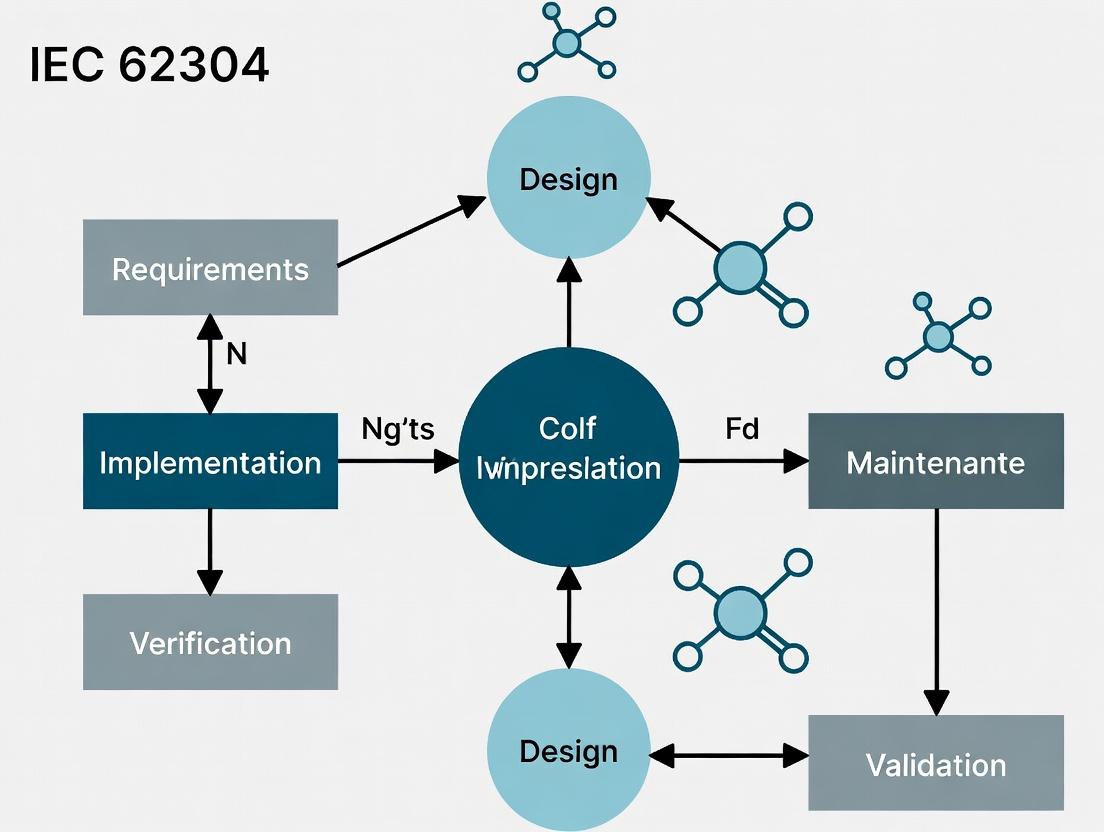
This comprehensive guide demystifies the IEC 62304 standard for medical device software lifecycle processes, tailored for researchers, scientists, and drug development professionals.
IEC 62304 Mastery: A Complete Guide to Software Lifecycle Compliance for Medical Device Researchers
Abstract
This comprehensive guide demystifies the IEC 62304 standard for medical device software lifecycle processes, tailored for researchers, scientists, and drug development professionals. It explores the standard's foundational principles, methodological applications for integrating software development with biomedical research workflows, common implementation challenges and optimizations, and strategies for validating software as a medical device (SaMD) and AI/ML algorithms. The article provides actionable insights to ensure regulatory compliance, enhance research reproducibility, and accelerate the translation of software-driven innovations into safe and effective clinical solutions.
What is IEC 62304? Foundational Principles for Medical Device Software Safety
Core Purpose and Global Regulatory Significance of IEC 62304
IEC 62304, "Medical device software – Software life cycle processes," is an international standard that establishes a framework for the safe design, development, and maintenance of medical device software and software within medical devices. Its core purpose is to provide a set of life cycle processes with activities and tasks, which when followed, ensure the safety and reliability of software. This standard is foundational for complying with global regulatory requirements, including the EU Medical Device Regulation (MDR 2017/745), In Vitro Diagnostic Regulation (IVDR 2017/746), and the U.S. Food and Drug Administration's (FDA) quality system regulations. Within a research thesis, understanding IEC 62304 is critical for framing investigations into software validation, risk management integration, and lifecycle traceability in complex drug delivery systems and software as a medical device (SaMD).
Application Notes: Regulatory Significance and Implementation
Global Regulatory Mapping
IEC 62304 is harmonized by major regulatory bodies, meaning compliance with the standard presumes conformity with essential regulatory requirements for software.
Table 1: Global Regulatory Recognition of IEC 62304
| Regulatory Region | Governing Body | Reference in Guidance/Regulation | Key Implication |
|---|---|---|---|
| European Union | Notified Bodies (for MDR/IVDR) | Harmonized Standard (EN IEC 62304:2021) | Provides presumption of conformity with General Safety & Performance Requirements (GSPR) Annex I of MDR/IVDR. |
| United States | Food and Drug Administration (FDA) | Recognized Standard (Consensus Standard) | Accepted for meeting aspects of 21 CFR Part 820 (QSR) and software validation requirements. |
| Japan | Pharmaceuticals and Medical Devices Agency (PMDA) | Adopted as JIS T 2304:2012 | Integral to submissions for marketing approval of medical devices with software. |
| Canada | Health Canada | Recognized under Medical Devices Regulations (SOR/98-282) | Required for licensing of Class III and IV medical device software. |
| International | International Medical Device Regulators Forum (IMDRF) | Referenced in IMDRF SaMD documents | Forms the basis for risk categorization and lifecycle management of SaMD. |
Software Safety Classification and Process Application
A cornerstone of IEC 62304 is its risk-based approach, mandating different rigor levels based on the potential of software to contribute to a hazardous situation.
Table 2: IEC 62304 Software Safety Classification and Corresponding Requirements
| Safety Class | Definition | Key Mandatory Process Requirements (Examples) |
|---|---|---|
| Class A (No Injury) | No possibility of injury to people or damage to health. | Basic life cycle processes. Software risk management is not required, but system-level risk must be considered. |
| Class B (Non-Serious Injury) | Possibility of non-serious injury. | Full life cycle processes. Software risk management required. Verification, but not necessarily validation of the software architecture. |
| Class C (Death or Serious Injury) | Possibility of death or serious injury. | All requirements for Class B, plus: • Validation of software architecture. • Comprehensive software unit integration and verification. • Detailed problem and modification analysis processes. |
Diagram Title: IEC 62304 Safety Classification & Process Flow
Experimental Protocols for IEC 62304 Research
Protocol: Mapping Software Development Artifacts to IEC 62304 Processes
Objective: To empirically analyze a software development project's artifacts and demonstrate traceability to IEC 62304 clauses, assessing implementation completeness. Methodology:
- Project Selection: Select a completed or in-development medical device software project (e.g., a clinical decision support algorithm or infusion pump controller).
- Artifact Repository Creation: Establish a secure digital repository containing all project artifacts (version-controlled source code, requirements documents, design specs, test cases, risk management files, bug reports).
- IEC 62304 Clause Matrix: Create a spreadsheet matrix with rows for each key clause of IEC 62304 (e.g., 5.1 Development Planning, 5.3.2 Software Requirements Analysis, 5.5.2 Software Unit Implementation, 5.7.1 Software Integration Testing, 9.1 Problem Resolution).
- Artifact-to-Clause Linking: Two independent researchers systematically review each artifact. For each, they identify and document which IEC 62304 clause(s) it satisfies. Evidence is recorded in the matrix (e.g., hyperlink to document, citation of code module).
- Traceability Graph Generation: Using the matrix data, generate a directed graph showing bi-directional traceability from high-level requirements down to test cases and problem reports.
- Gap Analysis & Validation: Compare the mapped coverage against the mandatory requirements for the project's declared Software Safety Class. Discrepancies are noted as implementation gaps. A third researcher reviews a random sample (≥10%) of linkages for validation.
Protocol: Evaluating the Efficacy of Software Risk Control Measures
Objective: To test and quantify the effectiveness of specific software risk control measures (e.g., safety checks, redundancy, partitioning) mandated by an IEC 62304-compliant risk management process. Methodology:
- Risk Control Identification: From a project's Software Risk Management File, select three implemented risk control measures related to software design or implementation.
- Fault Injection Test Design: For each control, design a suite of fault injection tests. Examples:
- For a range-checking safety control: Inject out-of-bounds values at the input API.
- For a watchdog timer control: Simulate a thread hang or infinite loop.
- For a redundant calculation check: Corrupt the memory of the primary calculation thread.
- Test Environment: Implement tests in a controlled, non-production environment (e.g., hardware-in-the-loop simulator, software test harness).
- Quantitative Measurement: Execute each fault injection 1000 times. Record:
- Number of times the risk control successfully mitigated the fault and prevented a failure (Fail-Safe).
- Number of times a failure occurred despite the control (Fail-Open).
- System response time from fault injection to control activation.
- Any unintended side-effects (e.g., performance degradation, false positives).
- Statistical Analysis: Calculate the effectiveness rate (Fail-Safe / Total Injections) for each control. Compare the reliability and performance metrics against pre-defined acceptance criteria derived from the system safety requirements.
Diagram Title: Protocol for Testing Software Risk Control Efficacy
The Scientist's Toolkit: Research Reagent Solutions
Table 3: Essential Research Tools for IEC 62304-Centric Studies
| Tool/Reagent Category | Specific Example | Function in Research Context |
|---|---|---|
| Static Code Analysis | Klocwork, Coverity, SonarQube | Automates code review against safety & security rules (MISRA C, CERT C), directly supporting IEC 62304 verification activities and defect detection. |
| Model-Based Design & Verification | MathWorks Simulink with Embedded Coder, ANSYS SCADE | Enables formal specification, simulation, and automatic code generation from models, facilitating requirements traceability and architectural verification mandated for Class B/C. |
| Requirements & ALM Platform | Siemens Polarion, Jama Connect, IBM DOORS | Provides a centralized system for managing user/software requirements, linking them to design elements, test cases, and risks, essential for Clause 5.2 & 9.4 traceability. |
| Unit Test Framework | CppUTest, Google Test, VectorCAST | Creates and executes repeatable unit tests for software modules, providing objective evidence for software unit verification (Clause 5.5.3). |
| Fault Injection & Dynamic Analysis | LDRA TestBed, Parasoft C/C++test, TRACE32 | Injects faults and monitors system behavior in real-time, crucial for experimental protocols evaluating software risk control robustness and integration testing. |
| Medical Device Cybersecurity Test Suite | MedSec Lab in a Box, Burp Suite, Wireshark | Provides specialized tools and vulnerability databases for testing security controls, addressing the integral cybersecurity aspects of modern IEC 62304 implementations. |
| Reference Regulatory Database | FDA Guidance Database, EUDAMED (when fully operational), IMDRF Document Library | Provides access to current regulations, guidances, and harmonized standards necessary for contextualizing IEC 62304 within the global landscape. |
Application Notes
The development and regulatory governance of medical software are defined by two key concepts: Software as a Medical Device (SaMD) and Software in a Medical Device (SiMD). These definitions, along with a risk-based safety classification system (Classes A, B, C), form the cornerstone of standards like IEC 62304, which governs the software lifecycle process for medical devices.
- SaMD: Software intended to be used for one or more medical purposes without being part of a hardware medical device. It runs on general-purpose computing platforms. Examples include software that analyzes medical images for tumor detection, mobile apps for insulin dose calculation, or AI algorithms for diagnostic support.
- SiMD: Software that is an integral part of a hardware medical device, necessary for that device to perform its intended medical function. It is embedded within the device. Examples include the control software for an infusion pump, the image processing software inside an MRI scanner, or the firmware in a pacemaker.
- Safety Classification (per IEC 62304): This classification determines the rigor of the software development lifecycle processes required. It is based on the potential risk of injury to patients, operators, or others from a software failure.
- Class A (Lowest Safety): No injury or damage to health is possible.
- Class B (Moderate Safety): Non-serious injury is possible.
- Class C (Highest Safety): Death or serious injury is possible.
Table 1: Comparison of SaMD vs. SiMD Core Characteristics
| Characteristic | Software as a Medical Device (SaMD) | Software in a Medical Device (SiMD) |
|---|---|---|
| Physical Integration | Independent; runs on general-purpose hardware | Embedded within a specific hardware medical device |
| Primary Function | Performs the medical function itself | Enables the hardware to perform its medical function |
| Example Platform | Cloud server, smartphone, desktop PC | Microcontroller, FPGA, specialized computer within medical hardware |
| Regulatory Example | Standalone AI diagnostic software | Radiation control software for a linear accelerator |
Table 2: IEC 62304 Safety Classification and Corresponding Process Requirements
| Class | Potential Harm from Software Failure | Mandatory Lifecycle Processes (Examples) |
|---|---|---|
| A | None | Software Development Plan, Configuration Management, Problem Resolution |
| B | Non-Serious Injury | All Class A processes, plus Software Requirements Analysis, Software Architectural Design, Software Verification, Risk Management |
| C | Death or Serious Injury | All Class B processes, plus Software Unit Implementation & Verification, Software Integration & Integration Testing, System Testing |
Experimental Protocols
The following protocols outline methodologies for key activities within the IEC 62304 software lifecycle, framed as experimental or validation procedures for researchers.
Protocol 1: Hazard Analysis and Risk Assessment for Software Safety Classification
Objective: To systematically identify potential software-related hazards, estimate the associated risk, and determine the preliminary IEC 62304 safety class. Materials: System specifications, intended use statement, known hazard databases (e.g., FDA MAUDE), risk management tool/worksheet. Procedure:
- Define Intended Use: Document the software's medical purpose, user population, and operating environment.
- Architectural Decomposition: Break down the software system into major functional components.
- Hazard Identification: For each component, brainstorm potential failure modes using techniques like FMEA (Failure Modes and Effects Analysis). Consider failures in data processing, control logic, user interface, and cybersecurity.
- Hazardous Situation & Harm Formulation: For each failure, describe the resulting hazardous situation and the plausible severity of harm to the patient or operator using the severity scales from ISO 14971.
- Preliminary Classification: Assign an IEC 62304 class based on the highest severity of harm identified: Class A (No Injury), Class B (Non-Serious Injury), Class C (Death/Serious Injury). Document rationale.
- Risk Control Planning: For risks deemed unacceptable, define software safety requirements (e.g., alarms, redundancy, range checks) to mitigate the risk.
Protocol 2: Verification Testing for a Class B/C Software Module
Objective: To provide objective evidence that a software unit or integration item meets its specified requirements. Materials: Software Requirements Specification (SRS), Software Design Description (SDD), unit/integration test plan, test environment (simulator, hardware-in-the-loop), test management software. Procedure:
- Test Case Derivation: Trace each software requirement to one or more test cases. For structural testing (for Class C), ensure Modified Condition/Decision Coverage (MC/DC) is achievable.
- Test Environment Setup: Configure the test platform to replicate the target environment as closely as possible. Include fault injection mechanisms.
- Execution: Run each test case, providing both normal and abnormal input data. Record all outputs, including pass/fail status, timestamps, and system state.
- Traceability & Reporting: Link test results back to the originating requirements. Generate a test report summarizing coverage (requirements-based and structural), defects found, and overall compliance.
Protocol 3: Validation of a SaMD Clinical Decision Support Algorithm
Objective: To demonstrate through laboratory and clinical data that the SaMD performs effectively and safely for its intended use. Materials: Retrospective clinical dataset (gold standard annotated), independent test dataset, algorithm executable, statistical analysis software. Procedure:
- Performance Metrics Definition: Select appropriate metrics (e.g., Sensitivity, Specificity, PPV, NPV, AUC-ROC for diagnostic SaMD).
- Independent Test Set Validation: Execute the algorithm on a completely held-out dataset not used during training/tuning. Compare outputs against the gold standard.
- Statistical Analysis: Calculate performance metrics with confidence intervals. Conduct analysis in subpopulations to identify bias or performance variation.
- Clinical Usability Assessment: In a simulated or real-use environment, assess human factors—how users interpret and act upon the software's output.
- Evidence Compilation: Aggregate all data into a validation report providing scientific evidence of safety, effectiveness, and clinical benefit.
Diagrams
Software Risk Assessment & Classification Workflow
SaMD vs SiMD Conceptual Relationship
The Scientist's Toolkit: Research Reagent Solutions for Medical Software Validation
Table 3: Essential Materials for SaMD/SiMD Development & Validation Research
| Item / Solution | Function in Research Context |
|---|---|
| Requirements Management Tool (e.g., JAMA, DOORS) | Traces high-level user needs to detailed software requirements, ensuring test coverage and regulatory compliance. |
| Model-Based Design Environment (e.g., MATLAB Simulink) | Allows for algorithm design, simulation, and automatic code generation, facilitating early verification. |
| Static Code Analysis Tool (e.g., Klocwork, Coverity) | Automatically analyzes source code for security vulnerabilities, coding standard violations, and runtime defects. |
| Unit Testing Framework (e.g., CppUTest, Google Test) | Provides a structure for writing and executing repeatable unit tests, essential for Class B/C software verification. |
| Hardware-in-the-Loop (HIL) Simulator | A test platform where the real software runs on target hardware connected to a simulated environment, enabling high-fidelity integration testing. |
| Annotated Clinical Reference Datasets | Datasets with verified "ground truth" labels, used as the gold standard for training and validating AI/ML-based SaMD algorithms. |
| Cybersecurity Testing Suite (e.g., OWASP ZAP, Nessus) | Tools to probe software for vulnerabilities like injection flaws, insecure APIs, and susceptibility to malware. |
| Traceability Matrix (Manual or Automated) | A document/software table linking requirements, design elements, code, tests, and defects, required for audit and certification. |
Application Notes and Protocols (Framed within IEC 62304 for Medical Device Software Research)
1. Introduction and Context This document details the structured application of the Software Development Lifecycle (SDLC) as mandated by international standard IEC 62304, "Medical device software – Software life cycle processes." Within the broader thesis context of medical device software research, the SDLC is not a guideline but a regulatory requirement. It ensures that software used in drug development, diagnostic tools, and therapeutic devices is developed, validated, and maintained with rigorous attention to risk management, traceability, and patient safety from initial planning through to final retirement.
2. SDLC Phases: Quantitative Data and Mandates The following table summarizes the core SDLC phases as defined by IEC 62304, their primary outputs, and associated risk management activities. The standard classifies software into safety classes (A: No injury or damage; B: Non-serious injury; C: Death or serious injury), which dictate the rigor of activities required.
Table 1: SDLC Phases per IEC 62304 Mandate
| SDLC Phase | IEC 62304 Process | Key Outputs/Deliverables | Risk Management Integration |
|---|---|---|---|
| Planning | Software Development Planning | Software Development Plan, Software Safety Classification (A/B/C), Risk Management Strategy | Initiation of software risk management process. |
| Requirements Analysis | Software Requirements Analysis | Software Requirements Specification (SRS) | Identification of risk control measures in software requirements. |
| Architectural Design | Software Architectural Design | Software Architectural Design Specification | Risk control measures integrated into architecture; segregation of safety-critical elements. |
| Detailed Design | Software Unit Design & Implementation | Detailed Design Specifications, Source Code, Unit Verification Protocols/Reports | Implementation of risk controls at unit level. |
| Verification & Testing | Software Integration & Testing, Software System Testing | Integration Test Protocols/Reports, System Test Protocols/Reports, Traceability Matrix | Verification of risk control measures' effectiveness. |
| Validation | Software Release | Validation Protocol/Report (in intended use environment), Release Documentation | Confirmation software meets user needs and intended uses. |
| Maintenance & Retirement | Problem Resolution, Software Modification, Software Retirement | Change Requests, Maintenance Logs, Retirement Plan | Ongoing post-market surveillance, analysis of software anomalies, controlled decommissioning. |
3. Experimental Protocol: Verification Testing for a Class B Software Item This protocol outlines a detailed methodology for integration testing, a critical verification activity under the SDLC for a software item classified as Class B.
- Objective: To verify the correct interaction and data flow between the 'Data Acquisition Module' and the 'Signal Analysis Algorithm' of a medical device software application.
- Materials (Research Reagent Solutions & Essential Tools):
Table 2: Research Toolkit for Software Verification
Item Function Requirements Traceability Matrix (RTM) Links test cases to specific software requirements and architectural elements. Ensures complete coverage. Simulated Data Generator (SDG) Produces synthetic, physiologically plausible input data with known characteristics (e.g., known arrhythmia patterns in ECG signals) to test algorithm responses. Test Harness Framework Isolated environment to execute the integrated modules with controlled inputs and capture outputs without hardware dependencies. Static Code Analyzer Automated tool to detect coding standard violations, potential security flaws, and complexity issues in the source code prior to dynamic testing. Issue Tracking System Database for logging, classifying, and managing all defects found during testing through to resolution (e.g., Jira, Bugzilla). - Procedure:
- Test Case Design: Derive test cases from the Software Requirements Specification and Architectural Design. Include normal, boundary, and invalid input scenarios. Map each case to the RTM.
- Environment Setup: Deploy the integrated 'Data Acquisition Module' and 'Signal Analysis Algorithm' in the designated test harness. Configure the SDG.
- Execution: For each test case: a. Input the predefined data set from the SDG. b. Execute the integrated software. c. Record the output from the Signal Analysis Algorithm and all system logs.
- Data Acquisition: Capture the output data (e.g., analysis results, event flags, error messages) and system performance metrics (e.g., memory usage, processing time).
- Analysis: Compare actual outputs against expected outputs defined in the test case. Evaluate performance against specification limits.
- Reporting: Document all results in the Integration Test Report. Log any discrepancies as defects in the Issue Tracking System. Update the RTM with pass/fail status.
- Statistical Analysis: For quantitative performance requirements (e.g., "algorithm detection sensitivity > 95%"), calculate point estimates and confidence intervals from repeated test runs with randomized input datasets to demonstrate statistical significance.
4. Visualizations of Key SDLC Relationships and Workflows
Application Notes: Integration within the IEC 62304 Software Lifecycle
The development of medical device software per IEC 62304 does not occur in isolation. It operates within a framework of interconnected quality management, risk management, and regulatory requirements. This integration is critical for comprehensive compliance and patient safety.
ISO 13485: Quality Management System (QMS) Foundation IEC 62304 is an application-specific standard that operates under the umbrella of an ISO 13485-compliant QMS. ISO 13485 provides the procedural infrastructure—document control, record management, management responsibility, corrective and preventive action (CAPA)—within which the specific software lifecycle processes of IEC 62304 are executed. The software development plan, required by IEC 62304 clause 5.1, is a QMS document controlled per ISO 13485.
ISO 14971: Risk Management Integration Risk management is the connective tissue between these standards. IEC 62304 mandates the application of risk management to software, explicitly referencing ISO 14971. Software risk analysis (clause 7 of IEC 62304) feeds into the overall device risk management file. The software safety classification (A, B, C) directly drives the rigor of risk control activities throughout the software lifecycle.
FDA Guidance: Regulatory Interpretation For U.S. market access, FDA guidance documents (e.g., "Content of Premarket Submissions for Device Software Functions," "Software as a Medical Device (SaMD)") provide the agency's interpretation of regulatory expectations. They align closely with IEC 62304 principles but often add specific details on documentation for pre-market submissions. The FDA recognizes consensus standards like IEC 62304 through its recognition program, facilitating their use in demonstrating compliance.
Table 1: Mapping of Key Requirements Across Standards/Guidance
| IEC 62304 Clause / Activity | ISO 13485 Linkage | ISO 14971 Integration | FDA Guidance Expectation |
|---|---|---|---|
| 5.1 Software Development Plan | QMS Document Control (4.2.4, 4.2.5) | Informs risk management plan | Expected in Design Controls (820.30) |
| 5.3 Software Requirements Analysis | Design and Development Inputs (7.3.3) | Hazardous situations inform safety requirements | Traceable to risk analysis; detailed in premarket submission |
| 6 Software Architectural Design | Design and Development Planning (7.3.2) | Implementation of risk control measures in architecture | Architecture diagram showing segregation |
| 7 Software Risk Management | Risk Management (7.1) | Direct application of ISO 14971 process | Comprehensive software risk management file |
| 8.1 Software Unit Implementation | Design and Development Outputs (7.3.5) | Verification of risk control measures at unit level | Verification records and results |
| 9.1 Software Integration Testing | Monitoring and Measurement (8.2.4) | Validation of risk control measures at system level | Integration test protocols/results |
| 10. Software Release | Release of Product (8.2.6, 8.3.4) | Confirm residual risk is acceptable | Configuration management and version control |
Experimental Protocols: Validating Integrated Compliance
The following protocols outline methodologies for conducting key research experiments that validate the effectiveness of an integrated standards approach within a medical device software development context.
Protocol 1: Assessing the Impact of Software Safety Classification on Verification Effort
Objective: To quantitatively measure how the software safety classification (per IEC 62304) influences the time and resources allocated to verification activities, within a QMS (ISO 13485) and under risk controls (ISO 14971).
Materials:
- Historical project data from at least 10 completed medical device software projects (Classes A, B, and C).
- QMS records (ISO 13485): Design history files, verification reports, audit reports.
- Risk Management Files (ISO 14971): Risk analysis documents, risk control verification records.
- Project management tools with logged effort data.
Methodology:
- Categorization: Group projects by their IEC 62304 software safety class (A, B, C).
- Data Extraction: For each project, extract the following quantitative metrics:
- Total project person-hours.
- Person-hours dedicated to software verification activities (unit, integration, system testing).
- Number of verification test cases executed.
- Number of defects found during verification.
- Traceability matrix completeness score (% of requirements linked to tests and risk controls).
- Normalization: Normalize verification hours and test case counts against the total size of the software (e.g., per Function Point or thousand lines of code (KLOC)) to allow cross-project comparison.
- Statistical Analysis: Perform ANOVA or t-test analysis to determine if significant differences (p < 0.05) exist in normalized verification effort, test case density, and defect density among the three safety classes.
- Correlation with Risk: Correlate the verification effort metrics with the severity of residual risks documented in the final Risk Management Report (ISO 14971) for each project.
Table 2: Example Data Collection Table for Protocol 1
| Project ID | Safety Class | Size (KLOC) | Total Project Hours | Verification Hours | Verification Hours/KLOC | Test Cases/KLOC | Major Defects Found | Residual Risk Level |
|---|---|---|---|---|---|---|---|---|
| PRJ-001 | A | 12.5 | 850 | 180 | 14.4 | 45 | 2 | Low |
| PRJ-002 | B | 45.0 | 3200 | 1250 | 27.8 | 112 | 8 | Medium |
| PRJ-003 | C | 28.7 | 4100 | 2200 | 76.7 | 285 | 15 | Medium-Low |
Protocol 2: Evaluating Traceability Efficacy in FDA Audit Readiness
Objective: To experimentally evaluate the effectiveness of different tool-supported traceability models (linking requirements, risk controls, code, and tests) in facilitating successful audit simulations based on FDA guidance and ISO 13485 requirements.
Materials:
- Two comparable software modules (e.g., alarm management, data calculation) of similar complexity.
- Two traceability tools: a basic spreadsheet-based matrix and an integrated application lifecycle management (ALM) tool.
- Audit checklist derived from FDA Design Control guidance (820.30) and ISO 13485:2016 Clause 7.3.
- A panel of 3 independent auditors familiar with regulatory standards.
Methodology:
- Setup: Develop both software modules using the same technical specifications. For Module X, establish traceability using the basic spreadsheet. For Module Y, use the integrated ALM tool with automated links.
- Audit Simulation: Provide auditors with the audit checklist and the design history file for one module at a time, in a randomized, blinded fashion.
- Task Execution: Auditors are asked to perform specific, time-bound tasks:
- Task 1: Trace a specific software requirement back to its system-level requirement and forward to its verification test.
- Task 2: Identify all risk controls (from ISO 14971 analysis) implemented for a given hazardous situation and find their corresponding verification evidence.
- Task 3: For a code change (simulated change request), identify all requirements, tests, and risk controls that would need re-evaluation.
- Data Collection: Record for each task and module: (a) Time to complete task (minutes), (b) Accuracy of the outcome (% correct), (c) Auditor confidence score (1-5 Likert scale).
- Analysis: Compare the mean completion time, accuracy, and confidence scores between Module X and Module Y using paired t-tests. Qualitative feedback on traceability gaps is also collected.
Visualizations
IEC 62304 Integration with Key Standards & Guidance
Integrated Software Development & Risk Management Workflow
The Scientist's Toolkit: Research Reagent Solutions
Table 3: Essential Materials for Integrated Standards Research
| Item / Solution | Function in Research Context |
|---|---|
| Application Lifecycle Management (ALM) Software | Centralized platform for managing requirements (linked to risk), test cases, defects, and traceability matrices, enabling Protocol 2 experiments. |
| Static & Dynamic Code Analysis Tools | Research reagents for automating verification steps (IEC 62304 8.3/9.3). Used to quantify code quality metrics and defect density for Protocol 1. |
| Risk Management Database Tool | Specialized software to manage ISO 14971 processes (hazard analysis, FMEA, risk controls). Essential for establishing and analyzing risk-control links. |
| Electronic Document Management System (eDMS) | Core QMS (ISO 13485) infrastructure for controlled documents, approvals, and audit trails. Source of historical project data for Protocol 1. |
| Defect Tracking System | Repository for CAPA (ISO 13485 8.5) and software anomaly records (IEC 62304 7.6). Provides data for post-market surveillance and validation study metrics. |
| Project Management Software | Source of quantitative data on project effort, timelines, and resource allocation across different safety classes for Protocol 1. |
| Regulatory Audit Simulation Checklists | Derived from FDA Guidance (e.g., Software Validation) and ISO 13485 clauses. The primary measurement tool for Protocol 2 efficacy assessments. |
Why Researchers in Drug Development and Biomedicine Must Understand IEC 62304
The integration of sophisticated software into medical devices and digital health technologies is transforming drug development and biomedical research. For researchers, understanding IEC 62304—the international standard for medical device software lifecycle processes—is no longer an engineering concern but a critical research competency. This standard governs the development, maintenance, and risk management of software within medical devices, directly impacting the validity, regulatory acceptance, and safety of research tools and final products.
The Convergence of Research and Regulated Software
In modern labs, software is integral from discovery to clinical application. Key intersections include:
- High-Throughput Screening Systems: Software-controlled robotics and data analysis.
- Bioinformatics Pipelines: For genomics, proteomics, and biomarker discovery.
- Clinical Trial Management Systems & EDC Platforms.
- AI/ML Models for Drug Discovery and Diagnostic Imaging.
- Combination Products: Drug-device combinations like smart inhalers or auto-injectors.
Failure to consider IEC 62304 during the research phase can lead to irreproducible results, data integrity issues, and significant rework when transitioning to product development, delaying time-to-market.
Application Notes: Key IEC 62304 Concepts for Researchers
1. Software Safety Classification (Annex A): The standard classifies software based on its potential to create a hazard.
| Software Safety Class | Potential for Harm | Example in Research Context |
|---|---|---|
| Class A | No injury or damage to health is possible. | Software for managing non-critical lab inventory. |
| Class B | Non-serious injury is possible. | Software analyzing non-diagnostic research images. |
| Class C | Death or serious injury is possible. | Software controlling a dose in an investigational infusion pump, or AI algorithm for preliminary cancer detection in trial data. |
2. The Software Development Lifecycle (Clause 5): Mandates a structured, documented process. Research prototypes that ignore this become "throw-away" code, unusable for further development.
3. Risk Management Integration (Clause 7): Requires systematic hazard analysis. Researchers must consider how software failures (e.g., algorithm errors, data corruption) could impact experimental outcomes and patient safety.
Protocol: Integrating IEC 62304 Considerations into Pre-Clinical Software Development
Objective: To establish a reproducible and regulatory-aware methodology for developing research software intended for eventual use in a medical device context.
Materials & Reagent Solutions:
| Item | Function in Protocol |
|---|---|
| Version Control System (e.g., Git) | Tracks all changes to software code and documentation, ensuring traceability. |
| Issue Tracking System | Logs and manages software anomalies, features, and tasks (e.g., Jira). |
| Requirements Management Tool | Captures and links software requirements to design and test cases. |
| Static Code Analysis Tool | Automatically detects code quality and security issues. |
| Unit Testing Framework | Enables automated testing of individual software components. |
| Risk Management File Template | Documents foreseeable hazards and mitigations per ISO 14971. |
Experimental Workflow:
- Concept & Feasibility: Define intended use. Perform initial hazard assessment to assign a Preliminary Software Safety Class.
- Requirements Specification: Document functional and performance requirements with clarity and testability. Trace requirements to higher-level system (e.g., instrument) needs.
- Architectural Design: Decompose software into items. Identify all software-of-unknown-provenance (SOUP), such as open-source libraries. Assess and document risks associated with SOUP.
- Detailed Design & Implementation: Code using style guides. Conduct peer code reviews. Use static analysis tools.
- Verification Testing:
- Unit Test: Verify each software unit.
- Integration Test: Verify units interact correctly.
- System Test: Verify software meets all requirements.
- Problem Resolution: Log all defects from testing. Fix, retest, and document.
- Release: Configure and release software with version identification. Include all necessary documentation (e.g., build instructions, known limitations).
Diagram 1: IEC 62304-Aware Software Development Protocol
Quantitative Impact: The Cost of Ignoring Standards
Data from regulatory intelligence and industry surveys underscore the risk.
Table 1: Common Software-Related Deficiencies in Regulatory Submissions (e.g., FDA 483 Observations)
| Deficiency Area | Percentage of Software-Related Citations* | Implication for Researchers |
|---|---|---|
| Lack of/Inadequate Software Validation | ~45% | Research-grade code will not suffice for clinical trials or market approval. |
| Inadequate Design Controls / Requirements | ~30% | Poorly defined software function leads to failed reproducibility and verification. |
| Inadequate Risk Management | ~15% | Hazards from software failure modes not analyzed, compromising safety. |
| Inadequate Complaint/Problem Handling | ~10% | No process to address software bugs found during research use. |
Note: Approximate distribution based on historical FDA data.
Table 2: Project Timeline Impact of Late-Stage Remediation
| Stage When IEC 62304 is Adopted | Estimated Relative Time & Cost Impact |
|---|---|
| Initial Research & Prototyping | Baseline (1x). Minimal rework. |
| Pre-clinical Validation Phase | 1.5x - 2x due to requirement reconstruction and refactoring. |
| During Clinical Trials | 3x - 5x. Major delays; may require repeating validation studies. |
| Post-Market (After Discovery of Issue) | 10x+. Recalls, clinical hold, reputational damage. |
Protocol: Hazard Analysis for a Research-Use AI Imaging Algorithm
Objective: To perform a simplified hazard analysis per IEC 62304/ISO 14971 on an AI algorithm developed to identify potential tumor regions in preclinical histology images.
Methodology:
- Define Use Case: Algorithm analyzes whole-slide images from treated vs. control animal models to quantify potential therapeutic effect.
- Identify Hazardous Situations:
- H1: False Negative (FN) - Algorithm misses a tumor region.
- H2: False Positive (FP) - Algorithm flags normal tissue as tumor.
- H3: Inconsistent Analysis - Output varies for the same input image.
- Estimate Severity & Probability: Assign levels (e.g., S1-S3, P1-P3).
- Determine Risk & Mitigations:
| Hazard | Severity | Prob. | Risk | Software Cause | Mitigation (Software Requirement) |
|---|---|---|---|---|---|
| H1: FN | Serious (S2) | Probable (P2) | High | Low sensitivity; poor training data. | The algorithm shall achieve a sensitivity >95% on hold-out test set. |
| H2: FP | Minor (S1) | Probable (P2) | Medium | Low specificity. | The algorithm shall achieve a specificity >90% on hold-out test set. |
| H3: Inconsistency | Minor (S1) | Remote (P1) | Low | Random seed not fixed; non-deterministic code. | The software shall produce bitwise-identical output for the same input when run on the same hardware. |
Diagram 2: AI Algorithm Hazards Analysis Flow
| Tool / Resource Category | Specific Examples | Function for the Researcher |
|---|---|---|
| Document & Version Control | Git, GitHub/GitLab, Docusaurus | Ensures reproducible software builds and tracks the evolution of algorithms and protocols. |
| Requirements Management | Jama Connect, DOORS, Polarion | Links research objectives to specific, testable software functions, creating an audit trail. |
| Issue & Defect Tracking | Jira, Bugzilla, GitHub Issues | Manages bugs and feature requests systematically during software validation. |
| Automated Testing Frameworks | Pytest (Python), JUnit (Java), CI/CD pipelines (Jenkins) | Automates verification of software components, ensuring ongoing functionality. |
| Code Quality & Analysis | SonarQube, Coverity, linters | Identifies security flaws, code smells, and compliance issues early in the research phase. |
For researchers in drug development and biomedicine, IEC 62304 provides an essential framework for building robust, reliable, and regulatory-ready software. By adopting its principles of lifecycle control, risk management, and traceability during early research, scientists can enhance the integrity of their data, smooth the path to clinical translation, and ultimately ensure that software-dependent medical innovations are both effective and safe for patients. Integrating this standard into the research mindset is a strategic imperative in the era of digital medicine.
Implementing IEC 62304: Methodologies for Integrating SDLC into Biomedical Research
Application Notes: Aligning Research Software with Medical Device Standards
Research software in drug development and medical research often forms the foundation for later regulated medical device software. Mapping agile, exploratory development to the structured processes of IEC 62304 is critical for transitioning from research to product. These notes provide a framework for this alignment.
Table 1: Mapping of Research Software Artifacts to IEC 62304 Deliverables
| IEC 62304 Process/Activity | Typical Research Artifact | Mapped Research-Grade Deliverable | Compliance Gap & Action |
|---|---|---|---|
| 5.1 Software Development Planning | Project plan in lab notebook or wiki. | Formalized Software Development Plan (SDP) outlining research phases. | Gap: Lack of defined lifecycle model. Action: Adopt a modified V-model with iterative research cycles. |
| 5.2 Software Requirements Analysis | Experimental protocol, algorithm description. | Structured Software Requirements Specification (SRS). | Gap: Informal, changing requirements. Action: Use version-controlled requirement documents linked to research aims. |
| 5.3 Software Architectural Design | Notebook sketches, commented code structure. | Preliminary Software Design Document (SDD). | Gap: No documented architecture. Action: Create module diagrams and data flow models. |
| 5.4 Software Unit Implementation | Research code (e.g., Python/R scripts, MATLAB). | Version-controlled source code with inline documentation. | Gap: Lack of coding standards. Action: Adopt a basic style guide and peer review. |
| 5.5 Software Unit Testing | Ad-hoc script execution to verify output. | Documented unit test cases and results. | Gap: No systematic testing. Action: Implement a test framework (e.g., pytest) for core algorithms. |
| 5.6 Software Integration Testing | Running a full analysis pipeline end-to-end. | Integration test protocol and report. | Gap: Uncontrolled integration. Action: Define and test interfaces between modules. |
| 5.7 Software System Testing | Validating results against a known dataset. | System test protocol against formal requirements. | Gap: Testing not traceable to requirements. Action: Create a traceability matrix from SRS to tests. |
| 7.1.2 Problem and Modification Analysis | Logging of bugs and algorithm improvements. | Formal problem report and change request. | Gap: Informal issue tracking. Action: Use an issue-tracking system to record all changes. |
| 8.2 Software Release | Sharing code via GitHub or internal server. | Controlled software release package with documentation. | Gap: Uncontrolled distribution. Action: Establish a release procedure with version numbering. |
Experimental Protocol: Verification of a Research Algorithm for IEC 62304 Compliance
Protocol Title: Systematic Verification of a Biomarker Analysis Algorithm. Objective: To generate documented evidence that a research-grade analysis algorithm meets its specified requirements, creating deliverables suitable for IEC 62304 processes.
1. Requirements Traceability Setup
- Materials: Requirement Management Tool (e.g., Jira, Doors, or a spreadsheet), version control system (e.g., Git).
- Procedure:
- Formalize the research goal into discrete, testable software requirements (e.g., "The algorithm shall normalize fluorescence intensities using a Z-score method").
- Enter each requirement into the management tool with a unique ID (e.g., REQ-001).
- In the version control repository, tag the code snapshot that implements these requirements.
2. Unit Testing Protocol
- Materials: Testing framework (e.g., pytest for Python), continuous integration server (e.g., Jenkins, GitHub Actions).
- Procedure:
- For each core function, write test cases that validate:
- Normal Operation: Expected output for typical input.
- Boundary Conditions: Input at edges of allowable range.
- Error Handling: Response to invalid input.
- Automate test execution via the CI server on every code commit.
- Record test results (pass/fail) and associate them with the corresponding requirement IDs.
- For each core function, write test cases that validate:
3. Integration Testing Protocol
- Materials: Test harness script, sample integrated dataset.
- Procedure:
- Define the interfaces between modules (e.g., data format passed from normalization module to statistical module).
- Create a test that executes the full pipeline from raw data input to result output.
- Verify the data integrity and format at each interface point using validation checks in the test harness.
4. System Testing & Performance Validation
- Materials: Gold-standard reference dataset with known outcomes, performance measurement tool (e.g., custom script for accuracy/sensitivity).
- Procedure:
- Execute the complete software system using the reference dataset.
- Compare outputs to known results, calculating predefined metrics (e.g., accuracy, precision, recall).
- Document all results, deviations, and the final verification statement linking back to the original research requirements.
Diagrams
Diagram 1: Research to IEC 62304 Process Mapping
Diagram 2: Verification Testing Workflow
The Scientist's Toolkit: Key Research Reagent Solutions
Table 2: Essential Tools for IEC 62304-Aligned Software Research
| Tool/Reagent | Function in Research Context | Role in IEC 62304 Mapping |
|---|---|---|
| Version Control System (e.g., Git) | Tracks code changes, enables collaboration, and preserves history. | Foundation for software configuration management and change control. |
| Issue/Task Tracker (e.g., Jira, GitHub Issues) | Logs bugs, features, and experimental tasks. | Formalizes problem and modification analysis (Clause 7.1.2). |
| Testing Framework (e.g., pytest, unittest) | Automates verification of code functions against expected results. | Generates objective evidence for unit and integration testing (Clause 5.5-5.6). |
| Continuous Integration (CI) Server | Automatically builds and tests code upon each change. | Enables ongoing verification and builds release artifacts (Clause 8.2). |
| Documentation Generator (e.g., Sphinx, Doxygen) | Creates API documentation from source code comments. | Supports creation of software design and user documentation. |
| Reference/Validation Dataset | A gold-standard dataset with known properties and outcomes. | Serves as the objective basis for system validation and acceptance testing. |
| Electronic Lab Notebook (ELN) | Records experimental protocols, parameters, and results. | Provides traceable records that feed into software requirements and test cases. |
Developing Software Development Plans (SDP) for Research Prototypes and Algorithms
Within the medical device software lifecycle per IEC 62304, a Software Development Plan (SDP) is a mandated deliverable that defines the tasks, activities, and resources required for development. For research prototypes and algorithms—which may evolve into medical device software functions—an SDP provides essential structure, traceability, and risk management, even in early research phases. This bridges the gap between exploratory research and regulated development.
Core Components of an SDP for Research Prototypes
A tailored SDP for a research algorithm must include specific elements.
Table 1: Essential SDP Components for Research Prototypes
| SDP Component | Description for Research Context | IEC 62304 Alignment |
|---|---|---|
| Purpose & Scope | Defines the prototype's objective, intended use context, and boundaries. Clarifies it is for research, not clinical use. | Section 5.1 |
| Software Development Lifecycle Model | Specifies an iterative model (e.g., Spiral, Agile sprints) suitable for research. | Section 5.2 |
| Software Requirements Analysis | Documents functional and performance requirements for the algorithm, including input/output specifications. | Section 5.3 |
| Software Architecture & Design | Describes high-level structure, data flow, and key algorithmic modules. | Sections 6.1 & 6.2 |
| Software Unit Implementation | Details coding standards, version control, and prototype implementation steps. | Section 7.1 |
| Software Verification & Validation | Plans for unit testing, integration testing, and performance evaluation against research benchmarks. | Sections 5.6, 5.7, 5.8 |
| Risk Management | Identifies potential hazards (e.g., algorithmic bias, data leakage) and mitigation strategies. | Integrated per ISO 14971 |
| Configuration Management | Tracks versions of the prototype, training data, and model parameters. | Section 5.9 |
| Problem Resolution | Process for tracking and addressing defects discovered during research validation. | Section 8 |
Protocol: Integrating Prototype Development within an IEC 62304 Framework
This protocol provides a step-by-step methodology for developing an SDP for a machine learning-based diagnostic algorithm prototype.
Protocol Title
Development and Preliminary Verification of a Research Algorithm SDP.
Objective
To create and execute a minimal SDP for a research algorithm that establishes traceable requirements, a verifiable architecture, and a risk-controlled development process aligned with IEC 62304 principles.
Detailed Methodology
Define Intended Use & Boundaries:
- Document the prototype's purpose (e.g., "to classify cell types in histology images using deep learning").
- Explicitly state the non-clinical, research-only context.
- Define the hardware/software environment.
Elicit and Document Software Requirements:
- Functional: "The algorithm shall accept TIFF image format."
- Performance: "The algorithm shall achieve >95% recall on the held-out validation set."
- Interface: "The prototype shall output a JSON file containing classification probabilities."
Conduct Preliminary Hazard Analysis:
- Brainstorm potential hazardous situations arising from software failure (e.g., misclassification due to poor image quality).
- Document foreseeable sequences that could lead to that hazard.
- Propose risk control measures (e.g., input data validation checks).
Design Software Architecture:
- Decompose the algorithm into logical units (e.g., data pre-processing module, neural network model, post-processing module).
- Specify data flow and control flow between units.
Implement with Configuration Management:
- Use a Git repository with a defined branch strategy.
- Tag code versions associated with specific experimental results.
- Document all third-party libraries and their versions.
Execute Verification Activities:
- Unit Testing: Verify individual functions (e.g., image normalization).
- Integration Testing: Verify data flows correctly between modules.
- Performance Validation: Evaluate the algorithm against a predefined test dataset using pre-specified metrics (see Table 2).
Data Analysis and Acceptance Criteria
Table 2: Example Algorithm Verification Metrics & Results
| Verification Activity | Metric | Target | Observed Result | Pass/Fail |
|---|---|---|---|---|
| Unit Test: Pre-processor | Output pixel range | [0, 1] | [0, 1] | Pass |
| Integration Test: Full Pipeline | Runtime per image | < 2 seconds | 1.3 ± 0.4 s | Pass |
| Performance Validation | Classification Accuracy | > 90% | 92.7% | Pass |
| Performance Validation | AUC-ROC | > 0.95 | 0.97 | Pass |
| Robustness Test | Accuracy with noisy input | > 85% | 88.2% | Pass |
The SDP is considered successfully implemented for the research phase if all predefined acceptance criteria (Targets) are met.
Visualizing the SDP Process within the Software Lifecycle
Title: SDP Workflow for Research Prototypes in Medical Device Context
Title: Example Research Algorithm Modular Architecture
The Scientist's Toolkit: Essential Reagents & Materials
Table 3: Key Research Reagent Solutions for Algorithm Development & Validation
| Item | Function in Protocol | Example/Note |
|---|---|---|
| Annotated Datasets | Serves as the ground truth for training and validating the algorithm. Quality directly impacts performance. | Public (e.g., TCIA) or proprietary histopathology image sets. |
| Data Versioning Tool (e.g., DVC) | Tracks versions of large datasets and ML models, ensuring reproducibility and configuration management. | Integrates with Git to link data to specific code versions. |
| Unit Testing Framework | Automates verification of individual software units (functions, classes) to ensure code correctness. | Pytest (Python), GoogleTest (C++), JUnit (Java). |
| Containerization Platform | Packages the algorithm, dependencies, and runtime into a single unit, ensuring consistent execution environments. | Docker, Singularity. |
| Continuous Integration (CI) Server | Automates building, testing, and reporting on code changes, enforcing SDP verification steps. | GitHub Actions, GitLab CI, Jenkins. |
| Algorithm Performance Benchmark Suite | A standardized set of metrics and tests to objectively evaluate algorithm performance against requirements. | Includes accuracy, precision/recall, AUC-ROC, inference speed, robustness tests. |
| Issue Tracking System | Manages problem resolution for defects found during verification, as required by the SDP. | Jira, GitHub Issues, GitLab Issues. |
Application Notes
Effective integration of risk management per IEC 62304 requires a systematic traceability model that links software failure modes to patient harm. This process bridges the abstract nature of software hazards with concrete biological system responses. The following notes detail a framework for establishing and validating these critical links within the medical device software lifecycle.
1. Foundational Traceability Model: The core principle is a bidirectional traceability matrix connecting Software Unit Hazards (e.g., incorrect algorithm output, timing fault) to System-Level Hazards, which are then mapped to specific Biological/Clinical Effects (e.g., arrhythmia, overdose, under-dosing). This mapping must be informed by biomedical knowledge of the target physiology and the device's clinical use case.
2. Quantitative Bridging Using Hazard Metrics: To move from qualitative risk analysis to quantitative assessment, software reliability metrics (e.g., Probability of Failure on Demand - PFD) must be integrated with clinical risk probabilities. This requires data from both software verification testing (fault injection, unit testing) and pre-clinical/clinical studies.
Table 1: Quantitative Risk Bridging Data Schema
| Data Layer | Metric | Source Method | Link to Next Layer |
|---|---|---|---|
| Software Hazard | PFD (e.g., 1x10⁻⁴), Fault Density | Unit/Integration Testing, Static Code Analysis | Informs severity/frequency of System Hazard. |
| System Hazard | Hazardous Situation Occurrence Rate | System Testing, Simulated Use Testing, Real-World Performance Data | Drives probability of subsequent Clinical Harm. |
| Clinical/Biological Effect | Probability of Harm per Hazardous Situation, Severity Score (I-IV) | Clinical Trials, Biological Pathway Models, Literature Meta-Analysis | Used to calculate overall Residual Risk. |
3. Role of Biological Pathway Analysis: For software affecting physiological parameters (e.g., infusion pump, cardiac stimulator), modeling the perturbed biological signaling pathways is essential. This allows for the prediction of cascade failures (e.g., how an incorrect insulin bolus triggers molecular pathways leading to hypoglycemic coma).
Experimental Protocols
Protocol 1: In Silico Hazard Propagation Analysis Objective: To simulate the propagation of a software-generated fault through a physiological model to predict clinical outcomes. Methodology:
- Model Development: Develop or license a computational model of the target physiological system (e.g., cardiovascular regulation, glucose-insulin dynamics).
- Fault Injection: Integrate the device control algorithm (Software Unit Under Test - SUUT) with the physiological model. Define fault injection points (e.g., corrupted sensor input value, algorithmic logic error).
- Simulation Runs: Execute Monte Carlo simulations (n≥1000) with randomized fault injection timing and parameters.
- Output Analysis: Record key biological variables (e.g., blood pressure, blood glucose) against safe thresholds. Calculate the probability of crossing into a hazardous physiological state.
- Validation: Correlate simulation outputs with existing in vitro or animal study data where available.
Protocol 2: Integrated Verification & Biological Validation Testing Objective: To empirically link software failure modes to cellular/biological responses using a hardware-in-the-loop (HIL) test bench. Methodology:
- HIL Setup: Configure a test bench with the device software running on target hardware (or emulator). Interface it with a bioreactor or cell culture system representing a biological endpoint (e.g., cardiomyocytes in a perfusion system for a pacemaker).
- Hazardous Scenario Execution: Deliberately trigger predefined software hazards (e.g., pacing pulse doublet, incorrect drug concentration calculation output).
- Biological Endpoint Monitoring: In real-time, monitor relevant biological response markers (e.g., cell electrophysiology via microelectrode array, cytokine release via inline sensors).
- Data Correlation: Synchronize software fault logs with biological response data streams. Establish a time-correlated causal link between the fault and the adverse biological event.
- Dose-Response Calibration: Vary the severity of the software fault (e.g., magnitude of error) to establish a dose-response relationship with the magnitude of the biological disruption.
Visualizations
Title: Software Hazard to Clinical Harm Traceability Path
Title: HIL Biological Validation Workflow
The Scientist's Toolkit
Table 2: Key Research Reagent Solutions for Integrated Risk Validation
| Item | Function in Research |
|---|---|
| Microelectrode Array (MEA) System | Enables real-time, label-free electrophysiological monitoring of cardiomyocyte or neuronal networks in response to software-triggered device stimuli (e.g., pacing anomalies). |
| Programmable Bio-Reactor with Inline Sensors | Provides a controlled ex vivo biological environment (e.g., for tissue samples). Inline pH, O₂, and metabolite sensors allow continuous feedback on physiological state changes induced by device faults. |
| High-Fidelity Physiological Simulation Software (e.g., OpenCOR, HumMod) | Computational platform for building in silico models of human physiology to simulate the downstream biological effects of software failure modes before empirical testing. |
| Hardware-in-the-Loop (HIL) Test Automation Framework | Software suite to automate fault injection into the device under test and synchronize its output/state logs with data from biological monitoring equipment. |
| Human Induced Pluripotent Stem Cell (iPSC)-Derived Cells | Provides a reproducible and human-relevant source of differentiated cells (cardiomyocytes, neurons, hepatocytes) for assessing biological impact in a controlled laboratory setting. |
| Multiplex Cytokine/Apoptosis Assay Kits | For quantifying a panel of biomarker proteins from cell culture supernatants or tissue lysates to assess inflammatory or cell death responses to hazardous device outputs. |
Application Notes
Within a research thesis for IEC 62304-compliant medical device software, traceability matrices are not merely a compliance artifact but a critical research tool. They formalize the translation of a scientific hypothesis into verified and validated code, ensuring that the final software's behavior is directly justified by the originating biomedical research. This is paramount for regulatory submission and for establishing the clinical validity of a Software as a Medical Device (SaMD).
The primary function is to create bi-directional links between artifacts across the software lifecycle. In the research context, this explicitly bridges the preclinical and developmental phases. A break in this chain represents a threat to the device's safety and effectiveness, as a code function may lack a scientific basis or a research finding may be inadequately implemented.
Key matrices include:
- Hypothesis-to-System Requirements Matrix: Links the research question (e.g., "Algorithm A derived from proteomic data can detect condition B with >90% specificity") to high-level software functions.
- System Requirements-to-Software Requirements Matrix: Decomposes system functions into detailed, verifiable software requirements.
- Software Requirements-to-Unit/Integration Test Matrix: Ensures each requirement is verified by specific test cases.
- Test-to-Risk Matrix: Links verification activities to specific risk control measures from the hazard analysis.
Quantitative analysis of traceability data reveals implementation gaps and testing coverage.
Table 1: Traceability Metrics Analysis
| Metric | Formula | Target Value | Observed Value in Case Study X | Interpretation |
|---|---|---|---|---|
| Forward Coverage | (Linked Downstream Items / Total Upstream Items) * 100 | 100% | 95% | 5% of research requirements had no corresponding system requirement. |
| Backward Coverage | (Linked Upstream Items / Total Downstream Items) * 100 | 100% | 98% | 2% of code units had no trace to a research requirement (potential gold plating). |
| Requirement Stability | (Changed/Added Req. / Total Req.) over last phase | <10% | 12% | Higher churn indicates immature research inputs impacting development. |
| Test Coverage | (Requirements with Linked Tests / Total Requirements) * 100 | 100% | 100% | All software requirements were verified. |
Experimental Protocols
Protocol 1: Establishing Hypothesis-to-Requirements Traceability
- Objective: To systematically derive and link software system requirements from a formally stated research hypothesis.
- Materials: Hypothesis statement document, Requirements Management Tool (e.g., JAMA Connect, Polarion), Traceability Matrix Template.
- Methodology:
- Deconstruct Hypothesis: Parse the primary research hypothesis into core causal/associative relationships (e.g., "Input I processed by Model M produces Output O with Performance P").
- Elicit Functional Requirements: For each relationship component, define a corresponding software function (e.g., "The software shall accept Input I in format F," "The software shall execute Model M version 2.1").
- Elicit Performance Requirements: Translate performance measures (P) into quantifiable software requirements (e.g., "The software shall achieve a specificity of ≥90% on Dataset D").
- Assign Unique Identifiers: Tag each hypothesis element (HYP-XX) and requirement (SYS-REQ-YY).
- Populate Matrix & Validate: Create links in the matrix. Validate with stakeholders that each requirement is necessary and sufficient to address the hypothesis.
- Data Analysis: Calculate Forward Coverage (Step 2). Gaps indicate insufficient requirement elicitation.
Protocol 2: Validating Code-to-Hypothesis Traceability via Analysis of Residual Risk
- Objective: To ensure that all code modules are traced to a research-backed requirement and that untraced code does not introduce unacceptable risk.
- Materials: Software Architecture Document, Source Code, Traceability Matrix, Hazard Analysis Report.
- Methodology:
- Code Module Inventory: List all code modules/units from the version-controlled repository for the build.
- Matrix Gap Analysis: Identify any modules not linked backward to a software requirement via the matrix. This is the "Untraced Code Set."
- Static Code Analysis: Execute static analysis tools on the Untraced Code Set to identify functions with potential safety-related outputs (e.g., data transformation, control signals).
- Hazard Linkage Review: For code with safety outputs, check linkage to hazard mitigations in the risk management file.
- Justification or Action: For untraced, safety-related code: either establish a new requirement (and trace to hypothesis) or justify its non-hypothesis-driven purpose (e.g., infrastructure). Remove unjustified code.
- Data Analysis: Calculate Backward Coverage (Step 2). Justify all outliers.
Visualizations
Diagram Title: Bi-Directional Traceability in IEC 62304 Research Lifecycle
Diagram Title: Detailed Traceability Linkage from Biomarker Research to Code
The Scientist's Toolkit: Research Reagent Solutions for Traceability
| Item/Category | Function in Traceability Experiment | Example Solution |
|---|---|---|
| Requirements Management Tool | Serves as the central digital repository for all requirements, links, and matrices. Enforces uniqueness, manages changes, and generates coverage reports. | JAMA Connect, Siemens Polarion, IBM DOORS Next. |
| Application Lifecycle Management | Integrates requirements, code repositories, test cases, and risks in a single platform, automating traceability link creation. | Jira with Medical Device add-ons (e.g., Cognizant), codeBeamer. |
| Static Code Analysis Tool | Identifies code structure, dependencies, and complexity to aid in mapping code modules to architectural elements for backward traceability. | SonarQube, Klocwork, Coverity. |
| Electronic Lab Notebook | Captures and versions the foundational research hypothesis, experimental data, and algorithm development, providing the source for initial requirements. | RSpace, LabArchives, eLABJournal. |
| Risk Management Database | Maintains the hazard analysis, linking identified software anomalies (from untraced code analysis) to potential harms and control measures. | RiskCloud, RELM, dedicated modules in ALM tools. |
| Validation Test Dataset | The gold-standard dataset, derived from original research, used to create test cases that validate the final software output against the hypothesis. | Curated, version-controlled clinical dataset with known ground truth. |
Practical Applications for AI/ML Model Development, Clinical Calculation Engines, and Data Analysis Tools
Application Notes
AI/ML Model Development for Medical Devices (IEC 62304 Context)
The development of AI/ML models as Software as a Medical Device (SaMD) requires strict adherence to the IEC 62304 lifecycle framework. Recent implementations focus on continuous learning models with locked algorithms for regulatory approval, utilizing development protocols that ensure traceability from requirements to verification.
Table 1: Quantitative Performance Metrics of Recent AI/ML Diagnostic Models (2023-2024)
| Model Application | Data Type | Sample Size (n) | Average Sensitivity | Average Specificity | AUC | Regulatory Status (FDA/CE) |
|---|---|---|---|---|---|---|
| Diabetic Retinopathy Detection | Fundus Images | 125,000 | 0.947 | 0.898 | 0.973 | FDA De Novo (Class II) |
| Stroke Detection (CT) | Medical Imaging (CT) | 82,450 | 0.921 | 0.934 | 0.962 | CE Mark (Class IIa) |
| Sepsis Early Warning | EHR Time-Series | 450,000 patient records | 0.883 | 0.912 | 0.945 | Under Review |
| Cardiac Arrhythmia (ECG) | Signal Data (ECG) | 64,300 | 0.989 | 0.992 | 0.995 | FDA 510(k) Cleared |
Clinical Calculation Engines for Decision Support
Clinical calculation engines embedded within medical devices compute scores (e.g., MELD, CHA₂DS₂-VASc) to support clinical decisions. Under IEC 62304, these engines are classified as Class C software due to their potential to inform serious decisions, mandating rigorous hazard analysis and comprehensive unit/integration testing.
Table 2: Validation Results for Deployed Clinical Calculation Engines
| Calculation Engine | Clinical Area | Validation Method | Test Dataset Size | Accuracy vs. Gold Standard | Mean Absolute Error (MAE) |
|---|---|---|---|---|---|
| eGFR (CKD-EPI 2021) | Nephrology | Prospective Cohort | 12,340 patients | 98.7% | 2.1 mL/min/1.73m² |
| NEWS2 (National Early Warning Score 2) | Critical Care | Multi-center Audit | 8,560 admissions | 99.2% | 0.3 points |
| HAS-BLED Bleeding Risk | Cardiology | Retrospective Validation | 22,100 records | 97.8% | N/A |
| SOFA Score | ICU | Real-time Simulation | 5,670 simulations | 99.5% | 0.4 points |
Data Analysis Tools for Drug Development
In drug development, AI-driven data analysis tools process high-dimensional omics data and clinical trial outcomes. When used to generate evidence for regulatory submission, the software development process aligns with IEC 62304's risk management principles, particularly for tools analyzing primary efficacy endpoints.
Table 3: Capabilities of Modern Data Analysis Platforms in Clinical Trials
| Platform/Tool | Primary Function | Typical Input Data Volume | Processing Speed Gain vs. Legacy | Primary Output |
|---|---|---|---|---|
| Genomic Variant Analysis Pipeline | NGS Data Analysis | 2-5 TB per 1000 genomes | 12x | Annotated Variant Call Format (VCF) |
| Longitudinal Clinical Data Analyzer | Mixed Models for Repeated Measures (MMRM) | 10-50 GB per Phase III trial | 8x | Treatment effect estimates, p-values |
| Biomarker Discovery Suite | Multiplex Immunoassay Analysis | 1-2 TB imaging/cytometry | 15x | Candidate biomarker panels |
| PK/PD Modeling Environment | Non-linear Mixed-Effects Modeling | <1 GB per study | 10x | Parameter estimates, visual predictive checks |
Experimental Protocols
Protocol: Development and Validation of a Locked AI/ML Algorithm per IEC 62304
Objective: To develop a diagnostic AI model following a locked algorithm paradigm suitable for regulatory submission as SaMD. Materials: Annotated clinical dataset (training/validation/test splits), cloud compute environment (HIPAA compliant), version control system (e.g., Git), requirements management tool. Procedure:
- Software Development Planning (IEC 62304 §5): Define intended use, classification (Class B/C), and development lifecycle model.
- Requirements Analysis (§5.3): Elicit and document software system and software item requirements, including input data specs, performance thresholds (e.g., sensitivity >0.90), and output format.
- Software Architecture Design (§5.4): Design modular architecture separating data pre-processing, model inference, and result post-processing.
- Model Development & Unit Verification (§5.5-5.6): a. Implement data preprocessing pipeline (normalization, augmentation). b. Train model (e.g., CNN, Transformer) on training set. c. Perform unit testing on individual components (e.g., gradient calculation, layer output). d. Validate on held-out validation set; tune hyperparameters.
- Integration and Integration Testing (§5.7): Integrate model into application framework. Test integrated system with synthetic and real data.
- Software System Testing (§5.8): Execute test plan on independent test set representing clinical population. Document all results against requirements.
- Performance Evaluation: Calculate confusion matrix, ROC-AUC, precision, recall on test set.
- Release (§6): Generate software deployment package, version documentation, and submit for regulatory review.
Protocol: Verification of a Clinical Calculation Engine
Objective: To verify the correctness and safety of a clinical calculation engine implementing a published score (e.g., CHA₂DS₂-VASc). Materials: Reference standard calculation tool (validated independently), comprehensive test dataset covering all edge cases, static code analysis tool, unit testing framework. Procedure:
- Requirement Traceability Matrix Creation: Link each clause of the clinical score's definition to a software requirement and a test case.
- Static Code Analysis: Analyze source code for safety, security, and compliance issues.
- Unit Test Development: For each calculation component (e.g., age points, condition checks), develop unit tests with known inputs/outputs.
- Boundary Value & Equivalence Partition Testing: Test with minimum, maximum, and typical input values for each field (e.g., age: 0, 65, 120).
- Reference Comparison: For
ntest cases (where n ≥ 1000), run engine and reference tool. Record and compare outputs. - Failure Mode Testing: Input invalid data (e.g., text into age field) and verify graceful error handling per specification.
- Report: Document all discrepancies. Achieve 100% requirement traceability and test pass rate prior to release.
Protocol: AI-Driven Biomarker Analysis from RNA-Seq Data
Objective: To identify differential gene expression signatures predictive of treatment response from RNA-Seq data in a clinical trial. Materials: RNA-Seq read files (FASTQ) from treated/control cohorts, high-performance computing cluster, bioinformatics pipelines (Nextflow/Snakemake), differential expression tools (DESeq2, edgeR), AI/ML libraries (scikit-learn, PyTorch). Procedure:
- Data Curation & Preprocessing: Quality control (FastQC), alignment (STAR), and gene count quantification (featureCounts). Document all software versions.
- Differential Expression Analysis: Using DESeq2, perform hypothesis testing for each gene. Apply multiple testing correction (Benjamini-Hochberg).
- Feature Engineering: Select top
nsignificant genes (p-adj < 0.05, log2FC > |1|). Create normalized expression matrix. - Predictive Model Training: Split data 70/30 into training and hold-out test sets. a. Train multiple classifier types (e.g., Random Forest, SVM, Neural Net) on training set using 5-fold cross-validation. b. Optimize hyperparameters via grid search. c. Select best-performing model based on cross-validation AUC.
- Model Evaluation: Apply final model to held-out test set. Generate ROC curve, precision-recall curve, and calculate performance metrics.
- Biological Interpretation: Perform pathway enrichment analysis (e.g., using GSEA) on the most important features from the model.
- Validation: Seek validation in an independent, publicly available cohort if possible.
Diagrams
IEC 62304 Software Lifecycle Flow
AI/ML Model Dev & Validation Workflow
Clinical Calc Engine Logic Pathway
The Scientist's Toolkit: Research Reagent Solutions
Table 4: Essential Tools for AI/ML Clinical Model Development
| Item | Category | Function | Example/Note |
|---|---|---|---|
| Annotated Clinical Datasets | Data | Training and validation of models; must be de-identified and IRB-approved. | MIMIC-IV, The Cancer Genome Atlas (TCGA), UK Biobank. |
| Version Control System | Software Engineering | Track changes to code, models, and datasets; essential for IEC 62304 traceability. | Git with platforms like GitLab or Azure Repos. |
| Containerization Platform | Deployment | Package software and dependencies into reproducible, isolated units. | Docker, Singularity. |
| MLOps Platform | Lifecycle Management | Orchestrate model training, deployment, monitoring, and retraining pipelines. | MLflow, Kubeflow, Weights & Biases. |
| Static Code Analyzer | Safety & Security | Identify code defects, security vulnerabilities, and compliance issues early. | SonarQube, Coverity. |
| Unit Testing Framework | Verification | Automate testing of individual software components to ensure correctness. | Pytest (Python), JUnit (Java). |
| Requirements Management Tool | Regulatory | Create, manage, and trace software requirements to design and test cases. | JAMA Connect, Polarion, Doors. |
| High-Performance Compute (HPC) | Infrastructure | Provide necessary computational power for training large models on big data. | Cloud (AWS, GCP, Azure) or on-premise GPU clusters. |
Beyond Compliance: Troubleshooting Common Pitfalls and Optimizing Your Software Process
Common Audit Findings and How to Avoid Them in a Research Setting
In the context of IEC 62304 for medical device software lifecycle research, audit findings often stem from inadequate translation of research practices into a compliant, traceable framework. This document outlines common findings, preventative protocols, and tools essential for research aligned with regulatory expectations.
Table 1: Common Audit Findings & Corrective Actions in IEC 62304 Research
| Audit Finding Category | Typical Non-Conformance Example | Risk | Preventative Action (Protocol) |
|---|---|---|---|
| Inadequate Requirements Traceability | Algorithm validation experiments cannot be linked to a specific software system requirement. | High | Implement a Requirements Traceability Matrix (RTM) protocol. |
| Insufficient Change Control | Modifications to a machine learning model training dataset are not documented or assessed for impact. | High | Establish a formal Change Request (CR) and Impact Assessment workflow. |
| Poor Validation & Verification (V&V) Documentation | Lack of documented test protocols, raw data, or pass/fail criteria for software unit testing. | High | Adopt a standardized V&V Documentation Template for all experiments. |
| Incomplete Risk Management | Failure to identify and document software-related hazards (e.g., data corruption) in research prototypes. | Medium | Integrate preliminary Hazard Analysis (pHA) into the research design phase. |
| Non-Conforming Material Control | Use of unvalidated or expired research reagents (e.g., biochemical kits) in generating software input data. | Medium | Implement a Research Reagent Management and Qualification Protocol. |
Detailed Application Notes and Protocols
Protocol 1: Establishing a Research Requirements Traceability Matrix (RTM)
Purpose: To ensure every software function tested in research can be traced back to a user need and forward to verification evidence.
- Define: For each research milestone, document software requirements in a controlled document (e.g.,
SRS_Research_v1.0). - Link: Create an RTM table linking: User Need > Software Requirement ID > Research Test/Experiment ID > Test Result/Data File Location.
- Maintain: Any change to a requirement must trigger an update to the RTM and a review of linked tests.
Protocol 2: Change Control for Research Software Models
Purpose: To manage modifications to algorithms, datasets, or parameters systematically.
- Request: All proposed changes require a Change Request Form detailing the change, reason, and proposed validation.
- Assess: The principal investigator assesses impact on software safety, existing V&V results, and timeline.
- Approve/Reject: Document the decision. If approved, update specifications and re-verify affected functions per Protocol 3.
- Record: File the CR form and all related data in the project's designated change log.
Protocol 3: Verification & Validation Documentation for Research Experiments
Purpose: To generate audit-ready evidence that software components meet specifications.
- Pre-experiment: For each test, complete a V&V Protocol Template including: Objective, Requirement ID, Pass/Fail Criteria (e.g., "Algorithm accuracy >99%"), Materials, and Method.
- Execution: Record all raw data, instrument outputs, and software logs. Annotate any deviations.
- Reporting: Generate a V&V Report summarizing results against the criteria. Clearly state pass/fail conclusion. Archive protocol, raw data, and report together.
Visualizations
Title: Research Traceability & V&V Workflow
Title: Research Software Change Control Process
The Scientist's Toolkit: Research Reagent Solutions
Table 2: Essential Materials for Software-V&V Supporting Experiments
| Reagent/Material | Function in IEC 62304 Context | Critical Control for Audit |
|---|---|---|
| Certified Reference Materials (CRM) | Provides "ground truth" data for validating algorithm output accuracy (e.g., imaging phantoms, synthetic biological data). | Certificate of Analysis must be documented; CRM ID logged in test records. |
| Standardized Validation Kits | Enables consistent generation of input data for software verification across multiple experiment runs (e.g., qPCR kits for diagnostic software). | Use within expiry date; follow qualified storage and handling protocols. |
| Data Simulators/Signal Generators | Generulates controlled, reproducible input signals to test software under known edge cases and failure modes. | Simulator version and configuration must be documented as part of the test setup. |
| Version-Controlled Software Libraries | Ensures the computational environment used for algorithm development and testing is stable and reproducible. | Library name, version, and source must be recorded in the software build/configuration record. |
| Electronic Lab Notebook (ELN) | Serves as the primary system for maintaining traceable, time-stamped records of research plans, data, and conclusions. | Must be validated for use in a regulated context (21 CFR Part 11 compliant if applicable). |
Managing Legacy Research Software and Third-Party Components (SOUP)
Within the framework of IEC 62304 for medical device software lifecycle management, Legacy Research Software and Software of Unknown Provenance (SOUP) present significant challenges. In a research and drug development context, these are often bespoke analytical tools, data processing scripts, or simulation environments that lack formal design controls, comprehensive documentation, or verifiable pedigree. Their integration is frequently essential for leveraging historical research data or specialized algorithms.
Key Application Notes:
- Risk Context: Under IEC 62304, all software components, including SOUP, must be subject to risk management. The use of legacy research software elevates risks related to data integrity, reproducibility, and patient safety if outputs inform device functionality or clinical decisions.
- Compliance Pathway: The standard does not prohibit SOUP but mandates that its inclusion be justified, its known anomalies documented, and its impact on system safety risk-controlled.
- Modernization vs. Containment: A critical decision is whether to refactor/replace the legacy component (applying current software engineering practices) or to contain it within a validated wrapper interface that manages inputs and outputs under controlled conditions.
Table 1: Prevalence and Impact of Issues in Legacy Research Code Bases (Representative Survey Data)
| Issue Category | Prevalence in Analyzed Code Bases (%) | Median Estimated Remediation Effort (Person-Weeks) |
|---|---|---|
| Undocumented Dependencies | 85% | 3.5 |
| Hard-Coded Parameters | 78% | 2.0 |
| Deprecated/Unsupported Libraries | 72% | 8.0 (if replacement needed) |
| Missing or Incomplete Version Control | 65% | N/A (Historical) |
| No Unit or Integration Tests | 91% | 10.0 (to implement baseline) |
| Non-Reproducible Environment Setup | 80% | 4.0 (to containerize) |
Experimental Protocol: Legacy Software Hazard Analysis & Classification
This protocol outlines a systematic method to evaluate legacy research software/SOUP for potential integration into an IEC 62304-compliant system.
Title: Protocol for Legacy Component Hazard Analysis and Safety Classification.
Objective: To identify software anomalies, assess their potential to cause hazardous situations, and assign a preliminary safety classification per IEC 62304 (A, B, or C).
Materials:
- Legacy software source code and binaries.
- All available historical documentation (lab notebooks, README files, comments).
- Runtime environment specification (OS, libraries).
- Hazard analysis template (e.g., spreadsheet).
- Static code analysis tool (e.g., SonarQube, Pylint).
- Containerization platform (e.g., Docker).
Methodology:
- Inventory & Documentation Recovery: List all files, inputs, outputs, and external calls. Use code analysis tools to reverse-engineer dependency graphs. Document every known assumption and constraint.
- Static Code Analysis: Execute automated tools to identify common vulnerabilities, deprecated functions, and coding rule violations. Prioritize findings related to input validation, memory management, and numerical stability.
- Controlled Environment Replication: Package the software and its exact dependencies into a container (e.g., Docker). Verify that the original runtime behavior is preserved using a suite of archived input-output test cases.
- Anomaly & Hazard Identification: In a cross-functional team review (research, software engineering, regulatory), map each identified anomaly (e.g., "crashes on null input," "uses deprecated random number generator") to potential hazardous situations in the intended use context. Use guidewords (e.g., "no output," "wrong output," "late output").
- Safety Classification: For each hazardous situation, estimate the severity of possible harm and the probability of occurrence. Use this risk assessment to assign a preliminary software safety class (A: No injury or damage; B: Non-serious injury; C: Death or serious injury) which will dictate subsequent verification and validation activities.
- Mitigation Planning: Define mitigations for each risk. Options include: creating a validated input/output sanitization wrapper; implementing runtime monitors; scheduling refactoring; or decommissioning the component.
Visualization: Legacy Software Management Workflow
Title: Legacy SOUP Assessment & Integration Workflow
The Scientist's Toolkit: Research Reagent Solutions for SOUP Management
Table 2: Essential Tools for Managing Legacy Research Software Components
| Tool / Reagent | Category | Function in SOUP Management |
|---|---|---|
| Docker / Podman | Containerization | Creates reproducible, isolated runtime environments for legacy software, encapsulating outdated OS and library dependencies. |
| SonarQube / Pylint | Static Code Analysis | Automates code quality and security scanning to identify vulnerabilities, bugs, and code smells in legacy source code. |
| Git | Version Control | Establishes a baseline version for the legacy code, enabling traceable changes during any remediation efforts. |
| Jupyter Notebooks | Documentation & Wrapping | Provides a framework to create executable documentation, wrapping legacy scripts with validated pre- and post-processing steps. |
| pytest / UnitTest | Testing Framework | Enables the creation of a regression test suite to verify critical functionality before and after any modifications. |
| Confluence / Docusaurus | Knowledge Management | Centralizes recovered and newly generated documentation, ensuring institutional knowledge retention. |
| Black / Autoformatters | Code Standardization | Safely reformats code to modern standards, improving readability for team reviews without altering logic. |
Balancing Agile Research Practices with Regulatory Documentation Needs
Application Notes
In the development of medical device software per IEC 62304, the Agile methodology’s iterative cycles (Sprints) can be effectively harmonized with regulatory documentation needs through a traceability-focused approach. The core challenge lies in maintaining continuous, verifiable alignment between evolving software artifacts and static regulatory submissions.
Table 1: Mapping Agile Artifacts to IEC 62304 Documentation Requirements
| Agile Artifact / Practice | Corresponding IEC 62304 Deliverable | Integration Strategy & Tools |
|---|---|---|
| Product Backlog | Software Requirements Specification (SRS) | Treated as the "single source of truth." Each user story must contain structured acceptance criteria that are verifiable and traceable. Maintain bidirectional traceability via ALM tools (e.g., Jira, Polarion). |
| Sprint Backlog & Task Development | Software Detailed Design, Unit Verification | Development tasks are linked to specific requirements. Code commits and pull requests reference requirement/defect IDs. Automated unit test results are archived as verification evidence. |
| Sprint Review / Demo | Integration Verification, Validation | Demo scenarios are scripted and executed in a controlled environment. Results are documented as preliminary verification records. Formal V&V uses a frozen baseline of the integrated software. |
| Definition of Done (DoD) | Software Configuration Management | The DoD includes mandatory activities: code review, static analysis, unit testing, and updating of traceability matrices. Only items meeting DoD are eligible for release to a regulated environment. |
| Backlog Refinement | Risk Management (per ISO 14971) | Hazard analysis and risk control measures are reviewed as part of refining backlog items. New user stories or changes trigger risk assessment updates. |
| Continuous Integration (CI) | Build and Release Management | CI pipeline is validated. Each build is versioned, and outputs are stored in a secure repository. Deployment to test environments is automated and logged. |
A critical protocol is the "Regulatory Sprint Handoff," conducted at the end of each sprint or release cycle. This is a formal, documented gate where Agile outputs are transformed into regulatory artifacts.
Protocol 1: Regulatory Sprint Handoff and Documentation Update
Objective: To systematically capture outputs from an Agile Sprint and update the regulated design history file (DHF) without impeding development velocity.
Materials:
- Approved Sprint Backlog Items (from Jira, Azure DevOps, etc.)
- Current versions of: SRS, Design Documents, Risk Management File, Traceability Matrix
- Configuration Management/Version Control System (e.g., Git)
- Application Lifecycle Management (ALM) tool with traceability features
- Electronic Document Management System (eDMS)
Methodology:
- Sprint Completion & DoD Verification: Ensure all completed user stories meet the expanded "Regulatory DoD," which includes:
- Code reviewed, statically analyzed, and unit tested.
- Integration tests passed in the CI environment.
- All associated defects resolved or documented.
- Traceability links from code to design to requirement are verified.
Evidence Collation (Automated): The CI/CD pipeline automatically generates and archives an evidence package for the sprint's software baseline (tagged version in Git). This includes:
- Build report with version identifier.
- Static analysis report (e.g., MISRA compliance).
- Unit and integration test execution logs and coverage reports.
- Release notes for the baseline.
Formal Documentation Update:
- SRS Update: For any new or modified requirements from the sprint, update the formal SRS in the eDMS. The ALM tool should generate a change summary for this purpose.
- Traceability Matrix Update: Export the updated traceability matrix (Requirement -> Design -> Code -> Test) from the ALM tool and archive it in the eDMS, linked to the software baseline.
- Design Description Update: Update software architectural and detailed design documents to reflect significant changes. This can be done incrementally, with change summaries appended.
- Risk Management File Update: Document the review of risk control measures for implemented features. Record any new hazards or modified risk estimates.
Review and Sign-off: The updated regulatory documents undergo a streamlined review by the designated regulatory/quality representative, focusing on the changes introduced in the sprint. Upon approval, the DHF is updated, and the software baseline is marked as "DHF-compliant."
Preparation for Subsequent Sprint: The Product Owner and team review the updated DHF state to inform the next backlog refinement session, ensuring continuity.
Diagram 1: Agile-Regulatory Integration Workflow
The Scientist's Toolkit: Key Research Reagent Solutions for Agile Medical Software Research
Table 2: Essential Tools for Agile IEC 62304 Compliance
| Item / Solution | Function in Agile-Regulatory Research Context |
|---|---|
| Application Lifecycle Management (ALM) Tool (e.g., Polarion, Codebeamer, Jira with Regulatory Plugins) | Centralized platform for managing requirements (SRS), user stories, tests, and defects. Enforces bidirectional traceability and provides audit trails, serving as the digital backbone for the DHF. |
| Validated CI/CD Pipeline (e.g., Jenkins, GitLab CI, Azure DevOps) | Automated build, test, and analysis environment. Its validation is crucial for regulatory acceptance of automatically generated verification evidence (test reports, static analysis). |
| Static Code Analysis Tool (e.g., SonarQube, Klocwork, Coverity) | "Research reagent" for code quality and security. Used continuously during development to detect defects early, supporting compliance with IEC 62304 coding standards and risk mitigation. |
| Electronic Document Management System (eDMS) (e.g., SharePoint, Documentum, QMS-specific solutions) | Governs the formal, approved versions of all regulatory documents (SRS, Design, Risk File). Integrations with ALM tools allow for controlled updates from sprint outputs. |
| Version Control System (VCS) (e.g., Git) | Manages all software code and related artifacts. Branching strategies (e.g., GitFlow) are adapted to manage features, releases, and hotfixes in a controlled manner, forming the basis for Software Configuration Management. |
| Test Management & Automation Framework (e.g., Robot Framework, Selenium, unit test frameworks) | Enables the creation, execution, and reporting of automated verification tests. Links test cases to requirements and ensures repeatable, evidence-based testing for each release. |
Diagram 2: Traceability Matrix Core Relationships
Optimizing Verification & Validation (V&V) for Complex Computational Models
Within the IEC 62304 medical device software lifecycle framework, complex computational models (e.g., physiologically based pharmacokinetic (PBPK) models, finite element analysis for implants, AI/ML diagnostics) present unique V&V challenges. This application note details protocols to ensure these models are verified (correctly implemented) and validated (fit for intended use) per regulatory expectations for drug development and medical device research.
The following table summarizes current industry data on V&V challenges and resource allocation for computational models in medical research.
Table 1: V&V Resource Allocation & Challenge Prevalence in Computational Modeling
| Metric Category | Reported Mean (%) | Reported Range (%) | Primary Source/Study Focus |
|---|---|---|---|
| Project Budget Allocated to V&V | 30-40% | 15-60% | Industry Surveys (AI/ML & PBPK Models) |
| Models with Inadequate Version Control | ~35% | 20-50% | Retrospective Audit of Research Publications |
| Validation Failures Linked to Input Uncertainty | ~50% | 40-65% | Analysis of Regulatory Submissions |
| V&V Documentation Gaps in Submissions | ~25% | 15-30% | FDA 510(k) & De Novo Submission Reviews |
| Use of Automated Verification Tools | ~45% (Increasing) | 30-70% | Benchmarking in Medical Device Software |
Application Notes & Detailed Protocols
Application Note 1: Protocol for Sensitivity Analysis as Validation Precursor
Objective: To quantify the influence of model input parameters on outputs, identifying critical variables for targeted validation. Workflow Diagram Title: Sensitivity Analysis Workflow for Model Validation
The Scientist's Toolkit: Research Reagent Solutions for Sensitivity Analysis
| Item / Solution | Function / Explanation |
|---|---|
| SALib (Python Library) | Open-source library implementing global sensitivity analysis methods (Sobol, Morris, FAST). |
| MATLAB Simulink R2023a+ | Toolbox for Sensitivity Analysis and Design of Experiments (DoE) for Simulink models. |
| UNCSAM / UNCSIM Suites | Software packages for uncertainty and sensitivity analysis of complex models. |
| High-Performance Computing (HPC) Cluster | Enables computationally intensive global sensitivity analysis via parallel processing. |
| Parameter Database (e.g., PK-Sim) | Curated, literature-derived physiological parameter ranges for PBPK models. |
Experimental Protocol:
- Model Definition: Fix the model structure and the output variable of interest (e.g., predicted drug AUC, stent fatigue cycle count).
- Parameter Listing: Enumerate all input parameters (e.g., rate constants, material properties, scaling factors).
- Range Assignment: Assign a physiologically or physically plausible range (min, max, distribution) to each parameter from literature or experimental data.
- Method Execution:
- Preliminary (Local): Vary one parameter at a time across its range while holding others at nominal values. Record output variation.
- Definitive (Global): Use a sampling-based method (e.g., Sobol sequence) to generate a multi-dimensional parameter space. Run the model for all sample sets.
- Index Calculation: Compute sensitivity indices (e.g., Sobol total-order indices) quantifying each parameter's contribution to output variance.
- Reporting: Generate a ranked list. Parameters with an index > a pre-defined threshold (e.g., >5% of total variance) are deemed "critical" and prioritized for experimental validation.
Application Note 2: Protocol for Credibility Assessment Using ASME V&V 40
Objective: To structure validation activities based on model risk and decision context, aligning with FDA-recognized consensus standards. Workflow Diagram Title: Model Credibility Assessment per ASME V&V 40
Experimental Protocol:
- Context of Use (COU): Write a precise statement defining the model's purpose, the decisions it will inform, and the applicable physiological/ physical conditions.
- Risk Categorization: Determine the Model Influence (how central the model is to the decision) and Decision Consequence (impact of an incorrect decision). Use a risk matrix to establish the required Credibility Level (e.g., Low, Medium, High).
- Factor Mapping: Identify which Credibility Factors (e.g., Conceptual Model Adequacy, Mathematical Rigor, Input Confidence, Validation Experimental Accuracy) are most relevant for the COU and risk level.
- V&V Plan Development: For each relevant factor, define specific, quantitative Acceptance Criteria and the corresponding V&V Activities (e.g., for "Validation Experimental Accuracy," specify that model predictions must fall within ±20% of in vitro data for 90% of data points).
- Evidence Generation & Assessment: Execute the planned verification tests (code review, unit testing) and validation experiments (comparison to independent data). Systematically compare results to acceptance criteria.
- Documentation: Compile all evidence, plans, and assessments in the Design History File (DHF), creating a clear audit trail per IEC 62304.
Key Experimental Validation Methodology:In Vitro-In VivoExtrapolation (IVIVE) for a PBPK Model
Protocol Title: Validation of a PBPK Model Using IVIVE and Clinical Pharmacokinetic Data.
Table 2: Key Experiment Summary - PBPK Model Validation
| Protocol Step | Primary Objective | Quantitative Measures | Acceptance Criteria (Example) |
|---|---|---|---|
| 1. In Vitro Assay | Measure intrinsic hepatic clearance (CLint) | CLint (µL/min/million cells) | Coefficient of Variation (CV) < 25% across replicates |
| 2. IVIVE Scaling | Predict human in vivo hepatic clearance | Predicted Human CLh (L/h) | Use well-established scaling factors (e.g., hepatocellularity) |
| 3. PBPK Simulation | Simulate human plasma concentration-time profile | Predicted Cmax, AUC, t1/2 | Visual predictive check (VPC) and population simulations |
| 4. Clinical Data Comparison | Compare simulation to observed human PK data | Fold error of Cmax and AUC; Visual inspection | Geometric mean fold error ≤ 2.0; Observed data within 90% prediction interval of simulation |
Detailed Methodology:
- In Vitro Clearance Assay: Incubate the drug at therapeutic concentrations with primary human hepatocytes (or relevant cellular system) over time. Collect samples and quantify parent drug depletion via LC-MS/MS. Calculate CLint using the in vitro half-life and incubation volume/cell count.
- IVIVE Scaling: Scale the in vitro CLint to whole-organ and ultimately whole-body human hepatic clearance (CLh) using scaling factors: Human CLh = CLint * (Liver Weight) * (Hepatocellularity) * (Microsomal/ Hepatocyte binding correction).
- PBPK Simulation: Input the predicted CLh and other drug-specific parameters (e.g., fu, B/P, permeability) into a whole-body PBPK software platform (e.g., GastroPlus, Simcyp). Simulate a virtual population (n≥100) matching the demographics of the clinical study.
- Validation Comparison: Import observed clinical pharmacokinetic data (e.g., from a Phase I study). Overlay the observed data with the simulated 5th, 50th, and 95th percentile prediction intervals from the virtual population. Calculate geometric mean fold error for primary PK metrics. The model is considered validated for this COU if observed data fall predominantly within the prediction intervals and fold-error criteria are met.
Tool Selection and Automation Strategies to Streamline Compliance Workflows
1. Introduction Within the IEC 62304 software lifecycle framework for medical devices, manual compliance workflows are a significant bottleneck. This document provides Application Notes and Protocols for selecting and implementing tools to automate key verification, validation, and documentation tasks, thereby enhancing audit readiness and reducing development cycle time.
2. Application Notes: Tool Landscape and Quantitative Comparison
2.1. Tool Category Analysis The following tools address critical gaps in the IEC 62304 lifecycle, particularly in software development (process 5), software verification (process 6), and problem resolution (process 7).
Table 1: Quantitative Comparison of Automation Tool Categories
| Tool Category | Primary IEC 62304 Support | Avg. Time Reduction (%) | Key Metric Improved |
|---|---|---|---|
| Requirements Mgmt. (RM) | 5.1, 5.2 | 30-40% | Traceability Completeness |
| ALM/PLM Platforms | All Processes | 25-35% | Audit Preparation Time |
| Static Code Analysis | 6.1, 6.2 | 20-30% | Defect Density (per KLOC) |
| Unit Test Automation | 6.1 | 40-60% | Code Coverage (%) |
| Automated Trace Matrix | 5.2, 6.1 | 50-70% | Gap Identification Speed |
| Electronic Document Mgmt. (EDMS) | 8.1, 8.2 | 15-25% | Document Review Cycles |
2.2. Protocol: Automated Traceability Matrix Generation and Gap Analysis
Objective: To automatically generate a complete traceability matrix from software requirements to design, implementation, and test cases, identifying coverage gaps in compliance with IEC 62304 Clause 5.2.
Materials & Reagents:
- Software Requirements: Stored in a structured tool (e.g., Jama Connect, Polarion).
- Design Artifacts: Architecture diagrams (SysML) and detailed design documents.
- Source Code Repository: Git-based repository (e.g., GitHub, GitLab) with enforced branch policies.
- Test Management System: Tool containing test cases and results (e.g., qTest, TestRail).
- Automation Script/Platform: Custom Python scripts utilizing REST APIs or integrated ALM tool (e.g., Jira with requirements and test plugins).
Procedure:
- Data Extraction: Using authenticated API calls, extract the following into structured data files (JSON preferred):
- All software requirement items (Unique ID, Text).
- All design item IDs linked to requirements.
- All source code commit hashes or file paths tagged with requirement/design IDs.
- All test case IDs and their linked requirement IDs.
- Matrix Construction: Execute the script
generate_trace_matrix.py. The script creates a relational database table withRequirement_IDas the primary key and columns forDesign_ID,Code_Commit_ID, andTest_Case_ID. - Gap Analysis Logic: The script performs a SQL query to flag:
- Requirements with no linked design item.
- Design items with no linked source code commit.
- Requirements with no linked, passing test case.
- Report Generation: The script outputs a visual matrix (HTML/PDF) with color-coding (Green=Complete, Red=Gap) and a summary report listing all gaps by IEC 62304 process area.
- Validation: Manually verify a 10% random sample of the generated links for accuracy. Confirm that the gap list corresponds with a manual review of a separate 5% sample of requirements.
3. Protocol: Integrated Static Analysis within the CI/CD Pipeline
Objective: To automate software verification activities (IEC 62304 6.1) by integrating static code analysis into every build, enforcing coding standards and detecting defects early.
Materials & Reagents:
- CI/CD Server: Jenkins, GitLab CI, or GitHub Actions.
- Static Analysis Tool: SonarQube, Klocwork, or Coverity.
- Source Code: Medical device software source code in a Git repository.
- Build Environment: Docker container with defined toolchain and analysis tool client.
Procedure:
- Pipeline Configuration: In the
gitlab-ci.ymlor Jenkinsfile, define a stagestatic_analysisafter thebuildstage. - Tool Execution: Configure the stage to:
- Launch the analysis tool scanner (e.g.,
sonar-scanner). - Point to the source code directory.
- Provide a project key and the URL of the analysis server.
- Use a quality gate profile pre-configured for medical device software (MISRA C/C++, CERT C++, etc.).
- Launch the analysis tool scanner (e.g.,
- Quality Gate Enforcement: Configure the pipeline to fail if the analysis returns:
- Any Critical or Blocker severity vulnerabilities.
- New Major severity code smells.
- Unit test coverage below a predefined threshold (e.g., 80% for Safety Class B software).
- Results Archiving: The analysis report (in PDF/HTML format) is automatically attached to the CI build job as an artifact. All findings are logged in the central analysis server database with trend analysis.
- Problem Resolution Initiation: Any pipeline failure due to quality gate violation automatically creates a ticket in the linked problem resolution system (e.g., Jira), tagged with
IEC_62304_6.1and the relevant software component.
4. Visualizations
Diagram 1: Automated IEC 62304 Tool Integration Workflow
Diagram 2: Protocol for Automated Traceability & Gap Analysis
5. The Scientist's Toolkit: Key Research Reagent Solutions
Table 2: Essential Tools and Materials for Compliance Workflow Automation
| Item | Function in the Experimental/Development Context |
|---|---|
| Integrated ALM Platform (e.g., Polarion, Jama) | Serves as the single source of truth for requirements, risks, tests, and traces, automating document generation for audits. |
| Static Analysis Tool (e.g., SonarQube, Klocwork) | The "chemical probe" for code quality; automatically detects security flaws, bugs, and compliance deviations against coding standards. |
| Unit Test Framework (e.g., Google Test, CppUTest) | Provides the "assay" for verifying individual software units. Automated execution validates functionality after each code change. |
| CI/CD Orchestrator (e.g., GitLab CI, Jenkins) | The "robotic lab automation" system; automatically sequences and executes build, analysis, test, and reporting steps. |
| Electronic Signatures (21 CFR Part 11 Compliant EDMS) | The "lab notebook" authentication system; ensures integrity, confidentiality, and legal enforceability of all electronic records and approvals. |
| API Clients & Scripts (Python, REST API Libraries) | The "custom lab equipment"; enables interoperability between disparate tools, automating data extraction, transformation, and reporting. |
Validation, Evolution, and Comparison: Ensuring Software Efficacy in Clinical Contexts
Designing Clinically Relevant Validation Protocols for Research Software
Research software used in drug development and translational science often informs critical decisions that may impact patient safety. When such software functions within the regulatory scope of a medical device or as part of a device's development, it must adhere to rigorous lifecycle standards. IEC 62304, "Medical device software – Software lifecycle processes," provides the framework for safe design and maintenance. This document outlines application notes and protocols for validating research software within this context, ensuring it is clinically relevant, reproducible, and traceable.
Key IEC 62304 Concepts for Research:
- Software Safety Classification (Class A, B, C): Determines the rigor of validation required. Research software influencing clinical hypotheses or analyzing safety data often aligns with Class B or C.
- Software Development Lifecycle: Mandates planning, requirements, design, implementation, verification, validation, and maintenance.
- Traceability: Requires bi-directional links between system requirements, software requirements, design specifications, code, test cases, and results.
Core Validation Principles & Quantitative Benchmarks
Validation must demonstrate that software conforms to user needs and intended uses in the operational environment. For clinical relevance, this extends beyond bug-free code to analytical and clinical validation.
Table 1: Core Validation Pillars for Research Software
| Pillar | Objective | Key Metrics | Typical Acceptance Criteria (Example) |
|---|---|---|---|
| Technical | Software executes without error in target environment. | System uptime, mean time to failure, error rate per function. | >99.5% successful execution of all core functions over 1000 runs. |
| Analytical | Software output is accurate, precise, and robust. | Accuracy (vs. gold standard), precision (CV%), limit of detection, robustness to input perturbations. | Accuracy ≥ 95%, Intra-run CV < 5%, Output variation < 2% with ±10% input noise. |
| Clinical | Software output is clinically meaningful and correlates with/ predicts clinical endpoints. | Sensitivity, Specificity, PPV, NPV, AUC, hazard ratio, p-value for clinical outcome association. | AUC ≥ 0.80 for diagnostic classification; p < 0.05 for prognostic stratification in independent cohort. |
Table 2: IEC 62304 Safety Class Implications for Validation Rigor
| Activity | Class A (No Injury) | Class B (Non-Serious Injury) | Class C (Death/Serious Injury) |
|---|---|---|---|
| Regression Testing | Recommended for major changes. | Required for all changes. | Required; extensive suite with traceability. |
| Integration Testing | Basic functional testing. | Required per architectural design. | Comprehensive, including fault injection. |
| Validation in Clinical Environment | Not typically required. | Required using simulated or retrospective data. | Required using prospective clinical data where feasible. |
| Traceability Depth | Basic requirements-to-test. | Full tool-assisted traceability matrix. | Extensive, automated, including risk control links. |
Detailed Experimental Validation Protocols
Protocol 1: Robustness & Stress Testing for Algorithmic Pipelines
Objective: To verify software performance under non-ideal, real-world input conditions. Materials: See "Scientist's Toolkit" (Table 3). Methodology:
- Define Input Parameter Ranges: Establish biologically/technically plausible ranges for all input data parameters (e.g., image contrast, sequencing depth, signal-to-noise ratio, missing data %).
- Generate Perturbed Datasets: Using a curated "gold standard" dataset, systematically introduce controlled perturbations (e.g., Gaussian noise, random dropouts, systematic bias).
- Execute Software Suite: Run the complete software pipeline on each perturbed dataset. Record all outputs, warnings, and failure states.
- Quantify Output Stability: Calculate the coefficient of variation (CV%) or mean absolute percentage error (MAPE) for critical output values against the gold standard result.
- Determine Tolerance Limits: Establish the threshold of input perturbation at which software output becomes clinically unreliable (e.g., diagnostic call changes, predicted hazard ratio flips direction).
Diagram 1: Robustness Testing Workflow (91 chars)
Protocol 2: Clinical Validation Using Retrospective Cohort Data
Objective: To provide preliminary evidence that software outputs correlate with clinical outcomes. Methodology:
- Cohort Curation: Obtain IRB-approved, de-identified datasets with linked clinical outcomes (e.g., progression-free survival, response status). Split into training (70%) and locked validation (30%) cohorts.
- Software Execution: Process the raw cohort data through the research software to generate the primary output (e.g., risk score, molecular subtype, biomarker status).
- Statistical Analysis:
- For diagnostic outputs: Calculate sensitivity, specificity, PPV, NPV, and AUC against the clinical truth standard.
- For prognostic outputs: Perform Kaplan-Meier analysis with log-rank test between software-defined groups. Generate Cox proportional hazards models.
- Clinical Utility Assessment: Evaluate if the software output adds value beyond standard clinical variables (e.g., via multivariate analysis or net reclassification index).
Diagram 2: Clinical Validation Protocol Flow (78 chars)
The Scientist's Toolkit: Research Reagent Solutions
Table 3: Essential Materials for Validation Protocols
| Item | Function in Validation | Example/Specification |
|---|---|---|
| Synthetic Benchmark Datasets | Provides a gold standard with known truth for accuracy and precision testing. | FDA-led MAQC/SEQC consortium data, ICGC-TCGA curated WGS datasets. |
| Perturbation Simulation Libraries | Systematically introduces noise, artifacts, and missing data to test robustness. | scikit-learn make_classification, custom Python/R scripts for spike-in noise. |
| Containerization Platform | Ensures computational environment reproducibility and deployment consistency. | Docker containers, Singularity images with pinned software/package versions. |
| Clinical Data Repositories | Sources of real-world data with outcomes for clinical validation studies. | NIH dbGaP, EGA, Project Data Sphere, institution-specific biobanks. |
| Statistical Analysis Software | Performs rigorous clinical correlation and utility analysis. | R (survival, pROC, caret packages), SAS JMP Clinical, Python (scikit-survival, lifelines). |
| Traceability & Requirements Management Tool | Manages links between user needs, code, tests, and risks per IEC 62304. | Jama Connect, IBM DOORS Next, Siemens Polarion, open-source (Catena, RTM). |
Integrated Validation Workflow within IEC 62304 Lifecycle
The validation protocols above are not standalone; they must be integrated into the broader software development and risk management framework.
Diagram 3: Validation in IEC 62304 Lifecycle (79 chars)
Conclusion: Designing clinically relevant validation requires a multi-faceted approach combining rigorous technical testing with analytical and clinical performance studies. By framing these protocols within the IEC 62304 lifecycle, researchers ensure their software is not only functionally correct but also fit for its intended purpose in the translational medicine and drug development pathway. This structured approach facilitates smoother transition from research tool to regulated medical device software component.
The integration of Artificial Intelligence/Machine Learning (AI/ML) as Software as a Medical Device (SaMD) necessitates a robust regulatory and lifecycle framework. IEC 62304, "Medical device software – Software lifecycle processes," provides the foundational standard for software risk management and lifecycle activities. Emerging guidelines from the International Medical Device Regulators Forum (IMDRF)/WHO and the U.S. Food and Drug Administration (FDA) provide AI/ML-specific considerations. This analysis compares these frameworks within a research context focused on adapting IEC 62304 for dynamic AI/ML systems.
Table 1: Core Focus and Scope Comparison
| Framework | Primary Focus | Applicability to AI/ML SaMD | Key Output/Document |
|---|---|---|---|
| IEC 62304 | Generic software lifecycle processes; Safety and risk management. | Foundational, but presumes static software. Requires interpretation for ML's adaptability. | Software Development Plan, Risk Management File, Verification & Validation Reports. |
| IMDRF/WHO: "Software as a Medical Device": Possible Framework for Risk Categorization and Corresponding Considerations" | Risk-based categorization of SaMD and total product lifecycle (TPLC) considerations. | Directly applicable. Provides risk categorization matrix and TPLC principles for all SaMD, including AI/ML. | SaMD Risk Categorization (I-IV), TPLC Guiding Principles. |
| FDA AI/ML-Based SaMD Action Plan & Guiding Principles | Tailored framework for adaptive AI/ML, emphasizing Good Machine Learning Practice (GMLP). | Highly specific to AI/ML's unique challenges (e.g., continuous learning, bias). | Proposed Predetermined Change Control Plan (PCCP), Algorithm Change Protocol. |
Table 2: Quantitative Comparison of Key Principles
| Principle Category | IEC 62304 (Clause) | IMDRF/WHO Alignment | FDA AI/ML Guiding Principles Emphasis |
|---|---|---|---|
| Risk Management | Central (Annex B). Drives software safety classification (A, B, C). | Incorporated via SaMD Risk Categorization (I=Lowest, IV=Highest). | Extended to algorithm bias, robustness, and cybersecurity ("Locked" vs. "Adaptive" algorithms). |
| Lifecycle Model | Defined software lifecycle processes (e.g., development, maintenance). | Endorsed and expanded to Total Product Lifecycle (TPLC). | Focus on iterative, data-driven lifecycle with continuous monitoring and model updating. |
| Validation | Confirmation of intended use (Clause 5.7). Based on stable requirements. | Emphasizes analytical and clinical validation, especially for higher-risk categories. | Robust performance validation across relevant patient populations, accounting for real-world drift. |
| Change Management | Controlled per Clause 7. For bug fixes and pre-defined enhancements. | Expected within the TPLC. | Centralized via PCCP: Pre-specifies allowed changes (e.g., to SaMD Inputs, Architecture, Updates) and associated protocol. |
| Data Governance | Implied in development environment and V&V. | Highlighted as key consideration for SaMD. | Core tenet of GMLP: Data quality, relevance, and management across the lifecycle are critical. |
Experimental Protocols for AI/ML SaMD Development & Evaluation
Protocol 1: Establishing SaMD Risk Categorization (Per IMDRF/WHO)
- Objective: To classify the AI/ML SaMD into a risk category (I-IV) to determine the level of regulatory scrutiny and lifecycle controls required.
- Methodology:
- Define Healthcare Situation/Significance: Determine if the SaMD informs, drives, or diagnoses/treats.
- Define Healthcare Condition/Criticality: Assess if the condition is non-serious, serious, or critical.
- Apply Matrix: Plot the two determinations on the IMDRF risk categorization matrix.
- Document Rationale: Justify the categorization in the Risk Management File.
Protocol 2: Conducting Robust Performance Validation for an Adaptive Algorithm
- Objective: To validate the performance of an AI/ML model intended for continuous learning, ensuring generalizability and monitoring for bias and drift.
- Methodology:
- Dataset Curation & Partitioning: Use a multi-site, retrospective dataset. Partition into: Training (60%), Tuning/Validation (20%), and Locked Clinical Test Set (20%). Preserve demographic and clinical diversity in each set.
- Baseline Model Training & Tuning: Train initial model. Use the tuning set for hyperparameter optimization.
- Independent Testing: Evaluate the final, locked model on the Locked Clinical Test Set (unseen during development). Report performance metrics (e.g., AUC, sensitivity, specificity) with confidence intervals.
- Subgroup Analysis (Bias Detection): Perform stratified analysis of performance metrics across key demographic subgroups (e.g., age, sex, race, ethnicity).
- Simulated Continuous Learning Cycle: Implement a "virtual update" protocol using new, incoming data (simulated or early real-world data) to test the PCCP's update rules and trigger re-validation if performance drifts beyond a pre-specified threshold.
Protocol 3: Developing a Predetermined Change Control Plan (PCCP) Prototype
- Objective: To create a research prototype of a PCCP that outlines planned modifications to an AI/ML-based SaMD.
- Methodology:
- Define SaMD Specifications (SAS): Document the SaMD's Inputs (data types, ranges), Algorithm (architecture, version), and Outputs (predictions, confidence scores).
- Define Modification Protocol (MP): For each planned modification type (e.g., retraining with new data, expanding input features), specify:
- Protocol: Detailed steps for implementing the change.
- Acceptance Criteria: Quantitative thresholds for performance, bias, or robustness that must be met post-change.
- Methodology: The tests (e.g., on a synthetic dataset, a hold-out set) used to verify the criteria.
- Define Impact Assessment: Describe how the change will be assessed for its impact on safety and effectiveness, including an updated risk analysis.
Visualizations
Diagram 1: AI/ML SaMD Lifecycle Integration
Diagram 2: PCCP Structure & Workflow
The Scientist's Toolkit: Key Research Reagents & Materials
Table 3: Essential Research Materials for AI/ML SaMD Development
| Item/Reagent | Function in Research Context |
|---|---|
| Curated, De-identified Medical Datasets | Foundation for training, tuning, and independent testing of AI/ML models. Requires diverse representation to assess generalizability and bias. |
| Computational Environment (GPU/Cloud) | High-performance computing resources necessary for training complex deep learning models and running multiple validation cycles. |
| Version Control System (e.g., Git) | Tracks changes to code, model architectures, and hyperparameters, ensuring reproducibility and supporting the PCCP. |
| MLOps Platform (e.g., MLflow, Weights & Biases) | Manages the ML lifecycle: experiment tracking, model packaging, deployment, and performance monitoring. |
| Synthetic Data Generation Tools | Creates additional training data or "stress-test" scenarios to evaluate model robustness and edge cases where real data is scarce. |
| Bias/Fairness Analysis Libraries (e.g., Fairlearn, Aequitas) | Quantifies performance disparities across subgroups to meet validation requirements and GMLP principles. |
| Containerization (Docker) | Packages the model, its dependencies, and runtime into a reproducible unit, essential for consistent deployment and validation. |
| Risk Management Tool (e.g., dedicated RM software) | Manages hazard analysis, risk controls, and traceability matrices as required by IEC 62304 and expanded for AI/ML. |
The Role of Clinical Evaluation Reports (CER) in Software Validation.
Within the regulatory framework for medical device software, as defined by IEC 62304 and associated regulations (EU MDR 2017/745, FDA guidance), software validation is a critical process ensuring that software conforms to user needs and intended uses. A Clinical Evaluation Report (CER) is a systematic and documented process for continuously assessing, analyzing, and summarizing clinical data pertaining to a device to verify its safety, clinical performance, and effectiveness. For Software as a Medical Device (SaMD) or software within a medical device, the CER is not merely a parallel document but a foundational input and corroborating output for the software validation lifecycle. This application note details the integral role of the CER in anchoring software validation activities within clinical reality, as part of a broader thesis on the IEC 62304 software lifecycle.
Application Notes: Integrating CER with IEC 62304 Activities
The CER informs and is informed by specific stages of the IEC 62304 software development lifecycle. The relationship is iterative and bidirectional.
- Software Development Planning & Risk Management (Clause 5): Clinical data from previous generations or similar devices, as compiled in the CER's State of the Art analysis, directly informs the identification of essential performance and safety requirements. These requirements become validation targets. Hazardous situations identified in the clinical evaluation feed into the software risk management process (ISO 14971).
- Software Requirements Analysis (Clause 5): The intended purpose, target population, and clinical conditions of use defined in the CER are the primary sources for deriving detailed software system and software item requirements. Validation protocols must trace back to these clinically-derived requirements.
- Software Verification & Validation (Clause 5): While verification demonstrates "the software was built right," validation demonstrates "the right software was built." The CER provides the clinical evidence that the software's output (e.g., an alarm, a diagnosis support index, a treatment recommendation) is clinically valid and leads to the intended health outcome. It answers the "why" behind the "what" of functional testing.
- Post-Market Surveillance: The CER is a living document updated with post-market clinical follow-up (PMCF) data. This data validates the software's performance in real-world use and can trigger software change requests, leading to new validation cycles under IEC 62304's change control process.
Table 1: Quantitative Overview of CER-Driven Software Validation Inputs
| IEC 62304 Clause | Primary CER Input | Typical Quantitative Metrics for Validation Targets |
|---|---|---|
| 5.1 Software Development Planning | Clinical Benefits & Intended Purpose | Number of clinically-derived high-level system requirements. |
| 5.2 Software Requirements Analysis | Clinical Safety & Performance Outcomes | Percentage of software requirements traceable to a clinical need (Target: 100%). |
| 5.3 Software Risk Management | Identified Hazardous Situations | Number of software-related hazards mitigated through architectural design or validation testing. |
| 5.7 Software Verification | Clinical Performance Parameters (e.g., Sensitivity, Specificity) | Threshold values for algorithm performance established from CER literature/data. |
| 5.8 Software Validation | Clinical Evaluation Conclusions | Number of validation test cases directly linked to clinical evaluation endpoints. |
| Post-Production (7.) | PMCF Plan & Data | Rate of software-related incident reports analyzed for CER update and potential re-validation. |
Experimental Protocols for Clinical Validation of SaMD
The following protocol outlines a methodology for validating a diagnostic SaMD's output against clinical endpoints, a core activity bridging the CER and software validation.
Protocol: Prospective Clinical Performance Study for SaMD Validation
1. Objective: To validate the diagnostic accuracy of [SaMD Name/Algorithm] against the clinical ground truth, as required per the CER's performance evaluation plan and IEC 62304 validation requirements.
2. Study Design: Prospective, multi-center, blinded comparative study.
3. Materials & Reagents (The Scientist's Toolkit):
Table 2: Research Reagent Solutions & Essential Materials
| Item | Function in Validation Protocol |
|---|---|
| Annotated Clinical Datasets | Gold-standard, regulatory-grade image or signal libraries with confirmed diagnoses. Serves as the ground truth comparator. |
| Reference Standard Device/Procedure | The current clinical standard method (e.g., histopathology, expert panel consensus) used to establish the ground truth. |
| SaMD Test Environment | A controlled, validated software test harness that mirrors the production environment to execute the algorithm on test data. |
| Data De-identification Tool | Software to remove protected health information (PHI) from clinical datasets to ensure patient privacy per GDPR/HIPAA. |
| Statistical Analysis Software (e.g., SAS, R) | To calculate performance metrics (sensitivity, specificity, PPV, NPV) with confidence intervals. |
4. Methodology:
- Sample Size Calculation: Calculate using expected sensitivity/specificity, power (80-90%), and significance level (5%) based on CER performance claims.
- Data Acquisition & Blinding: Collect prospective patient data per the clinical investigation plan. De-identify and randomize. The SaMD analysis and reference standard assessment are performed independently by blinded personnel.
- SaMD Execution: Input the test dataset into the SaMD within the validated test environment. Record all outputs (e.g., diagnostic classification, probability scores).
- Reference Standard Assessment: The clinical ground truth is established for each case by the pre-defined reference standard.
- Data Analysis: Create a 2x2 contingency table comparing SaMD output to ground truth. Calculate sensitivity, specificity, positive/negative predictive values with 95% confidence intervals.
- Statistical Testing: Use tests like the McNemar's test for paired proportions if comparing to an alternative method.
5. Validation Success Criteria: The lower bound of the 95% CI for the primary endpoint (e.g., sensitivity) must meet or exceed the pre-specified performance goal defined in the software requirements and CER.
Visualization of the CER-Software Validation Relationship
Diagram 1: CER and IEC 62304 Software Validation Workflow
Diagram 2: The Clinical Evidence Cycle for SaMD Validation
Cybersecurity Post-Market Surveillance (PMS) and Software Updates
Within the regulatory framework of medical device software, IEC 62304:2006/AMD1:2015 establishes the lifecycle requirements for development and maintenance. Post-market surveillance (PMS) and software updates form a critical, iterative feedback loop in this lifecycle. The increasing connectivity of medical devices and their exposure to novel cybersecurity threats necessitate a PMS system that is dynamic, evidence-based, and integrates security into the post-deployment phase. This document outlines application notes and experimental protocols for researchers investigating PMS and update processes within the IEC 62304 paradigm, with a focus on cybersecurity incident response, vulnerability analysis, and patch validation.
Key Quantitative Data from Current Landscape
Table 1: Cybersecurity Incident Metrics in Medical Devices (2022-2024)
| Metric | Value | Data Source / Context |
|---|---|---|
| Percentage of recalled medical devices involving software | 67% | FDA Recall Data Analysis (2023) |
| Average time from vulnerability disclosure to patch availability | 122 days | CISA ICS Medical Advisories (2024 Avg.) |
| Common weakness enumeration (CWE) most prevalent in device PMS data | CWE-787: Out-of-bounds Write | MITRE/ICS-CERT Annual Report (2023) |
| Increase in unsupported legacy software vulnerabilities reported | 34% Year-over-Year | EU MDR Vigilance Database Trend (2022-2023) |
Table 2: Software Update Deployment Efficacy Metrics
| Protocol Phase | Success Rate Benchmark | Typical Failure Mode |
|---|---|---|
| Update Package Integrity Verification | >99.9% | Cryptographic Signature Mismatch |
| Pre-Update System Compatibility Check | 97% | Insufficient Storage / Memory |
| Post-Update Functional Regression | 99.5% | Undiscovered Side-channel Dependencies |
| User-Initiated Update Completion | 78% | Process Complexity / Downtime Concerns |
Detailed Experimental Protocols
Protocol 3.1: Vulnerability Impact Scoring for PMS Prioritization
Objective: To quantitatively assess and prioritize vulnerabilities discovered in post-market surveillance using a modified CVSS (Common Vulnerability Scoring System) tailored for clinical risk per IEC TR 80001-2-8.
Methodology:
- Data Ingestion: Collect vulnerability reports from internal testing, coordinated disclosure (CVD), and public sources (NVD, CISA).
- Environmental Scoring Modification:
- Exploitability Metrics (Base): Use standard CVSS v3.1 exploitability scores (Attack Vector, Complexity, Privileges, User Interaction).
- Impact Metrics Modification:
- Safety Impact (SI): Evaluate potential for patient harm (from "None" to "Critical") based on device function. Refer to ISO 14971:2019 hazard analysis.
- Operational Impact (OI): Evaluate impact on clinical workflow (from "Low" to "High").
- Security Impact (SeI): Use standard Confidentiality, Integrity, Availability impacts.
- Calculate Modified Score: Apply formula:
Modified Score = [Base (Exploitability + SeI) * 0.7] + [(SI + OI) * 0.3]. Weighting emphasizes safety/operational context.
- Validation: Compare prioritization list against expert panel risk assessment (blinded study). Target correlation coefficient >0.85.
Protocol 3.2: In-Silico Fuzz Testing for Update Validation
Objective: To validate the robustness of a software update against malformed inputs before deployment, ensuring the patch does not introduce new instability.
Methodology:
- Test Environment: Deploy the updated software build in a virtualized or containerized test environment mirroring production specifications.
- Fuzzing Engine Configuration: Use a generational fuzzer (e.g., AFL++, libFuzzer). Seed with valid API calls, network packets, or file inputs from the previous software version.
- Instrumentation: Implement sanitizers (AddressSanitizer, UndefinedBehaviorSanitizer) for runtime detection of memory corruption.
- Execution: Run fuzzing campaign for a minimum of 24 CPU-days or until plateau in code path discovery.
- Analysis: Triage all crashes and hangs. Classify each as:
- Regression: Bug not present in previous version.
- Legacy: Bug present in previous version.
- Newly Exploitable: Legacy bug now more easily triggered.
- Acceptance Criterion: Zero Regression-class critical/severe bugs (those causing persistent denial of service or control flow hijack) may remain unmitigated prior to release.
Visualization: Workflows and Relationships
Title: Cybersecurity PMS and Update Lifecycle Workflow
Title: Vulnerability Prioritization Protocol Flow
The Scientist's Toolkit: Research Reagent Solutions
Table 3: Essential Research Tools for PMS Cybersecurity Studies
| Item / Solution | Function / Rationale |
|---|---|
| SBOM (Software Bill of Materials) Analyzer (e.g., SPDX, CycloneDX tools) | Provides an inventory of software components and dependencies, essential for identifying vulnerabilities in third-party and open-source libraries during PMS. |
| Medical Device Test Harness (e.g., custom virtualization environment) | A controlled, instrumented environment that mimics the device's operational ecosystem to safely execute vulnerability testing and update validation without patient risk. |
| Protocol Fuzzing Suites (e.g., Defensics, Boofuzz) | Specialized fuzzers with profiles for medical communication standards (HL7, DICOM, MQTT) to discover vulnerabilities in device interfaces and data parsers. |
| Static Application Security Testing (SAST) Tool | Analyzes update source code for security flaws (e.g., buffer overflows, SQLi) early in the development phase, integrating with the IEC 62304 development process. |
| ICS/Medical Device Threat Intelligence Feed (e.g., from CISA, OEMs) | Curated, timely data on active exploits and vulnerabilities specific to operational technology and medical devices, informing proactive PMS activities. |
| Digital Twin / Simulation Environment | A high-fidelity model of the device and its physiological interactions, allowing for safety impact analysis of cyber-physical attacks during vulnerability assessment. |
This application note provides protocols for adapting software lifecycle processes to the development of cloud-based Software as a Medical Device (SaMD) and Digital Therapeutics (DTx). Framed within a thesis on IEC 62304, it addresses the convergence of medical device regulation, cloud computing, and agile therapeutic development. The traditional IEC 62304 lifecycle must evolve to manage continuous deployment, data security, and algorithmic updates inherent to these technologies.
Table 1: Key Regulatory & Standard Updates for Cloud-Based SaMD/DTx (2023-2024)
| Document | Issuing Body | Key Relevance | Status |
|---|---|---|---|
| IMDRF SaMD: Application of Quality Management System | IMDRF | QMS principles for SaMD lifecycle, including cloud. | Final (2023) |
| FDA: Cybersecurity in Medical Devices | U.S. FDA | Pre-market requirements for secure design, including for cloud-connected devices. | Final (2023) |
| EU MDR & IVDR Guidance on Qualification/Classification | EU Commission | Clarifies SaMD classification under EU regulations. | Ongoing Implementation |
| AAMI TIR45:2012 (R2022) | AAMI | Guidance on using AGILE in medical device software development. | Reaffirmed 2022 |
| ISO/IEC 27001:2022 | ISO/IEC | Information security management, critical for cloud infrastructure. | Current |
Application Notes: Modified IEC 62304 Lifecycle for Cloud-Based SaMD
Cloud-Centric Risk Management (IEC 62304 §5)
The risk management process (aligned with ISO 14971) must expand to address cloud-specific hazards.
Table 2: Extended Hazard Analysis for Cloud-Based SaMD
| Hazard | Potential Harm | Mitigation Strategy (Technical/Process) | Verification Protocol |
|---|---|---|---|
| Service Interruption | Delay or failure of therapy/ diagnosis. | Multi-AZ/Region deployment; graceful degradation. | Chaos engineering tests; Provider SLA audit. |
| Unauthorized Data Access | Privacy breach, data manipulation. | End-to-end encryption; Zero-trust architecture; rigorous IAM. | Penetration testing; audit logs review. |
| Algorithmic Drift | Degraded performance over time. | Continuous performance monitoring; automated retraining with change control. | Monitoring dashboards; statistical process control on accuracy metrics. |
| Deployment Failure | Inconsistent software version across user base. | Blue/Green or Canary deployments; comprehensive rollback procedures. | Automated deployment validation suite. |
Agile-Verified Development & Deployment Pipeline
A CI/CD/CD (Continuous Integration, Delivery, and Compliance) pipeline must integrate regulatory checkpoints.
Diagram Title: CI/CD/CD Pipeline for Cloud SaMD with Regulatory Gates
Protocol: Validating a Cloud-Based Algorithmic Update
Objective: To deploy and validate a retrained machine learning model for a DTx, maintaining regulatory compliance.
Materials & Pre-requisites:
- Approved baseline model (v1.0).
- New model (v1.1) trained on expanded dataset.
- Isolated "staging" environment mirroring production.
- Validated test suite (unit, integration, clinical performance).
- Defined performance acceptance criteria (accuracy, specificity, etc.).
Procedure:
- Change Initiation & Impact Assessment: File change request per QMS. Conduct risk assessment for the model update.
- Pre-Deployment Verification:
- Execute full test suite on v1.1 in staging.
- Perform equivalence testing against v1.0 using a pre-defined statistical margin.
- Record all results in the DHF.
- Controlled Deployment:
- Deploy v1.1 to a canary group (e.g., 5% of users) using feature flags.
- Monitor real-time performance and error logs against control group.
- Post-Deployment Validation & Monitoring:
- If canary metrics meet acceptance criteria for 48 hours, proceed to full rollout.
- Monitor key performance indicators (KPIs) for 30 days using statistical process control charts.
- Document the deployment and validation in the DHF and release notes.
The Scientist's Toolkit: Key Reagents & Solutions for DTx Clinical Validation
| Item / Solution | Function in Research Context |
|---|---|
| Randomized Controlled Trial (RCT) Platform | Digital platform for patient randomization, intervention delivery (DTx), and control group management (e.g., sham app). |
| Clinical Outcome Assessment (COA) ePRO | Electronic Patient-Reported Outcome tools validated for the target condition, integrated into the DTx for endpoint measurement. |
| Data Interoperability Suite (FHIR API) | Enables secure, standardized exchange of health data between the DTx, EHRs, and clinical trial databases. |
| Behavioral Analytics Engine | Software to quantify user engagement (e.g., session frequency, adherence metrics) as a secondary efficacy endpoint. |
| Regulatory Document Management System | QMS software tailored for agile SaMD development, managing requirements, risk files, and traceability matrices. |
Protocol: Security & Privacy by Design Assessment
Objective: To systematically evaluate security and privacy controls in a cloud-based SaMD architecture.
Methodology:
- Threat Modeling: Create Data Flow Diagrams (DFD) and apply the STRIDE methodology.
- Control Mapping: Map identified threats to the NIST Cybersecurity Framework or ISO 27002 controls.
- Penetration Testing: Engage certified ethical hackers to test the live staging environment.
- Privacy Impact Assessment: Evaluate data processing against GDPR, HIPAA, or other relevant frameworks.
Diagram Title: Secure Cloud SaMD Architecture with Data Flow
Adapting IEC 62304 for cloud-based SaMD and DTx requires integrating agile, DevOps, and robust cybersecurity practices within the regulated QMS framework. The core tenets of safety, risk management, and traceability remain, but their implementation must be automated, data-driven, and continuous to enable scalable, effective, and secure digital health innovations.
Conclusion
Mastering IEC 62304 is not merely a regulatory hurdle but a strategic framework that enhances the rigor, safety, and translatability of software-driven biomedical research. By understanding its foundations, methodically applying its processes, proactively troubleshooting pitfalls, and rigorously validating software in clinical contexts, researchers can significantly de-risk the path from algorithm to approved medical device. The future of biomedical innovation—particularly in AI, digital health, and personalized medicine—demands this integration of software excellence with clinical science. Embracing these principles positions research teams to not only comply with global standards but also to lead in the development of the next generation of safe, effective, and evidence-based digital medical solutions.